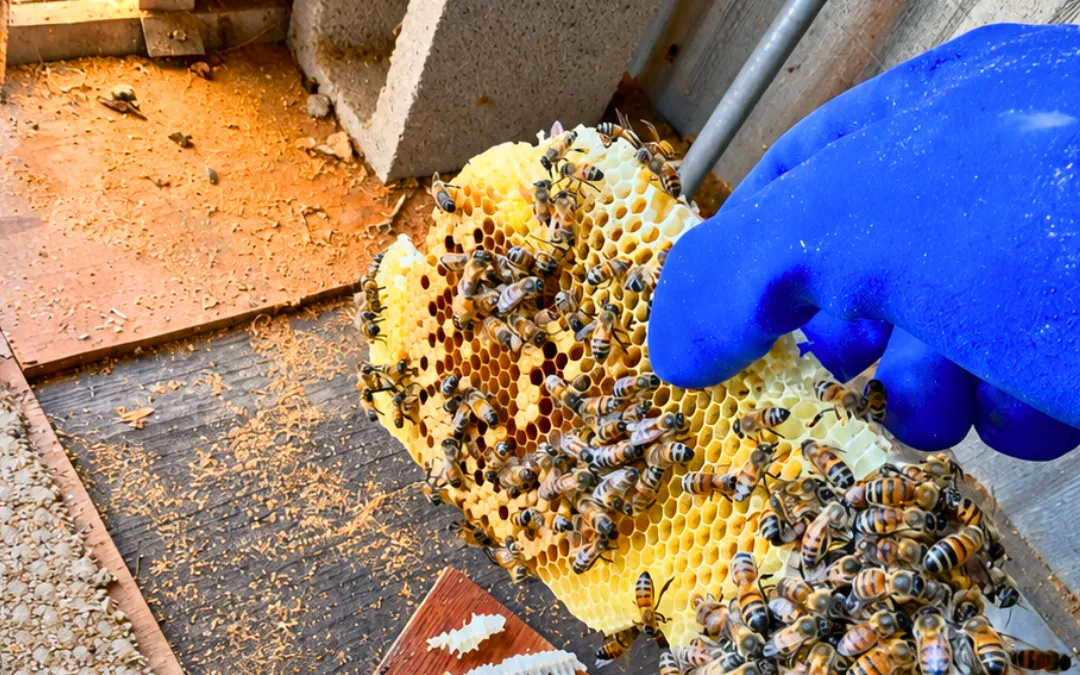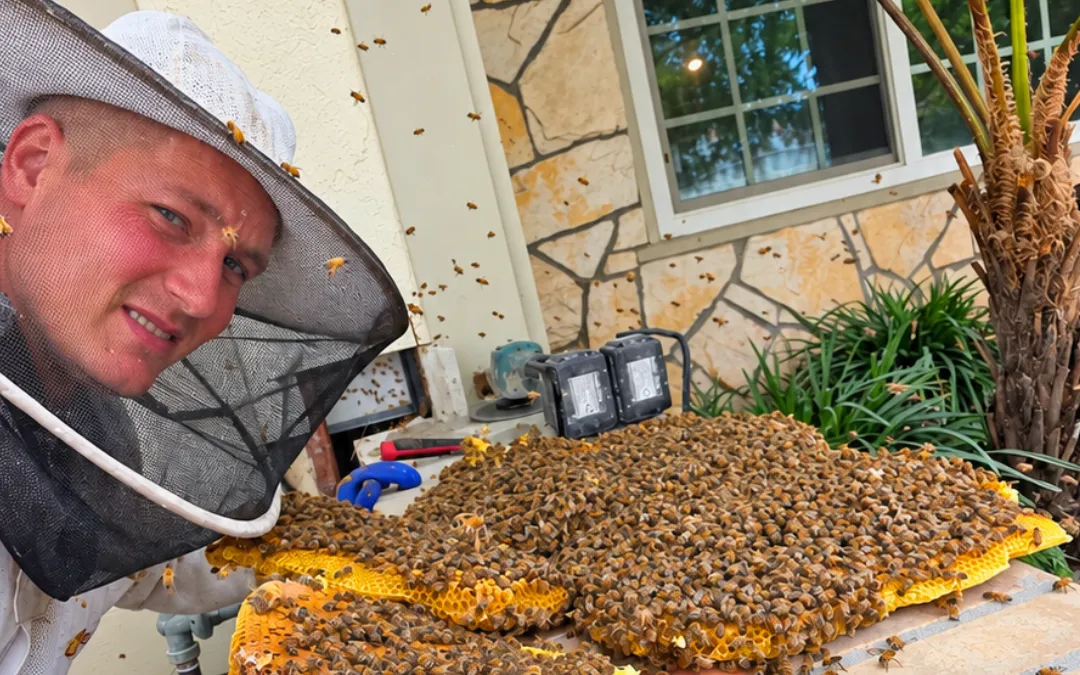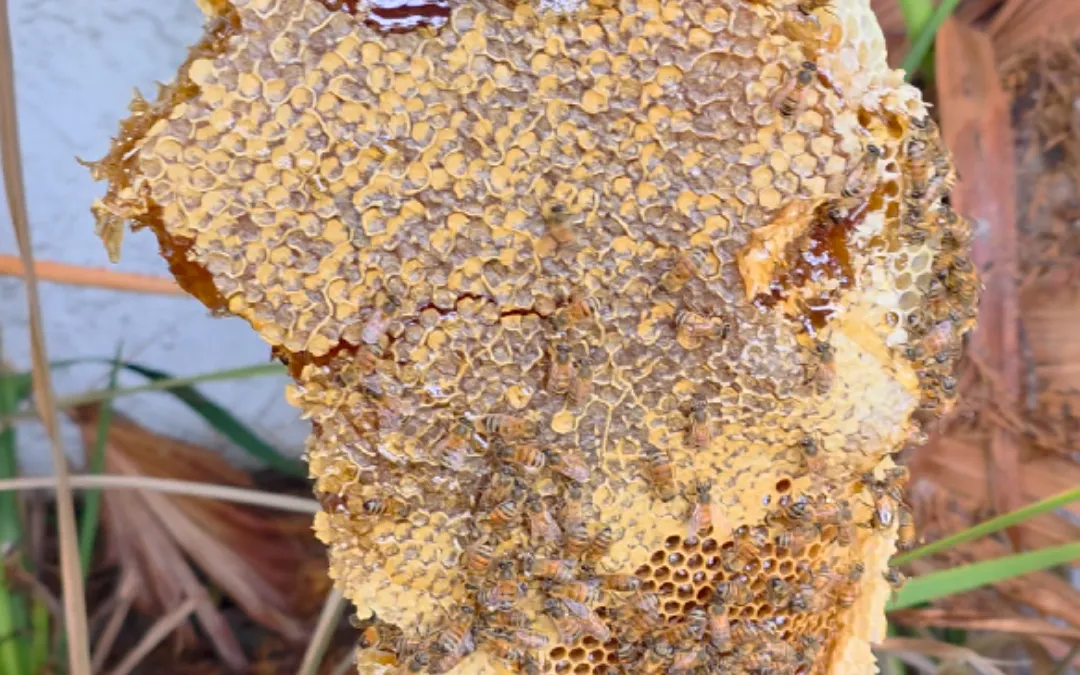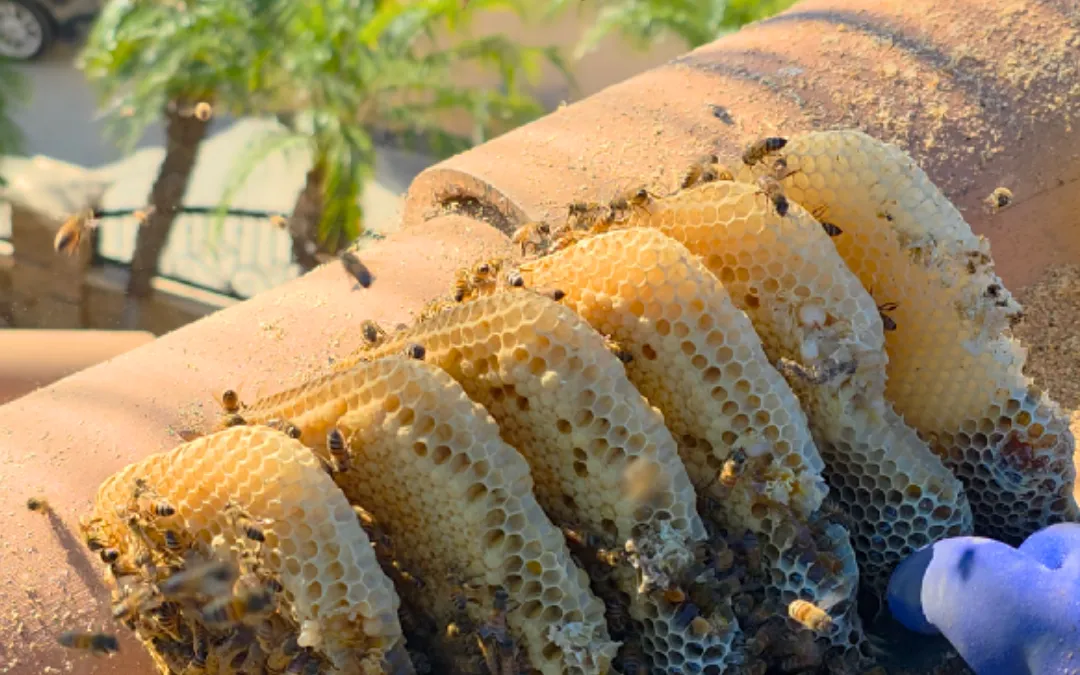
A beehive is the home of a honey bee colony: where the bees build their wax comb, raise their young and store honey and pollen. People use the word for two different things. A wild hive is a colony living in a natural or accidental cavity, like a hollow tree, a wall, a roof or a water meter box. A managed hive is a wooden box a beekeeper sets out, with removable frames for the bees to build comb on. Inside, both work the same way.
What a beehive does
A hive does four main jobs:
- It's shelter. It protects the colony from rain, sun, wind and predators. Honey bees like a dry, enclosed cavity with a small entrance that's easy to defend.
- It's a nursery. The queen lays eggs in the wax cells, and the worker bees raise the young (the brood) there.
- It's a pantry. Bees store honey and pollen in the comb to get the colony through stretches with no flowers.
- It controls the climate. The colony keeps the brood area at roughly 93 to 95°F (34 to 35°C) all year, which the young need to develop properly.
How a beehive works inside
A hive is built from sheets of honeycomb: double-sided slabs of six-sided wax cells hanging down side by side, with a "bee space" between them so the bees can get around. The colony usually lays out the comb the same way:
- Brood goes in the center. Eggs, larvae and capped pupae sit in the middle of the comb, where it's easiest to keep warm.
- Pollen goes in a ring around the brood. Pollen is the colony's protein, so the nurse bees keep it close to the young they're feeding.
- Honey goes on the outside and top. It's stored along the edges and above the brood, where it also helps insulate the nest.
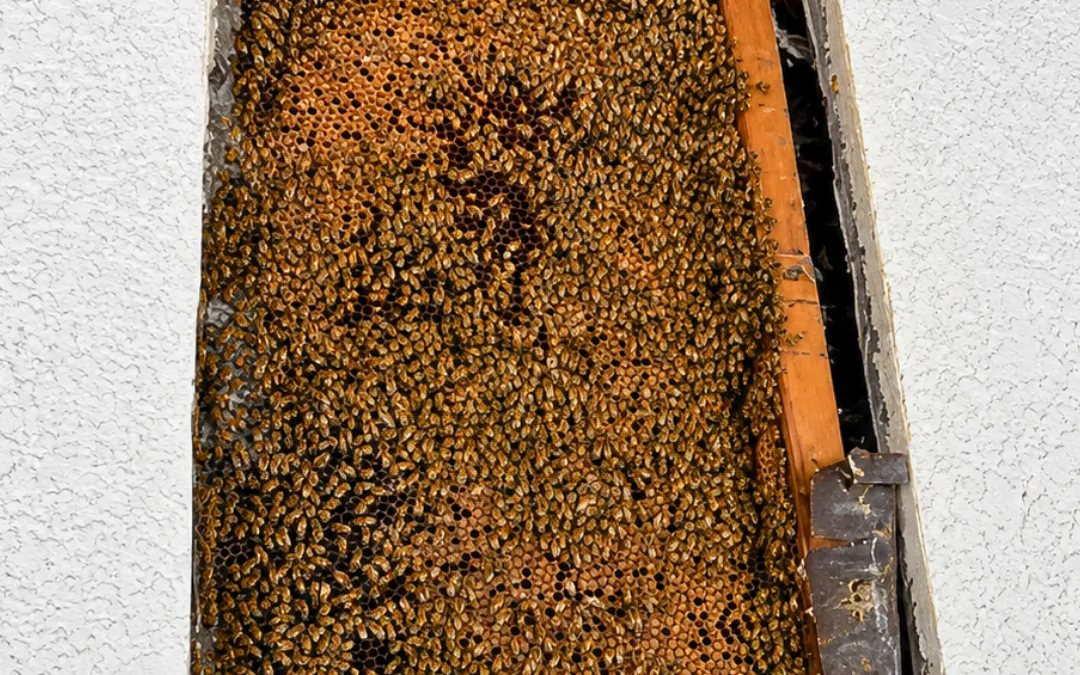
Worker bees make the comb from wax they produce in glands on the underside of the abdomen. There's more on that in how bees make honeycomb.
Who lives in a hive
A healthy colony in summer holds tens of thousands of bees (see how many bees live in a hive), and they come in three kinds:
- One queen, who lays all the eggs. See the role of the queen bee.
- Thousands of workers, all female, who build comb, feed the young, guard, forage and cool the hive. See what worker bees do.
- Drones, the males, whose job is to mate with queens from other colonies. See what drones do.
How bees heat and cool the hive
When it's cool, bees shiver their flight muscles to make heat and pack in tight around the brood. When it's hot, they fan their wings at the entrance to pull air through the hive and spread droplets of water that cool it as they evaporate. In a Southern California summer you'll often see a row of bees fanning at the entrance of a hive in a wall or roof.
Why bees build hives in walls and roofs
When a colony swarms, scout bees go looking for a new cavity: dry, dark, about the size of a big picnic cooler, with a small entrance. To a scout, the space between wall studs, under roof tiles, inside a chimney or in a water meter box looks just like a hollow tree. Once the colony moves in and builds comb, it won't leave on its own.
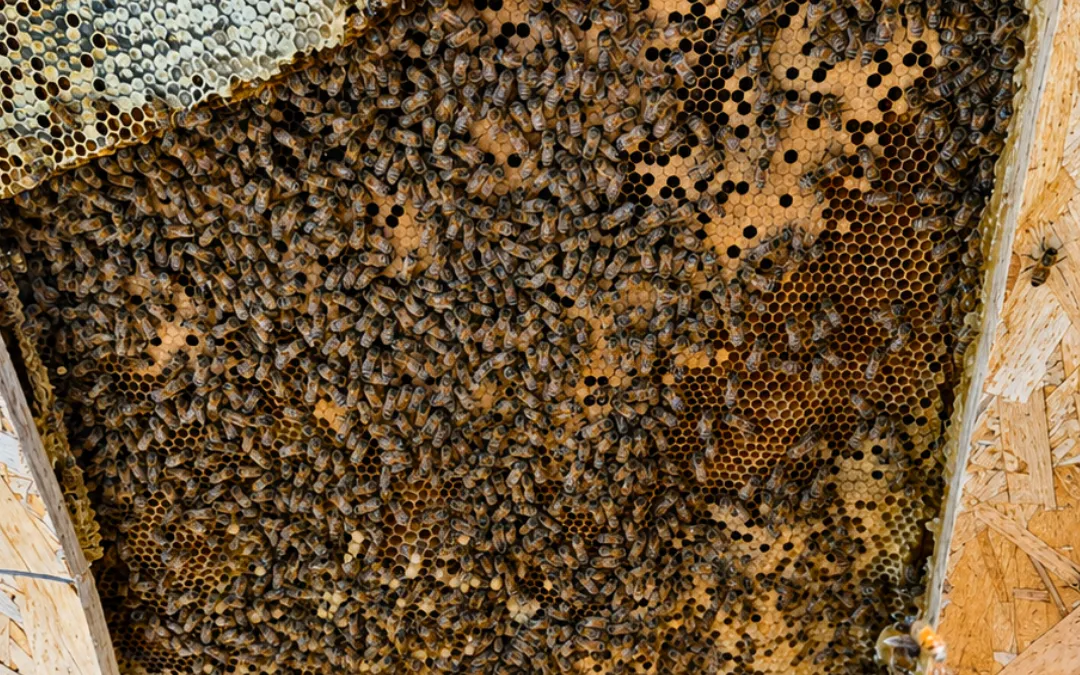
You can't just spray a hive that's inside a structure. The comb and honey stay behind, melt, draw pests and bring in the next swarm. The way to fix it is a live hive removal: I take out the bees and every piece of comb, then seal the entry. If you hear buzzing inside a wall, see what a bee infestation sounds like, or call or text (626) 487-6052.
Frequently asked questions
What is the main function of a beehive?
A beehive gives a honey bee colony shelter, a nursery to raise the young, storage for honey and pollen, and a space the bees can hold at about 93 to 95°F for their brood.
What is the difference between a beehive and a bee nest?
Most people use the two words to mean the same thing. "Hive" usually means a beekeeper's box or a honey bee colony, and "nest" gets used for any bee or wasp home. A honey bee colony in a wall or a tree is a wild hive.
How does a beehive work?
Worker bees build sheets of wax honeycomb. The queen lays eggs in the cells in the center, pollen gets stored around the brood, and honey goes at the top and edges. The workers heat, cool, clean and defend the hive.
Why do bees build hives in houses?
A swarm looks for a dry, enclosed cavity with a small entrance. Wall voids, roofs, chimneys and utility boxes are a match for what they'd look for in nature, like a hollow tree.
Like these guides? Add Eli the Bee Guy as a preferred source on Google to see more of them in your search results.