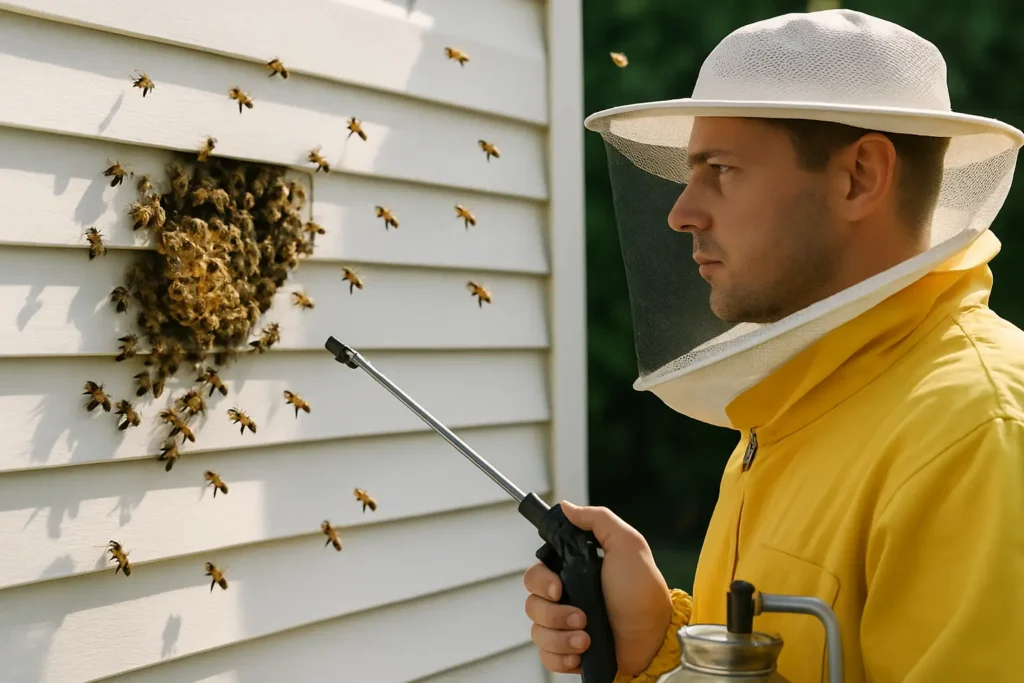
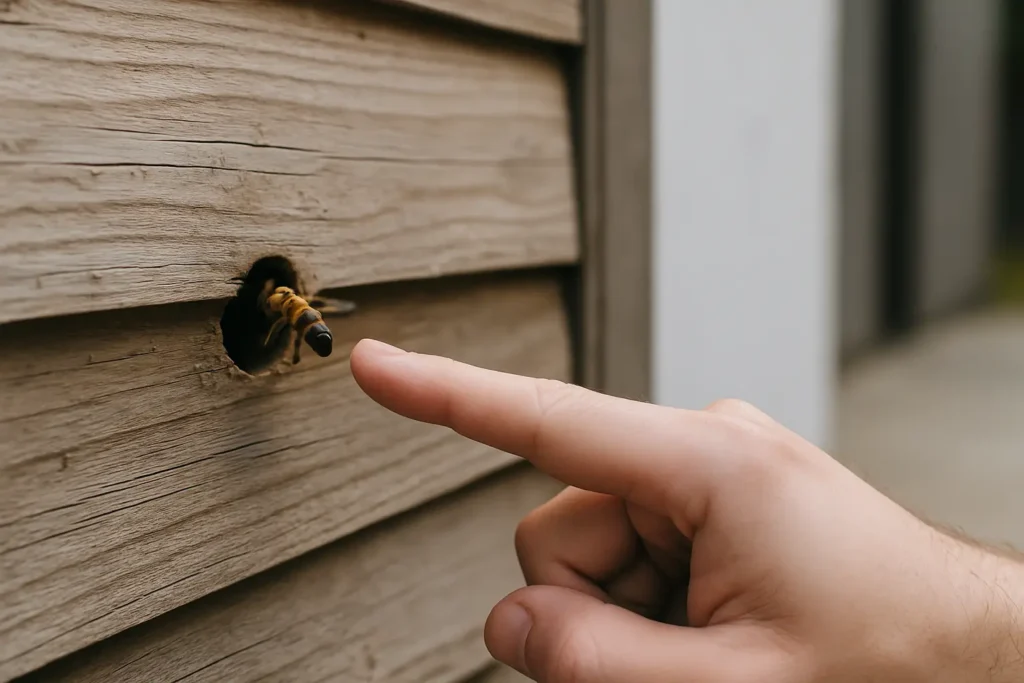
If someone in your home has a serious sting allergy, the sound of buzzing stops being background noise and starts feeling like a deadline. A few bees at the birdbath might be manageable. A steady stream of bees vanishing into a wall void is different. The goal is not to “get rid of bees.” The goal is peace and home restored – without creating a more dangerous situation for the allergic person or the bees.
Bee removal for allergies sits at the intersection of health and home. It calls for urgency, but also restraint. The wrong move can turn a calm colony defensive, increase the odds of stings, and leave you with lingering bees, honey, and repairs later.
Why bee activity is a bigger deal when allergies are involved
Most people worry about the pain of a sting. With allergies, the risk is the body’s overreaction. An allergic response can escalate quickly, and a single sting may be enough to trigger an emergency. That changes how you should think about timing, access, and “quick fixes.”
It also changes what “safe” means. Safe is not just fewer bees flying around. Safe is reducing the chance of any contact with bees during removal, and preventing re-occupation so the problem does not return when you least expect it.
First, identify what you are dealing with (without getting close)
A lot of calls that start as “bees” turn out to be something else. Honey bees, yellowjackets, and paper wasps behave differently, and removal is not one-size-fits-all.
Honey bees are often seen in a steady line coming and going from one entry point, especially around eaves, vents, fascia boards, chimneys, or small gaps where plumbing and wiring enter. Swarms are a temporary cluster, usually on a branch or fence, that may move on within a day or two if left undisturbed.
Yellowjackets tend to be more aggressive around food and trash, and many nest in the ground. Paper wasps build open, umbrella-shaped nests under overhangs. If you are unsure, that is normal – and it is a good reason to avoid DIY approaches that assume you have honey bees when you do not.
For households managing allergies, the safest identification method is distance and observation. Stand back, note where the insects are entering, and avoid blocking the entrance “to see what happens.” That can force bees to search for new exit points inside your structure.
What to do right now if allergies are a concern
If you suspect a hive in a wall, attic, soffit, or other structure, the immediate priority is reducing encounters.
Keep people and pets away from the flight path. Bees often take the same route in and out, and that invisible “bee highway” is where accidental stings happen. Close nearby windows, keep doors shut, and avoid yard work or leaf blowing near the activity. Vibration and noise can put colonies on alert.
Inside, keep the allergic person away from the wall or ceiling area closest to the entrance, especially if you hear buzzing. If bees are entering the living space, close that room off if possible and dim the lights. Don’t swat – try to contain with a glass and stiff paper if you must, and focus on getting professional help quickly.
If your household has an epinephrine auto-injector, confirm it is accessible and not expired. Allergy preparedness is not a replacement for removal, but it buys you time if something goes wrong.
Why “spray and seal” is risky – especially for allergies
When people are scared, they understandably want the fastest solution. Unfortunately, many of the fast solutions create new hazards.
Spraying insecticides can agitate bees and increase defensive behavior. It can also drive surviving bees deeper into the structure or force them to look for alternate exits – sometimes into interior walls, light fixtures, or vents. For someone with allergies, that added unpredictability is the opposite of what you want.
Sealing the entrance before removing the colony can be even worse. Trapped bees may attempt to chew or push into the home, and a blocked entrance does not remove the hive. Honey, wax, and brood left behind can attract ants, roaches, rodents, and moths. Odors can linger, and in warm Southern California weather, melting comb can create staining and damage.
A permanent solution typically requires removing the bees, removing the hive material when it is in a structure, and repairing the entry point so you do not repeat the experience next season.
What professional bee removal looks like for allergy-sensitive homes
For allergy situations, the best removals are calm, controlled, and thorough. The details vary based on where the bees are and how established the colony is, but a responsible process usually includes:
1) A plan to minimize flight and contact
Pros aim to work in a way that reduces the number of loose, defensive bees in the air. This can involve timing, careful access, and containment. The goal is fewer surprises, especially near doors, walkways, and play areas.
2) Live removal and relocation when possible
Honey bees are vital pollinators. Ethical bee management prioritizes rescuing and relocating a colony to an appropriate apiary rather than poisoning it. Relocation is not just “being nice.” It is also practical. A healthy colony can be moved and managed, while a poisoned colony often becomes a decay-and-cleanup problem inside the structure.
3) Full hive extraction when bees are in a structure
If bees are in a wall or attic, removing only the adult bees may not solve it. Comb left behind can continue to drip honey, smell, and attract pests. A full extraction addresses the source of the problem and supports a clean reset.
4) Entry-point repairs to prevent re-occupation
Bees are excellent at finding gaps. After removal, sealing and repairing the entry point matters. If you skip this step, a new swarm can move into the same cavity in the future – and you are back to managing risk again.
When you are calling for bee removal for allergies, ask directly whether the service includes comb removal when needed and whether entry points will be repaired. Those two details often separate a temporary fix from a durable one.
Timing: when it’s urgent, and when it can wait a day
Allergy risk can make everything feel like a 911-level emergency. Sometimes it is. Sometimes you have a small window to act thoughtfully.
If bees are inside living spaces, if the entry point is right by a doorway you must use, if there is a school, daycare, or high-traffic business entrance involved, or if the allergic person has had severe reactions in the past, treat it as urgent.
If it appears to be a swarm resting on a tree away from foot traffic, you may be able to keep distance while arranging a safe removal. Swarms are often gentle compared to established hives, but they are still bees, and allergies still apply. It depends on location, access, and who might unknowingly wander close.
How to make your property safer while you wait for removal
Small changes can reduce sting chances without provoking the colony.
Avoid mowing, trimming, pressure washing, or using blowers near the area. Keep outdoor food and sweet drinks covered, and secure trash lids to reduce other stinging insects that may show up. If you have exterior lights near the entry point, consider leaving them off at night to avoid drawing insects close to doors.
Most importantly, do not try to “test” the hive by tapping the wall, spraying water, or stuffing the hole. A calm colony is easier and safer to remove than an angry one.
Questions to ask when allergies raise the stakes
It is fair to be selective when health is on the line. When you call, ask how they handle allergic households, whether they use chemicals, and what the full scope includes.
You also want clarity on what happens after the bees are gone. Will comb be removed if it is in a structure? Will the area be cleaned to reduce odors and pests? Will entry points be repaired? And where are the bees going – are they being relocated to a managed apiary that can care for them?
If humane relocation and thorough repairs are priorities for you, a specialist like Eli the Bee Guy focuses on live removal, full hive extraction when needed, safe relocation, and repair work designed to keep bees from moving back in.
Trade-offs: humane removal, speed, and cost
With allergies, it is tempting to choose whoever promises the fastest and cheapest solution. The trade-off is that the cheapest option often skips the messy but important parts: comb removal, cleanup, and repairs.
Humane live removal can take more expertise and effort than chemical approaches, especially for cut-outs in walls or high eaves. But it typically reduces the chance of lingering problems inside the structure. In many cases, that means fewer follow-up hazards, fewer pests, and a better long-term outcome for both people and bees.
After removal: staying prepared without living on edge
Once the colony is removed and the entry point repaired, most families want reassurance. That is understandable. For allergy households, it can help to keep a simple plan: know where your epinephrine is stored, keep shoes by doors, and teach kids not to investigate buzzing areas.
It is also worth doing a quick property walk a couple times a year, especially in spring and early summer. Look for small gaps near rooflines, vents, and utility penetrations. Prevention is not about sealing every crack in a panic. It is about noticing the obvious entry points before a swarm decides your wall cavity looks like a great new address.
Peace is not the absence of nature. It is knowing your home is protected, your family is safe, and the bees that showed up were rescued and guided somewhere they can thrive.