A swarm shows up on a stucco wall in Riverside, or a steady stream of bees starts slipping under a roof tile in Orange County. Most people have the same two thoughts in the same order: Is anyone going to get stung? And are we about to lose a whole colony if we handle this wrong?
That tension – protecting people while protecting pollinators – is exactly where bee conservation efforts in California get real. This state produces a huge share of the country’s fruits, vegetables, and nuts, and that means pollination is not an abstract environmental issue. It is a daily, working partnership between landscapes and insects. But it is also a practical challenge for homeowners and property managers who need safe buildings, safe walkways, and predictable tenant experiences.
Why bee conservation efforts in California feel complicated
California has every ingredient for bee conflict: long warm seasons, dense development, and plenty of structures with voids that make perfect nesting sites. Add drought cycles that shrink natural forage, and bees do what any creature does – they search harder for food and shelter. Sometimes that search ends in a wall cavity, an irrigation box, or a busy courtyard.
It also depends on what people mean by “bee.” Many calls about “bees” involve yellowjackets or paper wasps, which behave differently and need a different plan. Even when they are honey bees, the scenario matters. A resting swarm clustered on a branch is usually in transition and may leave on its own. A colony that has built comb inside a structure is established, defensive when disturbed, and capable of causing property damage from wax, honey, and moisture.
Conservation, in other words, is not simply “leave them alone.” Sometimes leaving them alone puts people at risk and leads to a worse outcome for the bees later.
The real goals behind conservation (and what gets in the way)
When professionals talk about conservation, they are usually chasing three outcomes at once.
First is colony survival. That means reducing avoidable deaths from pesticides, starvation, and unmanaged disease. Second is habitat stability – making sure bees have forage and nesting options that do not force them into buildings. Third is conflict reduction, because a public that feels unsafe around bees tends to support quick-kill solutions.
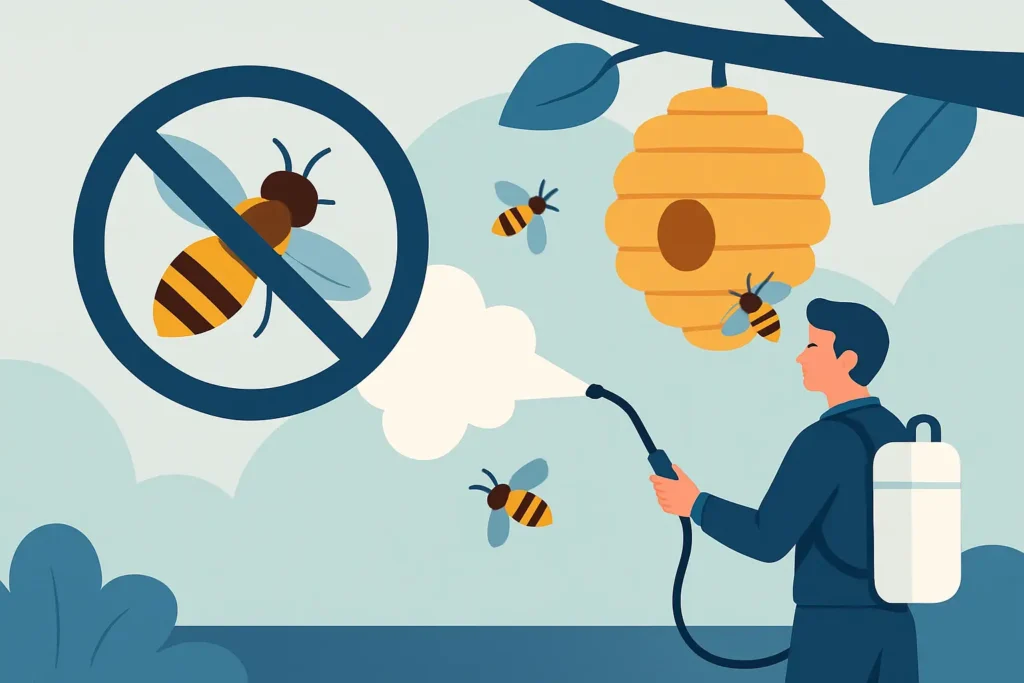
The obstacles are also threefold. Chemical exposure can be acute (a direct spray) or chronic (residues on blooms and in water sources). Habitat loss is steady and cumulative as lots get cleared, “clean” landscaping replaces diverse plantings, and open soil gets covered. Then there is misinformation. People are often told to spray a swarm, plug an entry hole, or “smoke them out.” Those shortcuts can trap bees inside, push them deeper into the structure, or leave comb behind that attracts pests and can create odor and staining.
Habitat that actually helps: forage, water, and timing
More flowers are good, but “plant pollinator-friendly” is not a one-size-fits-all answer in Southern California. The best conservation landscaping does three things: it provides blooms across seasons, it avoids creating a single concentrated hotspot right next to high-traffic doors, and it uses plants that can handle local conditions without heavy chemical inputs.
In practical terms, a yard that blooms only in spring does not support colonies through late summer and fall, when natural forage can be scarce. A mix of trees, shrubs, and smaller flowering plants usually outperforms a single showy bed. And in hot inland areas, bees will look for water. A shallow water source with landing spots (like stones) can keep them from clustering on pool edges, dripping faucets, or pet bowls.
Timing matters, too. If you are going to prune heavily or remove flowering plants, doing it all at once during a dearth period can reduce available food overnight. Staggering changes, or replacing before removing, is a small decision that makes the landscape more reliable for pollinators.
Pesticides: the trade-offs most people do not see
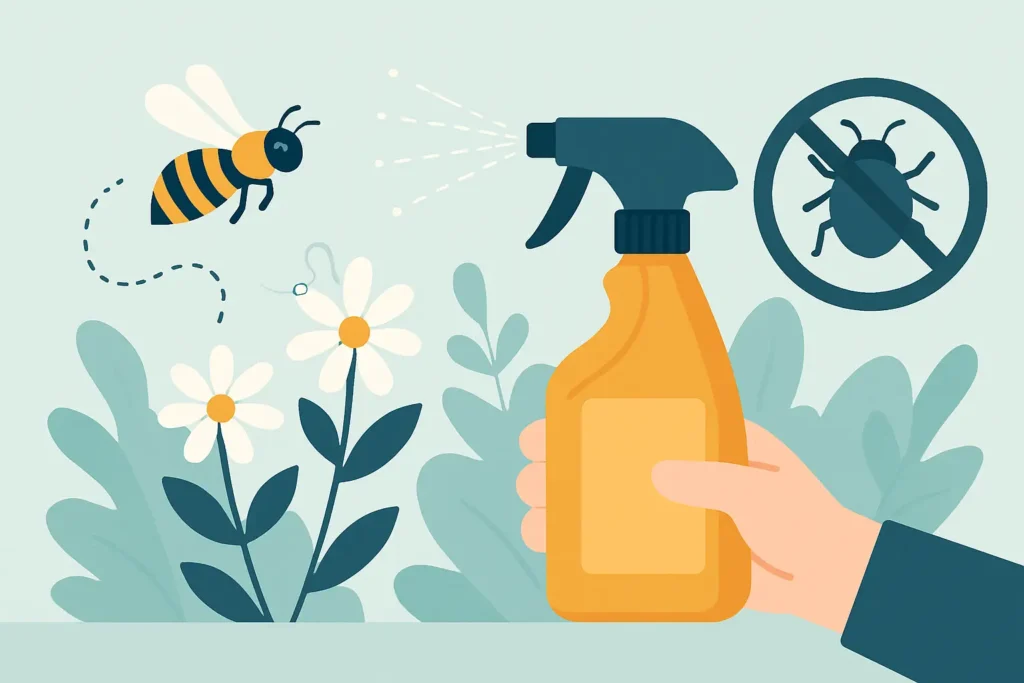
A lot of well-meaning property owners reach for “safe” sprays without realizing how exposure works. Some products kill on contact, others linger. Some are applied to soil and move into plant tissues. Some do not kill immediately but interfere with navigation and foraging. The trade-off is that you may solve a short-term nuisance and create a long-term stressor for every pollinator visiting the site.
That does not mean never treat pests. It means being disciplined. Treat the specific problem, not the entire yard. Avoid spraying open blooms. Apply at times when pollinators are least active, and never use a broadcast approach when a targeted repair or sanitation fix would solve the issue.
If you manage commercial properties, this also intersects with tenant expectations. “No insects anywhere” is not realistic in California. What is realistic is “no dangerous insects in high-traffic areas” and “no unmanaged colonies in structures.” That framing protects people without turning every bee into an emergency.
Disease and stress: the invisible side of California pollination
Honey bees face pressures that most homeowners never see: mites, viruses, nutrition gaps, and the stress of frequent moves in commercial pollination. Those issues are largely handled at the beekeeping and agricultural level, but residential choices still matter because they shape the baseline environment.
Nutrition is a good example. A colony that has steady forage and clean water is better able to maintain its immune function and brood health. A colony repeatedly exposed to residues and forced to forage farther is more stressed. Conservation at the neighborhood level is often less about heroic interventions and more about removing chronic stressors.
This is also why relocating live bees to vetted apiaries matters. A rescued colony needs follow-through: proper placement, monitoring, and management so it can stabilize rather than struggle in a poor site.
The conservation move that protects people, too: humane removal and relocation
When bees set up inside a wall, soffit, or roofline, the best conservation outcome is usually a live removal with full extraction of comb and a repair plan to prevent re-entry. It protects the bees by keeping the colony intact and gives your property a clean reset instead of a lingering mess.
The details matter. A “removal” that kills the bees but leaves comb behind can create secondary problems: fermentation odors, stains, ants, roaches, rodents, and sometimes new swarms attracted to the scent. A partial extraction that misses brood comb can also leave a site attractive for re-occupation.
For homeowners with allergies, humane does not mean slow or risky. A well-run removal focuses on containment, safe access, and clear communication about what to do during the work. Sometimes the safest conservation choice is also the most professional one.
If you are dealing with a swarm or an active hive and want an approach centered on bees rescued and peace and home restored, this is the kind of work we do at Eli the Bee Guy: live removals, full hive extractions, safe relocations, and entry-point repairs so the problem does not return.
What property owners can do this week (without turning your yard into a project)
California conservation is often won in small, repeatable habits.
Start with your building envelope. Walk the exterior and look for gaps where siding meets trim, openings around pipes, and warped soffit areas. Bees do not need much space to start exploring. If you find an entry point near a warm void (like an attic edge), sealing it proactively can prevent a future colony.
Then look at water. Fix dripping spigots and irrigation leaks that create “bee magnets” in high-traffic areas. If you want to offer water, place it away from doors and play areas. Bees will still visit, but you are guiding that activity to a safer spot.
Finally, check your landscaping practices. If a pest control vendor services the property, ask specifically how they avoid spraying blooming plants and what they do instead of broadcast treatments. A good vendor will understand targeted applications and will be willing to coordinate timing.
City and farm programs: what helps, and what can backfire
Across California, conservation shows up as pollinator gardens, pesticide restrictions in certain settings, roadside habitat efforts, and incentives for farms to plant hedgerows and cover crops. These can be powerful because they scale.
But there are trade-offs. A pollinator planting that is not maintained can become a weed patch that gets sprayed later, which defeats the purpose. A well-intended rule that restricts all treatments can also push property managers to delay dealing with stinging insects until the situation becomes a safety incident. And habitat planted right next to playgrounds or loading docks can increase conflict if it concentrates foraging where people cannot avoid it.
The best programs plan for people as part of the ecosystem: habitat placed thoughtfully, maintenance budgets included, and clear protocols for when bees choose a wall cavity instead of a flower bed.
When to let a swarm be, and when to act
It depends on location and behavior.
If a swarm is high in a tree away from foot traffic and it has only been there a few hours, it may leave on its own. If it is on a low branch over a sidewalk, near a school, or forming on a structure where scouts are finding gaps, acting quickly is safer for everyone.
If you see bees entering and exiting the same hole day after day, that is not a swarm. That is a colony. At that point, waiting usually increases the amount of comb inside and raises the difficulty – and cost – of doing the job right.
A good rule is simple: if people have to change their routine to avoid the bees, or if the bees are tied to your building, it is time to get professional help.
A closing thought to carry forward
Bee conservation efforts in California do not ask you to choose between your family’s safety and the survival of pollinators. They ask for a calmer kind of responsibility: fix what invites colonies into structures, reduce the chemical pressure you can control, and treat bees like living neighbors when conflicts happen. When that becomes the norm, the result is not just fewer stings or fewer infestations – it is a little more peace, and a little more home, for everyone sharing this landscape.