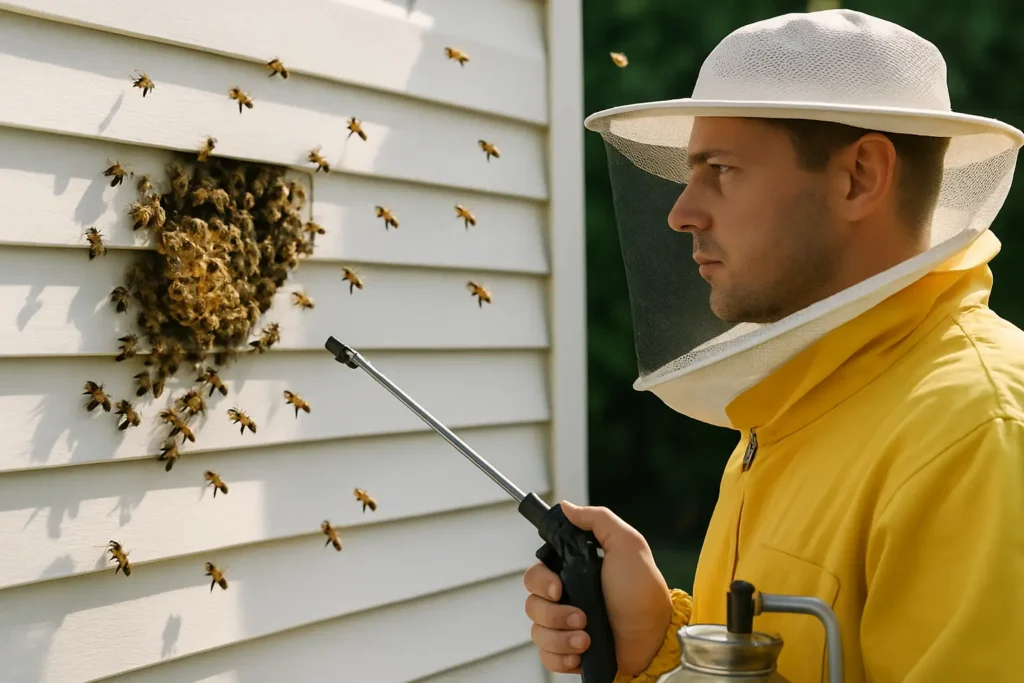
Bee Removal Costs: Your Southern California Guide to Pricing and Services
Professional bee removal and hive relocation mean safely removing a bee colony from a home or business and either moving it to a managed apiary or disposing of it responsibly. Costs depend on the bee species, how easy the hive is to reach, and the scope of work required. This guide walks through typical Southern California price ranges, the biggest factors that affect cost, what a professional job usually includes, and when emergency responses add fees. You’ll learn how species and hive location change labor and repair needs, what humane live relocation looks like compared with extermination, and when swarm pickups are often free. The article is organized into four clear sections: average local costs, the main price drivers, what professional quotes cover, and emergency pricing with notes on low- or no-cost swarm removals—so you can compare estimates and decide whether to request a free inspection and a transparent written quote.
What Is the Average Cost for Bee Removal in Southern California?

Costs for professional bee removal in Southern California vary because hive size, species, and access differ from job to job. Homeowners and businesses commonly see estimates ranging from a low-cost swarm pickup ( about $250) to several hundred dollars—typically $300 to $800—for attic or wall hives that need careful extraction and repairs. Those differences exist because a removal can be as simple as transferring a clustered swarm from a tree or as complex as removing comb and wax from inside wall cavities. Use this local price bracket to set realistic expectations; a free on-site inspection that identifies species, location, and damage risk is the next step before a firm quote.
Commercial properties also need tailored commercial bee removal services to protect customers and staff. These jobs can involve larger structures or public areas and require planning to minimize disruption to operations. Link to additional services
How Does Eli the Bee Guy Provide Transparent and Fair Pricing?
At Eli the Bee Guy we follow a consistent process so pricing is clear and fair while prioritizing humane relocation when possible. Every quote starts with a free on-site inspection: we check species, hive size, access difficulty, and visible property damage so the estimate reflects the actual work needed. Typical written quotes list labor for removal, relocation or collection, basic cleanup and wax removal, and minor entry-point repairs—no surprise fees beyond what the inspection documents. That transparency helps customers understand why some situations cost more and supports same-day or emergency options when required. bee hive removal.
What Local Factors Influence Bee Removal Costs?
Local Southern California variables affect travel time, crew availability, and logistics, all of which influence final pricing. Counties we serve—Los Angeles, Orange, Riverside, San Bernardino, and Ventura—have different travel distances from the operator’s base and varying disposal and labor costs that change time-on-site estimates. Seasonal activity matters too: peak swarming in spring and early summer can increase demand, affecting wait times or surcharges. These regional factors determine whether a job is a quick swarm pickup or a full hive extraction with repairs, so a free inspection clarifies how local conditions shape the estimate.
Which Factors Affect Bee Removal Pricing?
Prices are driven by a few core considerations: species (safety and whether live relocation is possible), hive location (access and repair needs), hive size (how much comb and brood must be moved), and the chosen method (relocation versus extermination). Each factor changes the equipment, labor hours, and cleanup or repair work required, so inspectors evaluate them together before delivering a final price. Below is a concise comparison showing how common species typically affect cost and why.
Different bee and wasp types create distinct safety and handling needs:
| Bee Type | Typical Price Impact | Why |
|---|---|---|
| Honey Bee | Moderate (relocation preferred) | Usually relocated by beekeepers; extra care to preserve colony and comb |
| Carpenter Bee | Moderate–High | Possible structural damage that requires inspection and repair |
| Africanized Bee | High | Higher safety protocols and protective gear increase labor and time |
| Wasp (paper wasp/other) | Low–Moderate | Often faster to remove but may require nest destruction for safety |
This table shows how species change the scope of work and therefore the estimate you’ll receive after inspection.
How Do Bee Species Impact Removal Costs?
The species determines whether live relocation is feasible, what protective measures are needed, and whether health or regulatory concerns affect the chosen method. Honey bees are usually good candidates for live relocation—this preserves the colony and reduces ecological harm but requires careful handling of comb and brood. Carpenter bees may need follow-up inspections for hidden galleries and possible repairs. Aggressive or Africanized bees raise safety concerns, require more containment measures, and usually increase labor and insurance costs. Inspectors identify species early to set accurate expectations for both safety and price.
How Does Hive Location Change the Price?
Location affects labor intensity, required tools, and the chance of repairs—difficult access raises costs. A clustered swarm in a tree can be a quick capture with minimal cleanup, while an attic or wall hive often needs cutting, comb removal, and patching, which adds labor and materials. Roofline or high-elevation hives require ladders, lifts, and safety harnesses, increasing time on site and the estimate. Inspectors assess access first to decide whether a simple pickup or a more involved extraction and repair quote is appropriate.
What Is Included in a Professional Bee Removal Service Cost?
A professional quote should list core deliverables so you know what the price covers: inspection, safe removal or relocation, cleanup (comb and wax), minor repairs to entry points, and follow-up checks or guarantees when applicable. These elements—inspection, relocation, cleanup, and repair—help you compare quotes apples-to-apples. Optional extras like major structural repairs or repeat visits for lingering bees are usually quoted separately, and a written estimate clarifies which items add cost. Below is a concise breakdown of common inclusions and when extra charges apply.
| Service Component | What It Includes | When Extra Charges Apply |
|---|---|---|
| Inspection | On-site assessment of species and access | Long-distance travel or multiple follow-up visits |
| Relocation/Removal | Containment and transport to a caring apiary | If extermination is required for safety |
| Cleanup | Wax and comb removal, surface cleaning | Extensive comb embedded deep in structure |
| Minor Repairs | Patching entry points and cosmetic fixes | Structural reconstruction or major carpentry |
This table outlines typical service parts and the triggers for additional fees so you can anticipate what a complete quote should cover.
What Does Humane Live Bee Relocation Entail?
Humane live relocation focuses on keeping the colony intact and moving it to a caring apiary. The process starts with an inspection to determine scope and access. The beekeeper then contains and removes frames or whole comb when feasible, minimizing brood loss. The colony is transported to a relocation site where it’s integrated and monitored, and follow-up checks ensure no remnants attract other pests. This approach preserves pollinators and supports local ecosystems, unlike extermination, which removes valuable bees and reduces nearby pollination.
How Are Property Damage Repairs and Cleanup Factored Into Pricing?
Basic cleanup and minor repairs are often included to restore normal use of the space after removal; major structural repairs are quoted separately based on the inspection. Typical minor repairs include patching small wall holes, sealing entry points, and surface cleaning of wax and stains—these are commonly bundled into standard quotes. When comb is built deep into studs or insulation is contaminated, inspectors will recommend contractor-level repairs and provide that cost as an add-on. Clear documentation during the free inspection explains what’s included and what requires a separate repair estimate.
When Does Emergency Bee Removal Cost More?

Emergency removals cost more when they require a rapid response, extra safety measures, or work outside normal hours. Urgency, risk to occupants, and difficult access raise the price. Examples that trigger higher fees include bees inside occupied living spaces, occupants with severe allergies who need immediate action, or highly aggressive colonies that require extra personnel and protective equipment. Emergency pricing reflects the need to prioritize safety and fast containment; any surcharges will be explained in the emergency quote. The next section lists common emergency scenarios and how they typically affect cost.
Common emergency situations that can increase cost include: drone bee do in a hive.
- Bees inside occupied living spaces: Requires urgent interior work and containment.
- Occupant with life-threatening allergy: Immediate priority and faster dispatch.
- Aggressive or Africanized colony: Extra personnel and specialized safety gear needed.
| Emergency Scenario | Additional Cost Drivers | Example Cost Impact |
|---|---|---|
| Interior dwelling infestation | Interior access, containment, and time | After-hours +20–30% (illustrative) |
| Allergic occupant emergency | Rapid dispatch, priority scheduling | Rush fee or immediate-response surcharge |
| Highly aggressive colony | More personnel, specialized gear | Higher labor and safety overhead |
This table connects common emergency scenarios to the reasons they increase cost and gives an illustrative sense of impact so you can weigh urgency against price.
What Are Typical Emergency Bee Removal Pricing Scenarios?
Emergency pricing usually combines the base removal cost with surcharges for time sensitivity and safety. For example, an after-hours call may include a percentage add-on, and life-threatening allergy calls receive priority handling. A same-day interior removal may carry a rush charge and extra labor, while an aggressive colony might require multiple technicians and extended containment. These are examples to set expectations; the free inspection and a written emergency quote will spell out exact fees. Knowing typical scenarios helps property owners request the right level of service quickly.
Are There Conditions for Free or Low-Cost Bee Swarm Removal?
Yes. Many services offer free or low-cost swarm pickups when the swarm is transient, easy to access, and causes no property damage; established hives usually require a fee. Free pickup typically applies to a single, visible swarm clustered on a branch, fence, or other exposed surface, with easy ground-level access and no embedded comb. If bees have built a mature hive inside walls, attics, or other structural cavities—or if there’s property damage—a standard removal fee and potential repair costs will apply. A free on-site inspection determines eligibility and clarifies whether a swarm qualifies for no-cost pickup or needs a paid relocation and repairs.
Eli the Bee Guy offers 24/7 emergency assistance for life-threatening allergy situations and provides free inspections plus transparent written quotes to determine if a swarm pickup is free or to document necessary removal work and repairs.
If you want a clear, no-surprise estimate or need urgent help, contact Eli the Bee Guy for a free inspection and a written quote that spells out what’s included—relocation when possible, cleanup, minor repairs, and emergency response options. We serve Los Angeles, Orange, Riverside, San Bernardino, and Ventura Counties and prioritize humane, beekeeper-led relocation whenever feasible. For urgent situations involving severe allergies, request immediate assistance so we can prioritize safety and respond as quickly as possible.