How to Find Humane Local Bee Removal Experts: Safe & Eco-Friendly
Finding a trustworthy bee removal professional protects your home and helps preserve vital pollinators—a balance that matters to homeowners and businesses alike. This guide walks you through spotting humane, effective services, typical costs, how live hive relocations work, and where to find vetted experts across Southern California. You’ll get practical vetting questions, clear cost drivers, a step-by-step rundown of humane relocation, and quick checks to confirm reputation and coverage. The focus is always on non-toxic live relocations (not extermination), transparent inspections and quotes, and emergency readiness. If you’re searching “bee hive removal near me,” this article gives you the questions to ask, red flags to avoid, and next steps to secure safe, eco-friendly service.
How to Choose a Reliable, Humane Bee Removal Company Near You
Start with a few simple criteria: prioritize companies that do live bee relocation, can show documented relocations, and provide free inspections with clear quotes. Those traits lower the chance of unnecessary extermination and show the tech understands local bee behavior and safety. Use a short checklist when you call so you get the right information fast and avoid common comparison mistakes. The checklist below highlights the key items to request on your first inquiry.
- Ask if they perform live bee relocation and rehome colonies with vetted apiaries.
- Confirm they offer a free inspection plus a written, itemized quote.
- Check for owner-operated or local presence and emergency response availability.
- Verify insurance and ask to see documented relocation examples.
These points steer your conversation and make the difference between humane specialists and standard exterminators obvious. The next section breaks credentials down into concrete qualifications to request.
What Qualifications and Experience Should a Professional Bee Removal Expert Have?
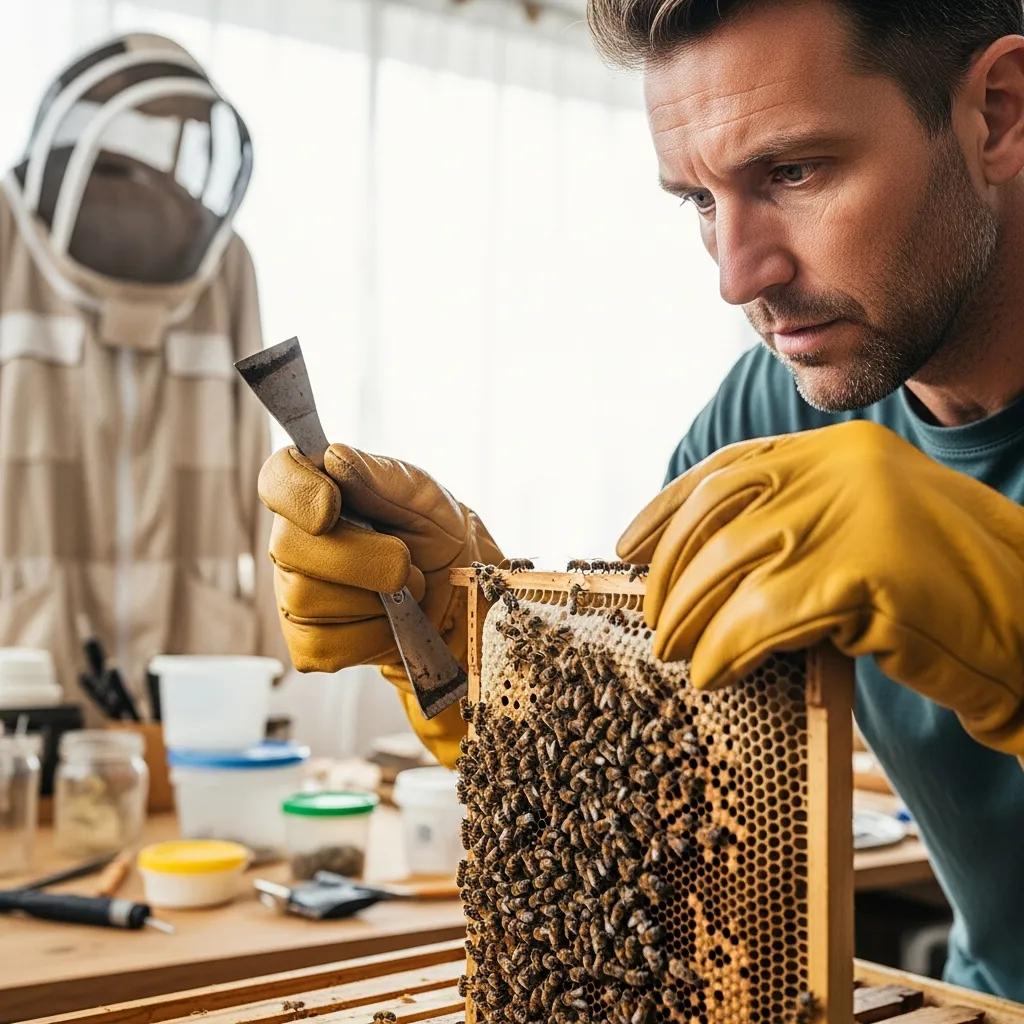
A good bee removal expert usually pairs beekeeper experience with documented live relocations and basic insurance to protect your property and liability. Ask for before/after photos or relocation case examples and probe their familiarity with local species — and how wasps differ (yellow jackets are wasps, not bees). Proven techniques—safe hive extraction, honeycomb removal, and pheromone treatment—reduce recurrence and structural damage. Partnerships with vetted apiaries show they care about rehoming outcomes, and specific relocation results signal hands-on, non-pesticide experience.
For businesses and larger properties, you’ll want specialists with commercial experience. Commercial properties have different safety and logistical needs; choosing a provider with commercial-grade experience can prevent delays and unexpected costs.
Why Choose Live Bee Relocation Over Extermination?
Live relocation protects pollinators and avoids toxic residues that can harm people, pets, and nearby beneficial insects. It also reduces the chance of re-infestation, because technicians remove honeycomb and treat pheromones and entry points. Saving honey bees supports local pollination and ecosystems—an ecological advantage over chemical methods. Knowing these benefits makes it easier to prioritize humane providers when comparing quotes and approaches.
What Are Typical Costs for Professional Bee Hive Removal?
Costs vary because jobs range from quick swarm pickups to complex structural extractions; price reflects access difficulty, hive size, species, and repair needs. Inspectors should give itemized quotes covering labor, relocation, cleanup, and any repair recommendations so you don’t get surprise fees. The short table below compares common job types, access complexity, and typical price ranges to set realistic expectations before you request a quote.
This comparison shows why transparent inspections matter and what price drivers to expect before you book.
| Job Type | What it Means | Typical Price Range |
|---|---|---|
| Swarm pickup (open, accessible) | Low complexity — quick capture | $100–$300 |
| Wall or attic hive (requires access/repair) | Moderate to high complexity — may need structural work | $350–$1,000 |
| Large colony with honeycomb removal | High labor — honey extraction and cleanup | $600–$1,500 |
Which Factors Influence Bee Removal Pricing?
Price is driven by obvious factors: physical access (attic versus open swarm), hive size, species, how much honeycomb and wax are present, and any structural repairs needed after extraction. Emergency callouts or night work raise costs because they require immediate response and extra labor. Ask for assessments that list each factor—access, containment, transport, apiary rehoming, and remediation—so you can see what you’re paying for. Knowing these drivers helps you weigh a low price against long-term value.
Are Free Inspections and Transparent Quotes Important?
Yes. A free inspection protects you from surprise fees and ensures the recommended approach matches reality; a proper inspection includes photos, a written scope, and a timeline. Transparent quotes itemize labor, relocation, cleanup, and repair suggestions so you can compare providers apples-to-apples. Insist on a written estimate after inspection and clarify emergency response options and any follow-up care before authorizing work. To request a no-cost inspection or a clear quote, visit Eli the Bee Guy’s website and schedule a free inspection.
What’s Involved in a Safe, Eco-Friendly Hive Relocation?
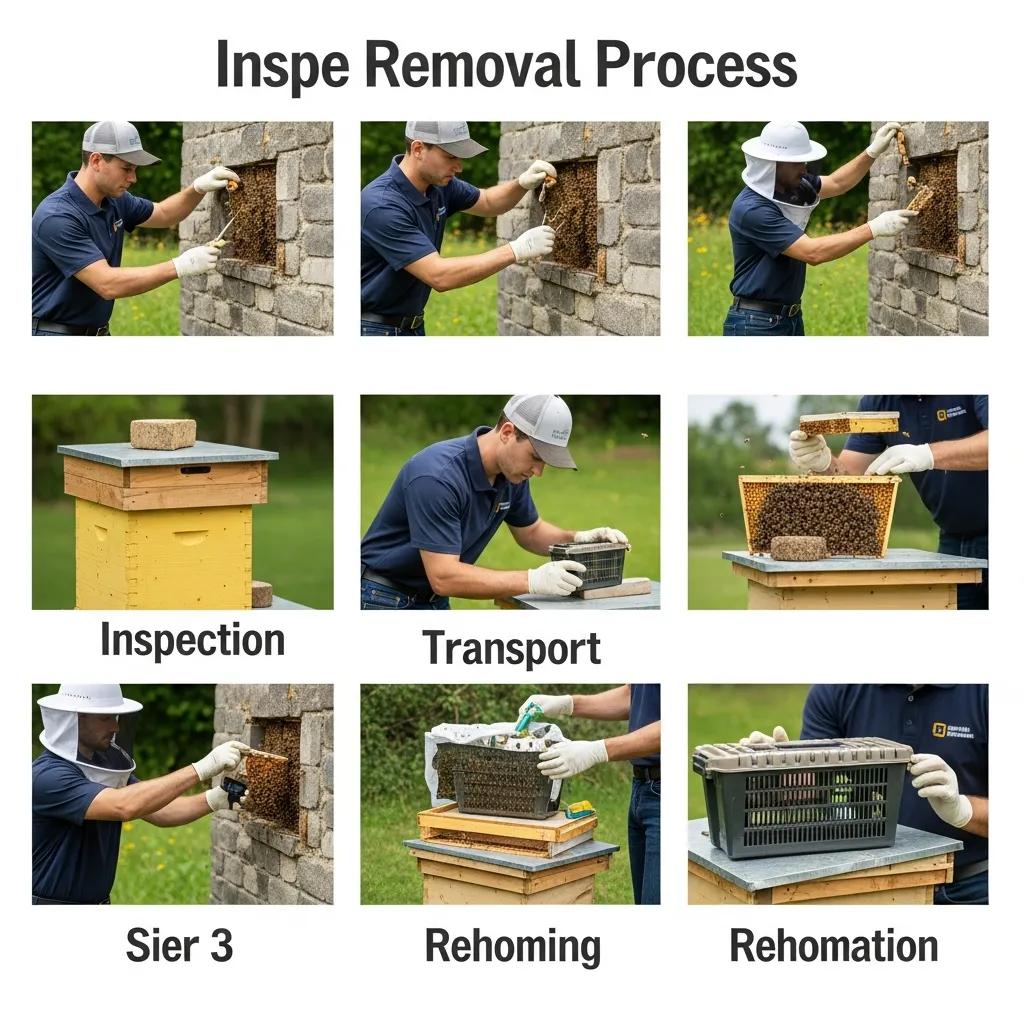
The process centers on careful assessment, secure containment, humane extraction, relocation to vetted apiaries, and site remediation to prevent return. A clear sequence reduces risk to people and bees and ensures colonies are rehomed responsibly. Below is a concise outline of the main steps and expected outcomes to set homeowner expectations.
| Step | Typical Method | Expected Outcome |
|---|---|---|
| Inspection | Visual assessment, photos, species ID | Accurate scope and written quote |
| Capture / Removal | Containment, hive box removal, honeycomb extraction | Live bees secured for transport |
| Transport & Rehoming | Move to vetted apiary, release/settle | Colony re-established with a beekeeper |
| Cleanup & Prevention | Pheromone treatment, repair recommendations | Lower chance of return and a safe site |
How Is a Live Bee Relocation Done, Step-by-Step?
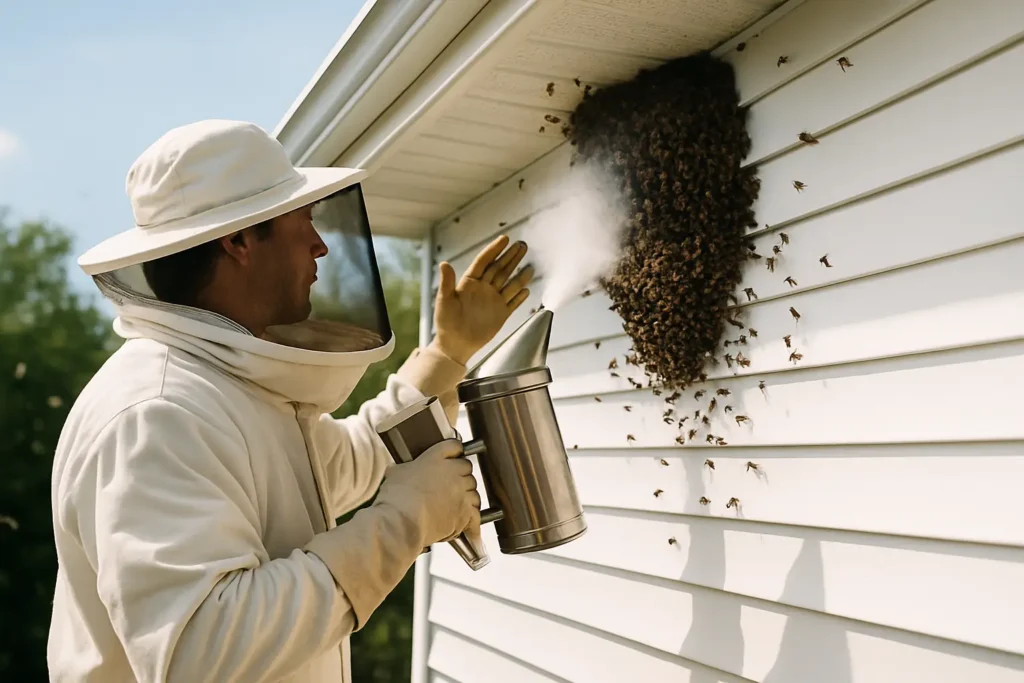
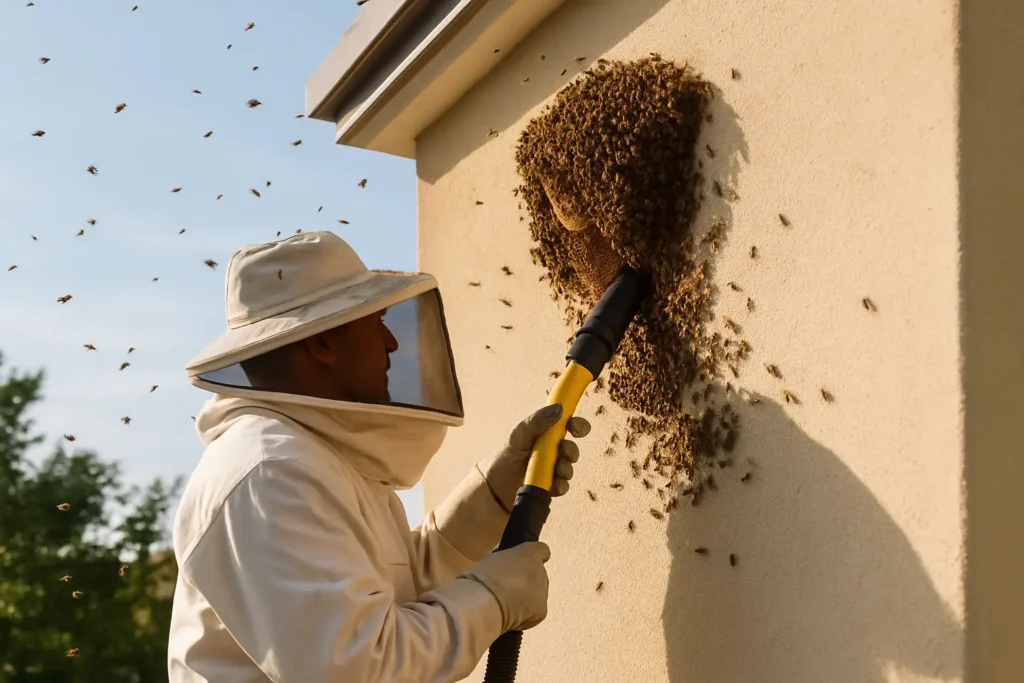
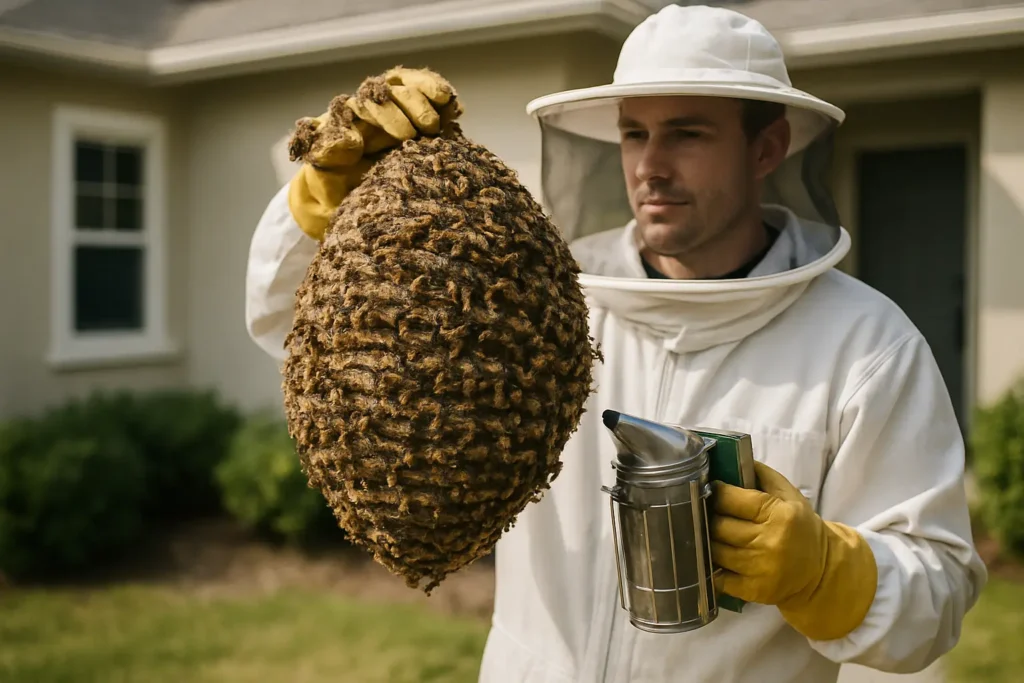
Relocation starts with a focused inspection to document the site and species, then moves to containment and careful hive extraction using non-lethal methods. Technicians transfer frames or the whole hive into transport boxes or nucleus hives, then take the colony to a vetted apiary partner to preserve colony health. After relocation they remove honey residues, treat pheromones, and recommend repairs or exclusion measures to prevent re-entry. On-site time varies by complexity; expect clear communication about schedule and aftercare.
How Do Professionals Handle Emergency Bee Situations?
In emergencies, human safety comes first: if someone is severely allergic or bees are in a hazardous spot, technicians secure the area with temporary exclusion and containment measures. Pros assess aggression, species, and risk, then use rapid-response capture or safe containment while coordinating any medical or public-safety referrals. Many humane specialists offer emergency availability and follow up with a full relocation and remediation plan. For urgent 24/7 help that still prioritizes relocation, Eli the Bee Guy advertises round-the-clock support and rehoming to vetted apiaries.
Where Can I Find Local Bee Removal Experts in Southern California?
Start by checking service coverage, recent reviews, and signs of owner-operated, humane practice in your county. Proximity affects response time and sometimes cost, so narrow your search to providers that list the specific Southern California counties you need, then verify their local presence with recent reviews and case examples. The short list and verification checklist below will help confirm availability and credibility quickly.
- Counties commonly served by regional humane specialists: Los Angeles, Orange, Riverside, San Bernardino, Ventura.
- Verification checklist before hiring: check Google Business Profile ratings, request before/after photos, ask about apiary partners, confirm insurance.
- Choose owner-operated providers when possible for direct accountability and local knowledge.
These steps tighten your selection process and reduce the chance of hiring a provider without local experience or humane relocation practices.
Which Areas Are Usually Covered by Trusted Bee Removal Pros?
Trusted humane providers generally serve nearby counties so they can respond quickly and maintain strong apiary partnerships. In Southern California that often includes Los Angeles, Orange, Riverside, San Bernardino, and Ventura counties. Proximity helps with faster emergency response, easier colony rehoming to local apiaries, and lower transport stress for the bees. Ask providers about typical response times for your county and whether they work with nearby beekeepers for rehoming.
How Can I Verify Reviews and Reputation for Local Bee Services?
Check Google Business Profile ratings, read recent reviews for jobs like yours, and request before/after photos or references for similar relocations. Ask whether the company documents relocations and works with vetted apiaries—those partnerships are a strong trust signal. Confirm insurance and get a written scope after a free inspection; photos, itemized quotes, and apiary references make it easier to compare providers and choose a humane, local expert.
Frequently Asked Questions
What Should I Do If I Encounter a Bee Swarm?
Stay calm and don’t swat at the bees—swarms are usually not aggressive because they’re searching for a new home. The safest move is to call a local bee removal pro who specializes in humane relocation. They can capture and relocate the swarm without harm. Don’t try to handle a swarm yourself, especially if you or anyone nearby is allergic to stings.
How Can I Prevent Bees from Nesting on My Property?
Take simple, proactive steps: seal cracks and gaps in walls, roofs, and around windows where bees might enter; keep outdoor eating areas clean and free of spills; and consider planting deterrents like mint or citronella around high-risk spots. Regular property checks help you find and fix potential nesting sites before bees settle in. You can check out FAQs for bee removal services for more information.
What Are the Signs of a Bee Infestation?
Look for increased bee activity around a specific spot, steady buzzing inside walls or an attic, or visible honeycomb and bees entering and leaving a hole. You might also see bees clustering on trees or structures nearby. If you suspect an infestation, contact a professional for a humane assessment and relocation options.
Are There Risks with DIY Bee Removal?
Yes. DIY removal risks stings, allergic reactions, and property damage. Without training and the right gear you can provoke bees or remove hives improperly, which can lead to recurrence or damage to walls and insulation. It’s safer and more effective to hire a professional experienced in humane removal and exclusion.
What Should I Expect During a Bee Removal Service?
Expect a thorough inspection to determine hive location and size, a clear explanation of the removal plan, and safe containment and relocation to a vetted apiary. After removal the crew will clean and treat the site to remove pheromones and may recommend repairs to prevent future infestations. Clear communication about the process and outcomes is standard practice.
How Can I Support Local Beekeepers After Removal?
You can support local beekeepers by buying honey and other bee products from nearby apiaries, planting bee-friendly flowers to provide forage, or attending local beekeeping workshops and events. These actions help sustain beekeepers and support pollinator conservation in your community.