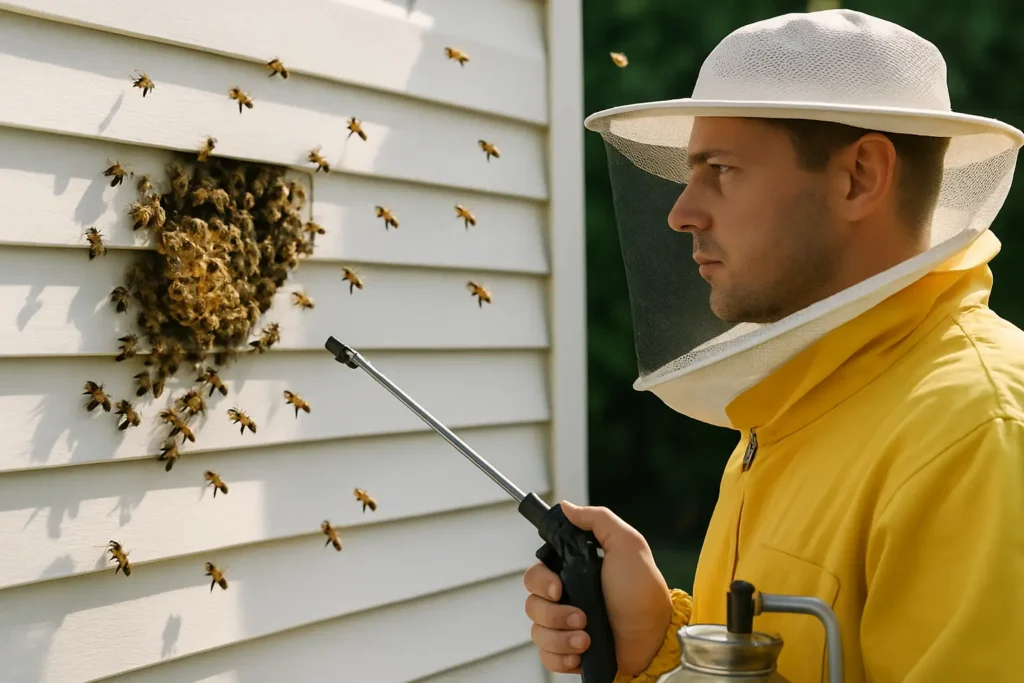
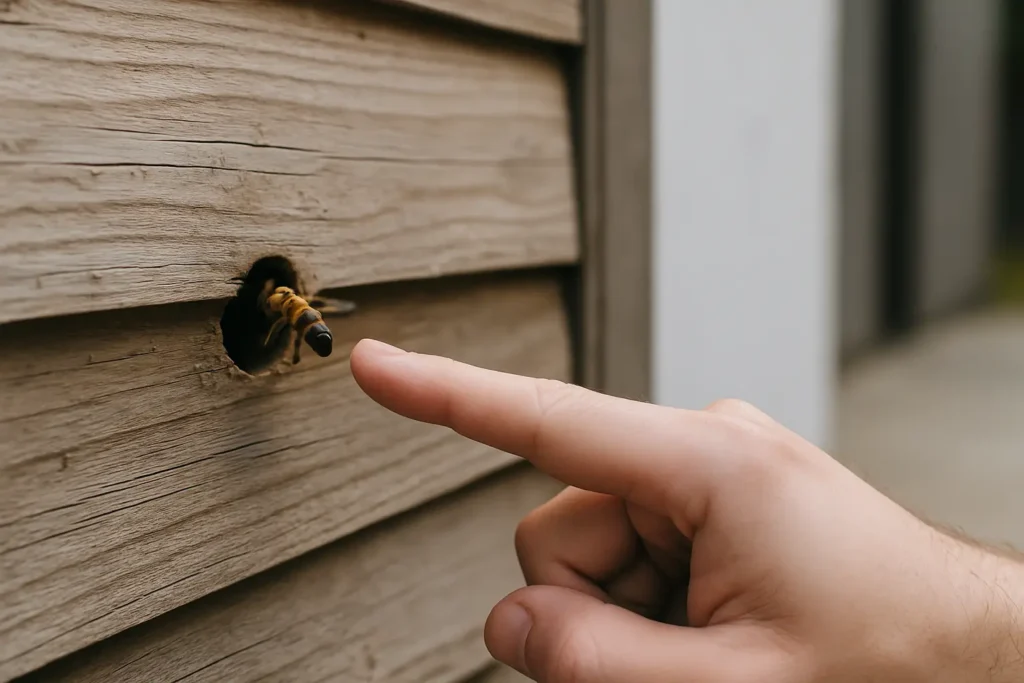
You notice it when the house goes quiet—then you hear it: a steady, low hum coming from the wall, soffit, or eave. Maybe it’s a swarm clustered on a tree, or bees drifting in and out of a small crack near a vent. The first instinct is usually the same: make it stop, fast.
But the method you choose matters more than most people realize. Bees aren’t just another nuisance insect, and a “quick fix” often turns into a lingering problem—odor, stains, re-infestation, or a colony dying inside the structure. If you’re weighing your options, here’s the real answer to why choose humane bee removal: it’s the approach that protects your household, your building, and the bees—without trading today’s stress for next month’s repair bill.
Why choose humane bee removal instead of extermination?
Humane bee removal is about resolving the problem completely while keeping the colony alive. That means live removal when possible, full hive extraction when bees have moved into a structure, relocation to an apiary where the bees can continue normal behaviors, and then closing up the entry points so the same thing doesn’t happen again.
Extermination, by contrast, focuses on killing the bees. It can seem cheaper or faster at first, but it often ignores what’s left behind: comb, honey, pollen, brood, and scent trails that can attract new bees. A dead colony inside a wall can also create a slow, messy chain reaction. The goal isn’t to shame anyone for panicking—if you have kids, tenants, customers, or a severe allergy in the building, urgency is real. Humane removal simply recognizes that you can prioritize safety and still rescue the bees.
The hidden cost of “spray and pray” solutions
A colony living in a wall isn’t just “bees in a hole.” It’s a working system with stored honey and wax comb. When bees are killed in place, that system doesn’t disappear.
Honey can liquefy and seep into drywall, insulation, or ceiling material, leaving stains and odors that don’t fade on their own. Wax comb can collapse and rot. If the colony dies, you may also see secondary pests move in—ants, roaches, or rodents drawn by the smell and the food source.
Even when the immediate buzzing stops, the property can pay the price for months. Humane removal, done correctly, aims to prevent that entire aftermath by removing the comb and hive material, not just the insects.
Safety isn’t negotiable—humane removal can be the safer route
People sometimes assume “humane” means “hands-off.” In professional bee work, it’s the opposite. Safe, humane removal is controlled and methodical. It’s about reducing defensive behavior and preventing chaos.
When a colony is threatened, bees can become more defensive. Smoke, agitation, and improper chemical use can raise the temperature and stress in the hive, pushing bees out into open areas. That’s when stings become more likely, and that’s especially risky for anyone with life-threatening allergies.
A humane approach prioritizes calm removal and proper containment so bees aren’t left scattered around a property. It also helps ensure the job is finished the first time, which reduces repeated exposure to stinging insects.
The ethical case: bees matter, and your choice adds up
Most Southern California homeowners don’t need a lecture on the environment. You just want your home back. Still, it’s hard to ignore what bees contribute: pollination for gardens, landscaping, and food crops across our region. Honey bees aren’t the only pollinators, but they are part of the bigger picture—and local bee populations face ongoing pressures.
Humane removal is a practical way to align your values with your actions without compromising safety. When bees are rescued and relocated to vetted apiaries, they have a chance to keep doing what they do best: forage, pollinate, and build.
It also prevents a common problem with “kill solutions”: a vacant, scent-marked cavity that becomes attractive to new swarms. Saving the bees is one benefit; reducing the odds of repeat infestations is another.
It depends: swarm vs. established hive
Not every bee situation is the same, and the best humane strategy changes depending on what you’re seeing.
A swarm is usually temporary. A cluster of bees may gather on a branch, fence, or the side of a building while scout bees search for a permanent home. In many cases, a swarm can be collected and relocated with minimal disruption. Timing matters, because swarms can move quickly.
An established hive in a wall, attic, chimney, or under a deck is different. If bees are entering and exiting through a consistent hole day after day, and you’ve noticed activity for more than a week or two, there may be comb built inside. Humane removal here typically means a full extraction—removing bees and hive material and addressing the access point.
There are also situations where a “humane” answer isn’t simple. If the colony is deep inside a complicated structure, safe access may require opening a section of drywall or siding. That can feel intimidating, but it’s often the difference between a permanent solution and a cycle of recurring problems.
What “humane bee removal” should include (and what to ask)
The phrase gets used loosely. If you’re hiring help, it’s reasonable to ask what the process actually includes.
A truly humane, long-term approach usually means: the bees are removed alive whenever possible, hive material is addressed rather than ignored, the bees are relocated to an appropriate environment, and the access point is repaired so another swarm doesn’t take the same vacancy.
If a provider plans to “drive them out” with chemicals or repellents without removing comb, that can become a short-lived solution. Bees are persistent, and so is the scent left behind.
You don’t need to know every technical detail, but you do deserve clarity. Ask where the bees go. Ask whether comb removal is included. Ask what prevents re-occupation. Those answers will tell you whether you’re getting rescue and resolution—or just a temporary quiet.
Why entry-point repair is part of humane removal
A lot of homeowners think of bee removal as a one-time event: bees arrive, bees leave, problem solved. But bees are excellent at finding voids and protected cavities. If there’s a gap at an eave, a loose vent screen, a crack near the roofline, or an opening around plumbing or electrical penetrations, another swarm can locate it.
Humane removal respects the bees, but it also respects your home. Closing entry points and reinforcing vulnerable areas restores your space without turning your property into a revolving door for future colonies.
This is where “permanent” solutions live. It’s not just what you remove—it’s what you prevent.
Commercial properties: humane removal protects operations, not just feelings
For property managers, the stakes can be higher. A hive near an entryway, loading zone, or outdoor dining area creates a liability concern. Tenants want fast action, and nobody wants a scene.
Humane removal supports business needs because it reduces repeat incidents. When bees are relocated and the access points are addressed, you’re less likely to get the same emergency call two weeks later. That stability matters for tenant relationships and for maintaining safe common areas.
It also helps with public perception. Customers and tenants increasingly notice how companies treat wildlife. Choosing a humane option communicates responsibility without making it a marketing stunt.
When speed matters: allergies, kids, and high-traffic areas
There are moments when you need help immediately—especially if someone in the home has a known severe allergy, or if bees are near a nursery window, a pool area, or a busy walkway.
Humane removal doesn’t mean delaying action. It means responding quickly with the right plan, reducing risk while avoiding methods that create secondary problems inside the structure. The calmest removals are often the safest removals.
If you’re not sure what you’re dealing with—honey bees vs. yellow jackets vs. another stinging insect—don’t experiment. A misidentified nest can lead to the wrong approach and a worse outcome.
A Southern California reality: our climate makes “temporary fixes” fail
In our region, mild weather can extend bee activity. A colony that might struggle in harsher climates can continue building and storing resources here. That means a hive in a wall can grow quickly, and a “wait and see” approach can turn a small issue into a bigger extraction.
It also means scent trails linger and swarms remain active for longer stretches of the year. Humane removal paired with sealing and repair is well-suited to this reality because it treats the structure as part of the solution, not just the backdrop.
Choosing a provider who rescues bees and restores your home
If humane removal is your goal, choose someone who treats it as both a rescue and a repair project. That’s the difference between “bees are gone today” and “peace and home restored” for the long term.
If you’re in Los Angeles, Orange, Riverside, San Bernardino, or Ventura counties and want a service built around live removal, full hive extraction, relocation to vetted apiaries, and entry-point repair, Eli the Bee Guy is a dedicated option that keeps safety and ethics in the same plan.
Bees belong somewhere—just not in your walls. The best outcome is one where your household gets its space back, and the colony gets a real chance to thrive somewhere it won’t collide with daily life.