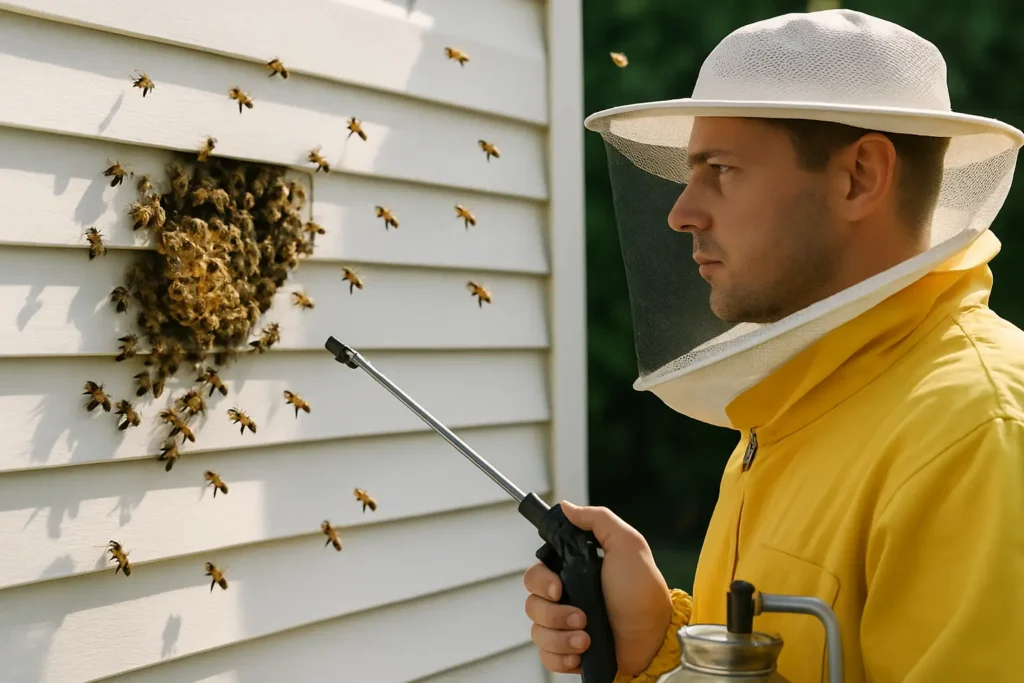
A low hum in the wall isn’t background noise—it’s a moving, living colony building comb behind your drywall. A swarm settling on a tree branch might look calm, but the next step can be a hive in your attic, eaves, or irrigation box. When bees choose a property, it can feel urgent and personal: you want your home safe again, and you don’t want the bees harmed.
That’s exactly where professional bee relocation services matter. Not because homeowners can’t handle a situation with good intentions, but because bees are both delicate (they can be killed by the wrong approach) and high-stakes (a disturbed colony can defend itself quickly). A humane relocation done correctly protects people, preserves pollinators, and prevents the same problem from repeating.
What “professional bee relocation services” really mean
“Relocation” shouldn’t be a euphemism for “spray and remove.” True relocation is a process: identifying the bees, removing them live when possible, collecting comb and brood, securing the queen, and placing the colony in a vetted apiary or managed setting where it can keep functioning as a colony.
A real professional also handles what most people don’t see: the scent trail and leftover nest material that attracts new bees later. If the job ends when the buzzing stops, the property often becomes a repeat address.
In Southern California—Los Angeles, Orange, Riverside, San Bernardino, and Ventura counties—warm weather stretches the season. Colonies can grow fast, and swarms can show up when you least expect them. That’s why the “full picture” approach matters: safe removal, ethical relocation, and repair work that restores peace and home.
Swarm vs. established hive: why the difference changes everything
A swarm is usually a temporary stop. You might see a cluster on a tree limb, fence post, or the side of a building. Swarming bees are often less defensive because they’re focused on protecting the queen and finding a new home. That said, a swarm can move into a wall void or attic the same day.
An established hive is different. Once bees start building comb inside a structure, they’ve invested resources and they will defend that space. More importantly, comb and honey inside a wall create ongoing issues: odors, staining, and pests (like ants) after the bees are gone if the material isn’t properly removed.
Professionals treat these two scenarios differently. A swarm may be captured and relocated with minimal disturbance. A hive in a wall usually requires a careful extraction so the colony can be removed alive and the structure can be put back in a way that discourages re-occupation.
Why DIY removal often turns into a bigger problem
Most DIY attempts fail for one of three reasons: the bees aren’t actually gone, the colony is harmed in place, or the homeowner gets hurt.
First, bees are excellent at finding alternative exits and rebuilding. Blocking an entrance hole without removing the hive can push bees deeper into the structure, or force them to find a new path into living spaces. Second, using chemicals may kill bees but leave comb and honey behind, which can melt, ferment, or attract insects. Third, disturbed bees can defend aggressively, especially if the queen or brood is threatened.
There’s also a practical reality: getting the queen is the difference between a successful relocation and a lingering problem. If the queen isn’t captured and relocated, the colony may not stabilize—or you may only remove the “front line” while the core remains.
What a humane, professional relocation typically includes
Every situation is different, but a service that’s designed to be both effective and ethical usually includes a few essentials.
It starts with a proper assessment: where the bees are, how they’re entering, how long they’ve likely been there, and what’s required to access the colony without creating unnecessary damage. In many cases, this is where homeowners get clarity—whether it’s truly honey bees, or something else.
Then comes live removal. For a swarm, that might look like a controlled capture into equipment designed to protect the colony. For a structural hive, it may involve opening an access point, gently removing comb, securing brood so it stays intact, and ensuring the queen is moved with the colony.
Finally, there’s the part that prevents repeat calls: cleanup and closure. Removing the materials that attract future bees, sealing and repairing entry points, and advising on property-specific risk areas (like gaps under eaves, roofline voids, or utility penetrations) is what turns a one-time emergency into a lasting solution.
Safety isn’t optional—especially with allergies and high-traffic properties
If someone in the home has a history of severe reactions, you don’t want to “see what happens.” Stings can be life-threatening, and even a normally calm colony may react to vibrations, lawn equipment, or curious pets.
Commercial properties face a different pressure: foot traffic and liability. A hive near a loading dock, patio, school walkway, or landscaped entrance can’t be treated casually. The right approach is controlled, documented, and built around minimizing exposure for tenants, customers, and staff.
Professionals also understand timing. Heat, wind, and daylight affect bee behavior. So does the condition of the colony. Knowing when to remove, how to stage the work, and how to keep bees calm isn’t guesswork—it’s experience.
The trade-offs: relocation isn’t always a “simple move”
Ethical bee work is the right goal, but it’s fair to acknowledge trade-offs.
Sometimes the colony is deeply embedded in a structure, and accessing it requires opening drywall, soffits, or siding. A true hive extraction can be more involved than a quick spray-and-go, because it prioritizes saving the colony and removing the attractants.
It also depends on the type of insect. Homeowners often call everything a “bee,” but yellowjackets and paper wasps behave differently and require different handling. Professional assessment prevents missteps—especially dangerous ones.
And sometimes, the property’s condition matters. If there are multiple gaps and voids, bees may have more than one entrance, or they may simply return to the same area even after relocation. That’s why repair and prevention are part of responsible service, not an add-on.
How to choose a provider you can trust
The words “bee removal” can mean very different things from one company to another. If humane treatment matters to you—and if you want the problem solved for good—ask a few direct questions.
Ask whether the bees are removed live when possible, and where the colony is relocated. Ask whether comb and brood are removed during a structural extraction. Ask what happens after removal: do they repair or seal entry points, and do they address conditions that attract re-occupation?
You also want someone who explains the plan clearly. A trustworthy provider can tell you what they believe is happening, why, and what options you have if access is difficult. They won’t pressure you into a quick decision that leaves you with a hidden mess inside the wall.
In Southern California, many homeowners and property managers choose specialists like Eli the Bee Guy because the focus stays consistent: bees rescued, people protected, and the property restored in a way that supports long-term peace.
What you can do right now (before help arrives)
If you’ve found a swarm or hive, a few choices make a big difference.
Give the area space. Keep kids and pets away, and don’t run lawn equipment near the bees. Avoid spraying water or chemicals—both can agitate bees and complicate humane removal.
If the bees are entering a wall or roofline, don’t plug the hole. It’s a common instinct, but it can force bees into the structure and create new entry points indoors.
And if you need to move around the area, move calmly and predictably. Fast movements, vibrations, and loud noises can put bees on alert.
Peace and home restored means planning for the next season
Relocation is the rescue. Prevention is what keeps your property from becoming the next stop.
Bees look for protected cavities with stable temperatures and small entrances. In our region, that often means eaves, attic vents, gaps where stucco meets roofing, and openings around plumbing or cable runs. After a professional removal, sealing those access points and keeping up with basic exterior maintenance is what helps the fix last.
If you’ve had bees once, it doesn’t mean your home is “bee-prone”—it just means a scout found a good option. With the right repairs and a watchful eye during swarm season, you can make sure the next scout keeps moving.
When you’re dealing with bees, you’re not choosing between “their safety” and “your safety.” Done right, professional relocation protects both—and lets you get back to enjoying your space without tension, fear, or a constant hum in the background.