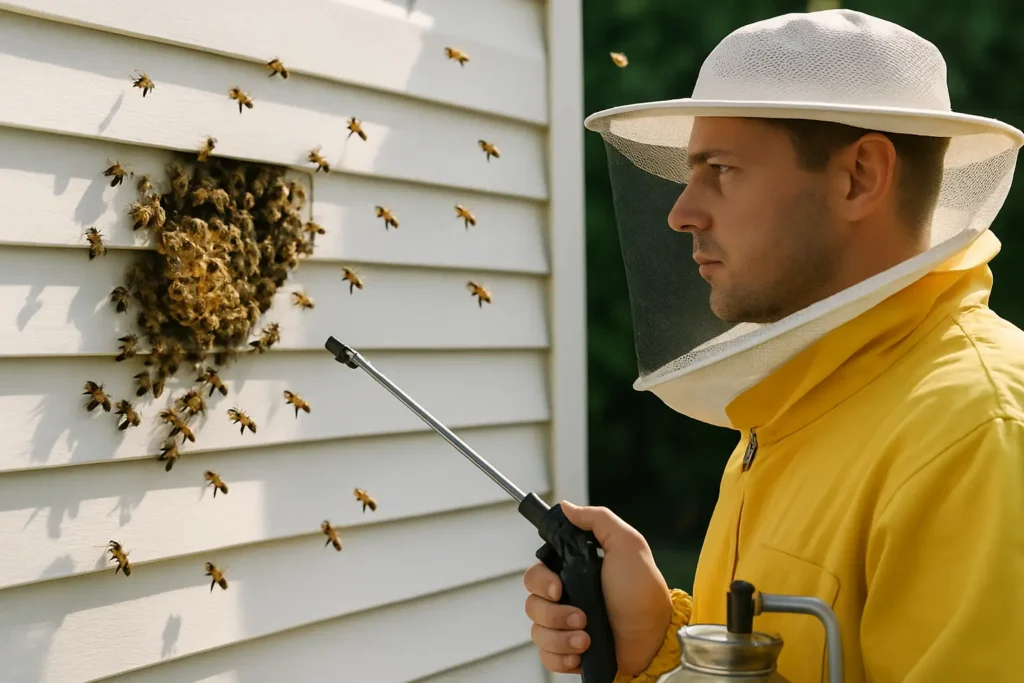
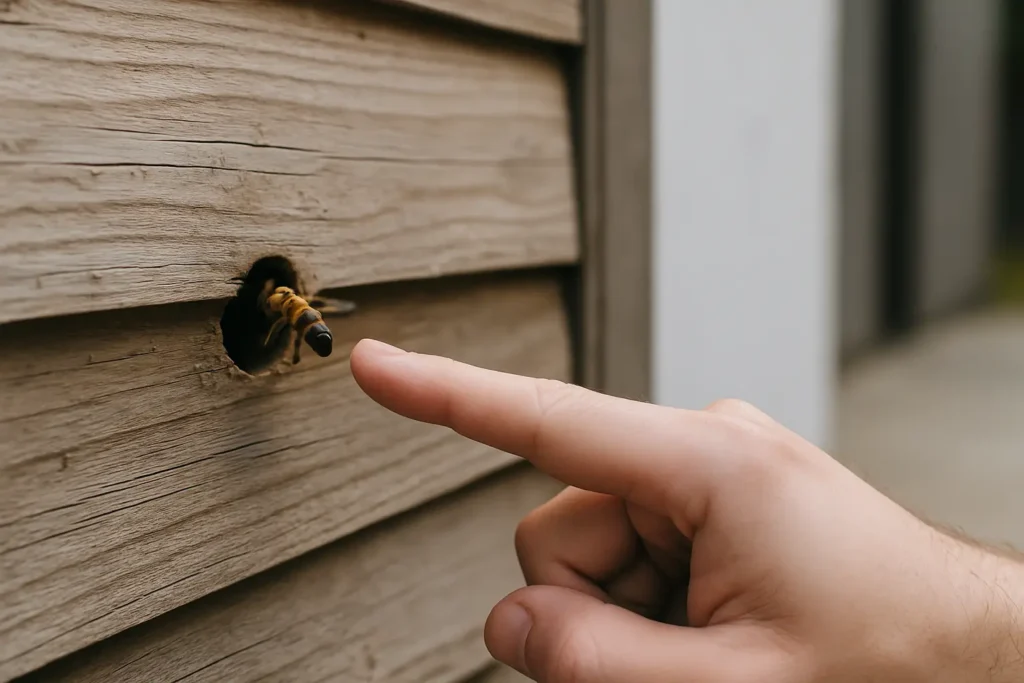
You hear it before you see it: a steady, living hum inside a wall, above a patio cover, or tucked into an eave you’ve walked past a hundred times. At first it’s just “bees near the house.” Then it’s a line of foragers at the faucet, a cluster around the kids’ playset, or a tenant calling because someone got stung. That’s the moment most property owners face a real decision—one that affects both the people who live or work on-site and the bees themselves.
“Ethical bee hive extraction” isn’t a marketing phrase. It’s a standard of care. It means removing a colony from a structure in a way that prioritizes human safety, avoids unnecessary harm to the bees, and solves the problem for good—so your home is restored to peace and the bees have a chance to keep doing what bees do.
What ethical bee hive extraction actually is
Ethical bee hive extraction is the careful removal of an established honey bee colony—bees, brood (developing bees), comb, honey stores, and the queen—from a building or other human structure, with the goal of relocating the living colony to an appropriate apiary or managed setting.
That definition matters because a “spray and walk away” approach doesn’t count. Neither does trapping for a few days and hoping the bees disappear. A true extraction addresses the whole colony and the environment that allowed it to move in.
It also recognizes a practical truth: honey bees in a wall cavity are not living “near” your home. They are living in it. Their comb can hold significant honey and pollen. Left behind, that material can melt, ferment, soak insulation, stain drywall, and keep attracting pests long after the buzzing stops.
Why “just move them” is rarely simple
Homeowners often ask, “Can’t you just relocate the bees?” Sometimes, yes—when it’s a swarm.
A swarm is a temporary cluster of bees that has split from an existing hive and is searching for a new home. Swarms typically have no built comb and no stored honey. In many cases, they can be collected quickly and safely because there’s nothing embedded inside a structure.
A hive is different. Once bees establish comb inside a wall, soffit, or roofline, the colony becomes anchored. Brood is protected in the comb. Honey stores build up. The bees defend that investment.
Ethical bee hive extraction accepts that reality. It focuses on removing the colony and the comb—so you’re not stuck with odors, leaks, or a second round of bees moving into the same void.
The ethical part: what humane looks like in practice
“Ethical” doesn’t mean “hands-off.” It means deliberate choices that reduce harm and avoid shortcuts.
First, it means avoiding poisons and pesticides for honey bee situations where live removal is feasible. Chemical treatments can kill bees quickly, but they can also create lingering contamination inside the structure and leave behind comb and honey. For many properties, that creates bigger problems than the bees did.
Second, it means working to preserve the colony structure. A healthy colony is more than adult bees. The queen, brood, and comb are the engine of survival. When an extraction is done with care, comb containing brood can often be secured into frames so the colony can rebuild in a standard hive box rather than starting from nothing.
Third, it means choosing relocation settings that support natural bee behaviors. Bees need room to forage, space to expand, and management that respects their role as livestock under human stewardship—not pests to be eliminated.
Finally, ethical also means honest expectations. Not every removal is low-impact. If comb is attached deep inside a wall, opening the surface may be necessary. Humane removal still involves construction work; it just avoids harm that isn’t necessary.
What the extraction process typically involves
Every property is different, but ethical bee hive extraction generally follows a careful sequence.
Inspection and a plan you can understand
A professional should start by locating entry points, listening for the densest activity, and identifying what kind of bees you’re dealing with. In Southern California, that often includes honey bees, and sometimes more defensive colonies depending on genetics and stressors.
The inspection should also consider what’s behind the surface—wiring, plumbing, stucco, siding, or tile. The best plan is the one that removes the hive completely while minimizing unnecessary damage.
Controlled access, not demolition
Ethical extraction aims for “surgical” access. That may mean removing a section of soffit, opening drywall between studs, or carefully lifting a portion of fascia. The goal is to expose the comb and colony without turning the job into a remodel.
A reputable removal should also prioritize safety controls: protective equipment, calm handling, and a work zone that keeps residents, pets, and bystanders away from flight paths.
Removing bees, comb, and the queen
Once the comb is accessible, the work becomes methodical. Bees are gently removed and contained. Comb is taken out piece by piece. When brood comb is intact enough to salvage, it can be secured so the colony has a bridge to recovery. Locating the queen is a key moment; without her, the colony may struggle to reorganize.
Cleaning the cavity (this is where “ethical” meets “effective”)
After the comb is removed, the cavity needs attention. Residual wax and honey odors can attract ants, roaches, moths, and future swarms.
Cleaning doesn’t have to mean harsh chemicals. It can be careful scraping, removal of contaminated insulation, and practical measures that reduce lingering scent. The point is to leave your structure in a condition that doesn’t invite the same problem again.
Sealing and entry-point repairs
Ethical bee hive extraction isn’t complete until the home is protected. Bees are persistent, and other colonies can find the same gaps.
Entry-point repairs might include sealing cracks, reinforcing vulnerable joints, screening vents appropriately, or restoring the opened area so it’s weather-tight. This is where many “cheap” removals fail: the bees are gone, but the invitation remains.
Trade-offs: live extraction vs. faster methods
Homeowners dealing with a buzzing wall in August don’t always want nuance—they want it handled. Still, it helps to understand the trade-offs.
Live extraction is typically more labor-intensive than chemical kill treatments. It takes time to open and remove comb, manage the bees, and restore the area. It can also be more expensive up front.
But it’s often the most permanent path. When comb and honey are left behind, you may pay later in cleanup, odor control, drywall repair, pest issues, and repeat infestations.
It also depends on access. A colony deep inside a complicated roofline may require more structural work to reach safely. Ethical practice doesn’t pretend otherwise; it sets clear expectations before anything is opened.
When you should call right away (and what to do while you wait)
If anyone on the property has a history of severe allergic reactions, treat any bee issue as time-sensitive. The same goes for high-traffic commercial entrances, schools, multifamily walkways, or areas where people can’t reasonably avoid the bees.
While you’re waiting for help, keep doors and windows closed near the activity, keep pets inside, and avoid vibrations near the hive area (loud tools, hammering, pressure washing). Don’t spray anything into a hole in the wall; that can agitate the colony and drive bees into interior spaces.
If the bees are in a tree as a swarm and not entering a structure, give them space. Swarms are often temporary and can be collected more easily when they’re not disturbed.
How to spot a contractor who’s truly ethical
“Humane” is easy to say. It’s harder to prove. You can usually tell by the details.
An ethical professional talks about removing the comb, not just the bees. They can explain where the bees will go and why that location supports the colony. They’re cautious about safety and realistic about access points and repairs.
They also don’t minimize your concerns. Wanting bees treated with respect and wanting your property safe are not competing values. The right approach protects both.
If you’re looking for a service that prioritizes live removals, responsible relocation, and entry-point repairs, Eli the Bee Guy focuses on exactly that kind of sustainable, humane bee management across Southern California.
A few ethical “depends” scenarios homeowners run into
Sometimes the question isn’t whether to remove the bees—it’s how.
If a colony has been in place for a long time, there may be significant honey stores. In warm weather, honey can drip when comb is disturbed. A careful extraction plan accounts for that, with containment and cleanup so you don’t end up with stained ceilings or sticky wall cavities.
If the hive is near electrical equipment, the safest approach may require coordination and extra precautions. Ethical work includes protecting the home and the crew, not taking risks to save time.
If the bees are in a location that can’t be opened without major construction, you may need to weigh timing and budget. In some cases, waiting for a planned remodel can reduce cost and disruption—if the bees aren’t posing an immediate threat.
The goal: peace and home restored, bees rescued
Ethical bee hive extraction is one of those rare services where the “right” choice is both kinder and more durable. It treats bees as living pollinators worth saving, and it treats your home like the place your family should feel safe.
If you’re standing in your yard listening to that hum and wondering what happens next, choose the path that solves the whole problem—carefully, completely, and with respect for the life inside your walls. The calm you get afterward is real, and so is the difference you make for the bees.