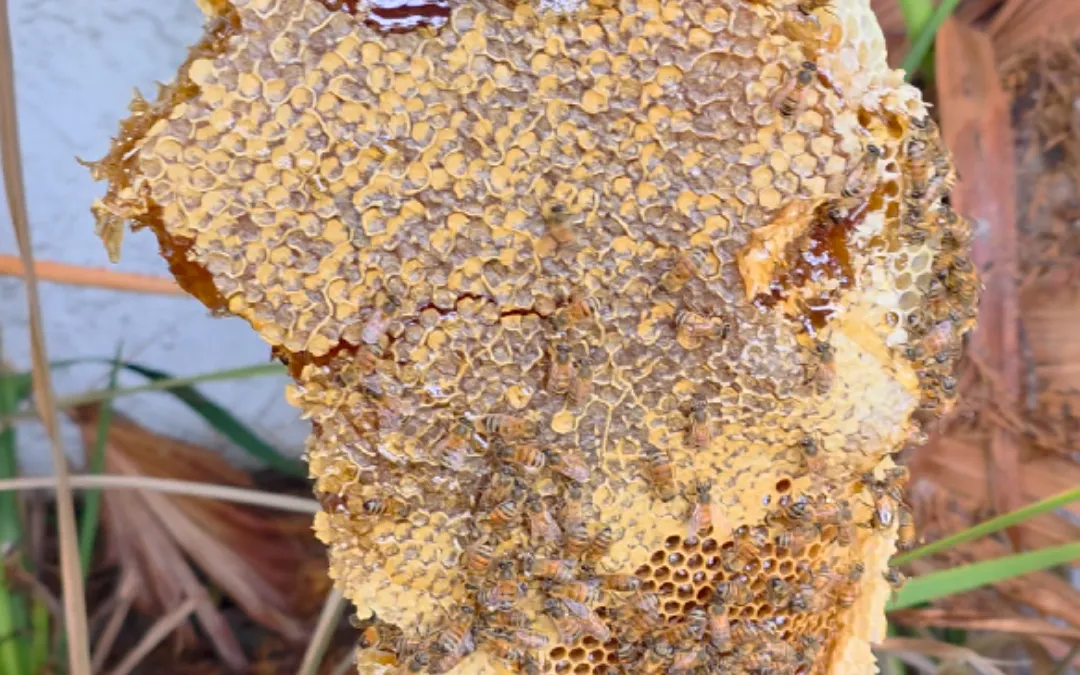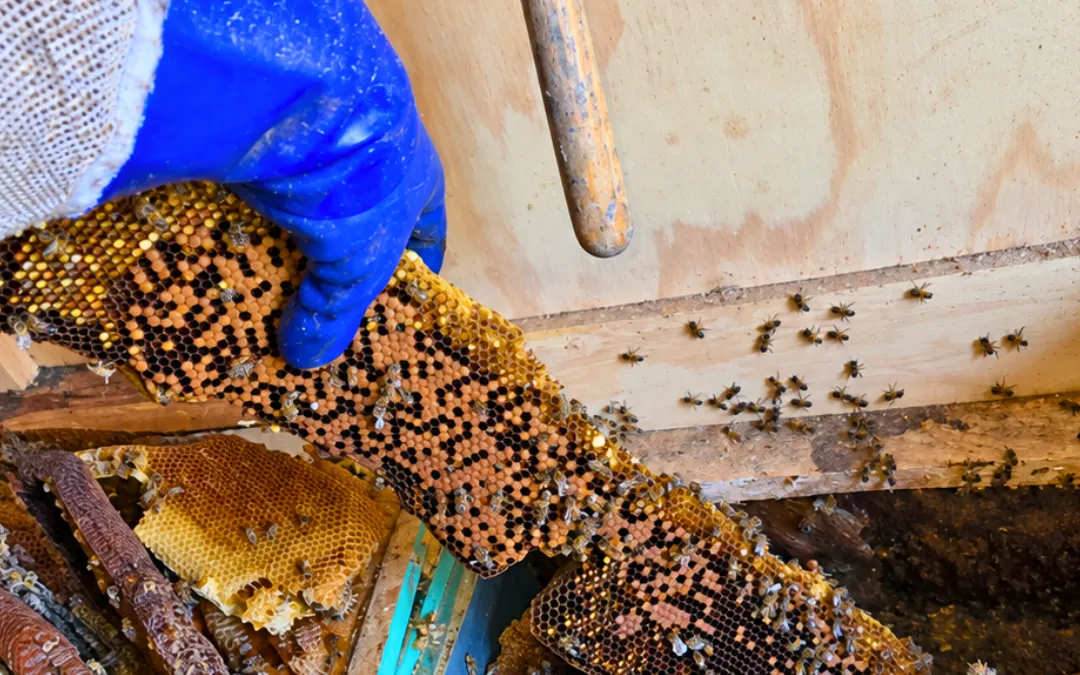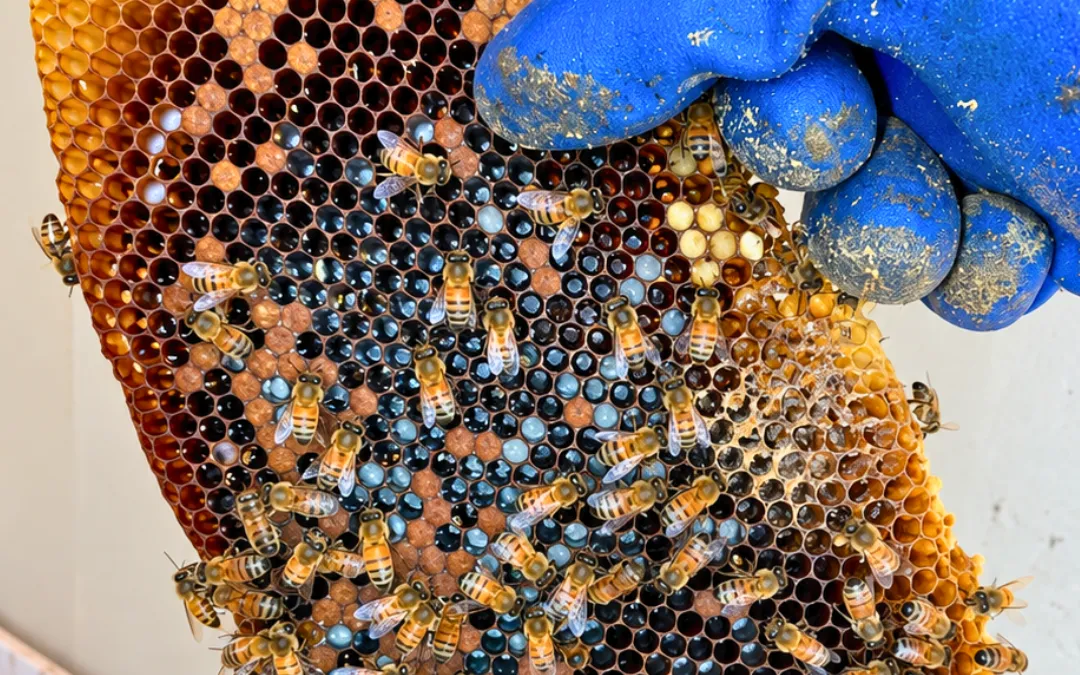
When I cut a hive out of a wall, the middle of the comb is usually full of brood: eggs, curled white larvae, and cells sealed over with wax. People ask me how long it takes for all of those to become bees. It depends on which kind of bee it's going to be.
Short answer: A honey bee goes through four stages: egg, larva, pupa and adult. From egg to adult takes about 16 days for a queen, 21 days for a worker and 24 days for a drone. The egg hatches after three days for all three. The difference comes in the larva and pupa stages.
How long does it take for a bee to be born?
About 21 days for a worker, 24 for a drone and 16 for a queen. The Extension Bee Health project gives those numbers and adds that they vary by race and location, so treat them as typical rather than exact to the hour.
"Born" isn't quite the right word for a bee. A new adult chews her way out of a capped wax cell, which beekeepers call emerging. Everything before that happens inside the cell.
What are the stages of the bee life cycle?
Every honey bee goes through the same four stages:
- Egg. The queen lays each egg in its own cell. The Bee Health project says the egg hatches after three days into the larva, or feeding stage.
- Larva. The feeding stage. The cell is still open, and nurse bees keep the larva fed while it grows.
- Pupa. Once the larva is done growing, the cell is capped with wax, and Penn State Extension notes the larva spins a cocoon and pupates. Inside, it changes into an adult bee.
- Adult. The finished bee chews through the wax cap and emerges. A new worker starts on her first job right away, which I go through in what a worker bee does.
How many days is each stage for a queen, worker and drone?
The egg stage is the same for everyone. The larva and pupa stages are where the three types split apart. These figures come from UF/IFAS Extension's European honey bee profile:
| Bee | Egg | Larva | Pupa | Egg to adult |
|---|---|---|---|---|
| Queen | 3 days | 5.5 days | 8 days | 15 to 16 days |
| Worker | 3 days | 6 days | 12 days | 21 days |
| Drone | 3 days | 6.5 days | 14.5 days | 24 days |
So the queen is the fastest, mostly because her pupa stage is so short. The drone is the slowest, and his pupa stage alone is almost as long as a queen's entire development. I cover what he does once he's out in what a drone bee does.
Why does a queen bee develop faster than a worker?
Diet is the big difference. Queen larvae are fed royal jelly for their whole development, while worker larvae are switched to a different diet partway through.
According to Penn State Extension, every larva gets royal jelly for the first three days after hatching. Larvae headed to be workers then switch to "worker jelly," a mix of royal jelly, pollen and nectar. Larvae chosen as queens keep getting royal jelly. Penn State says the queen's cell is capped about nine days after the egg is laid, and she emerges at about 16 days, the shortest development of any caste.
Timing matters here. The Bee Health project notes that a larva must begin its royal jelly diet within a few hours of hatching to develop into a queen. If you want the details on what that food is, read what royal jelly is.
What does brood look like in a hive?
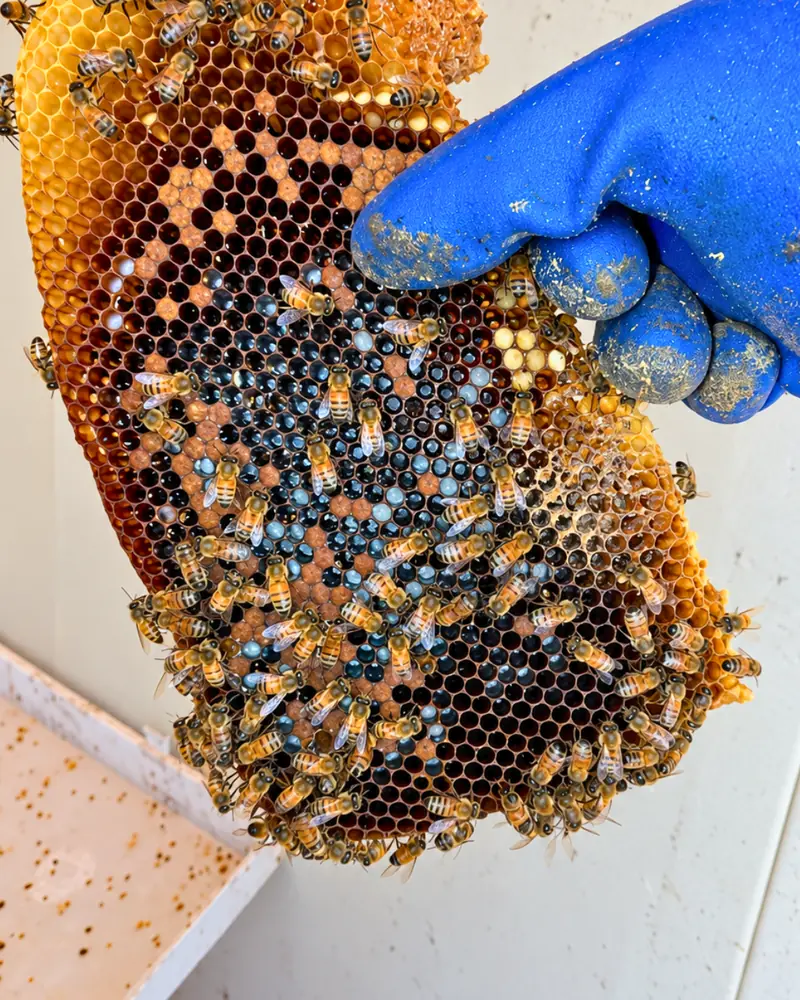
Brood is easy to spot once you know what you're looking at. Here's what I see when I open up a colony:
- Eggs look like tiny grains of white rice standing in the bottom of a cell. You usually need good light to see them.
- Larvae are glossy white and curled into a C shape, sitting in a little bit of food at the bottom of an open cell.
- Capped worker brood is a flat, tan or brown wax cap over the cell.
- Capped drone brood sits up higher, with a domed cap.
- Queen cells look nothing like the rest. They're large, peanut-shaped cells that usually hang off the edge or bottom of the comb.
Why does the bee life cycle matter if bees are in your wall?
Because it tells you how fast a colony can grow. A queen in a healthy colony can lay up to about 1,500 eggs a day, according to the Bee Health project, and each of those eggs is about three weeks away from being a working adult. A small swarm that moved into your wall a month ago can already have its first new generation of workers out and flying.
It's also why brood comb has to come out with the bees. If a colony is sprayed, every egg, larva and pupa in those cells dies and is left to rot in the wall. On a live structural hive removal, I cut out the brood comb along with the rest and move it into a bee box with the adult bees, so the young can finish developing and the colony can keep going with a beekeeper. I've pulled brood comb out of a wall in Los Angeles this way.
Have a hive that keeps growing?
The sooner a colony comes out, the less comb there is to remove. Call or text a photo to (626) 487-6052 for a free inspection. I answer calls and texts 7 days a week and do removals Monday through Saturday across Orange County, the Inland Empire and Los Angeles County.
Frequently asked questions
How long does it take for a worker bee to be born?
How long does it take a queen bee to develop?
How long does it take a drone bee to develop?
How long does it take a bee egg to hatch?
What decides whether a larva becomes a queen or a worker?
Like these guides? Add Eli the Bee Guy as a preferred source on Google to see more of them in your search results.