What you will learn
- The parts of a beehive from bottom to top
- The three tools you will use every time
- What to wear
Step by step
The steps are written in simple words. Tap a word with a dotted line under it to see what it means. Tap “Go deeper” under a step for the numbers and reasons behind it. Every step ends with one quick question, and the lesson quiz is at the bottom.
-
Start with the hive stand and bottom board
The hive sits on a stand that keeps it off the wet ground. The is the floor of the hive. The gap at the front of the bottom board is the door the bees use.
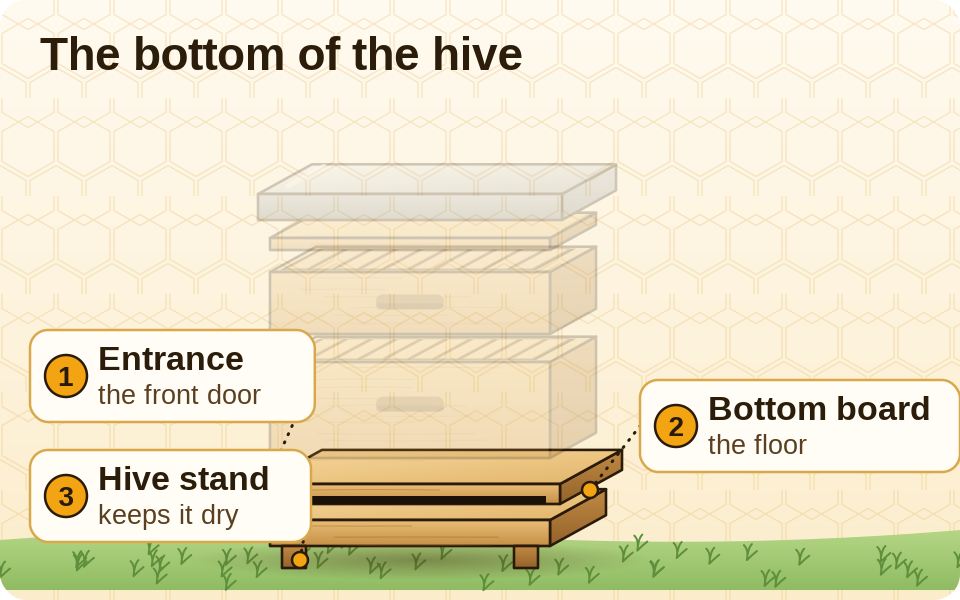
Picture 1. The bottom of the hive: stand, bottom board and entrance. Check yourself: step 1
What does the hive stand do?
-
Add the hive bodies
Hive bodies are the wooden boxes that stack on the bottom board. Bees raise their babies and store their food inside them. Boxes come in different heights, and taller boxes are heavier to lift when they are full.
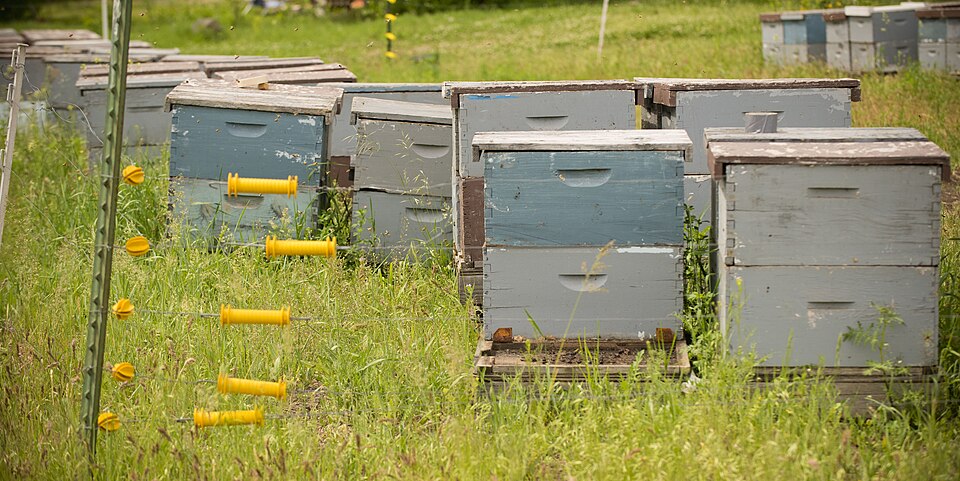
Hive boxes stacked on their stands. Photo: USDA NRCS, Public domain, Wikimedia Commons 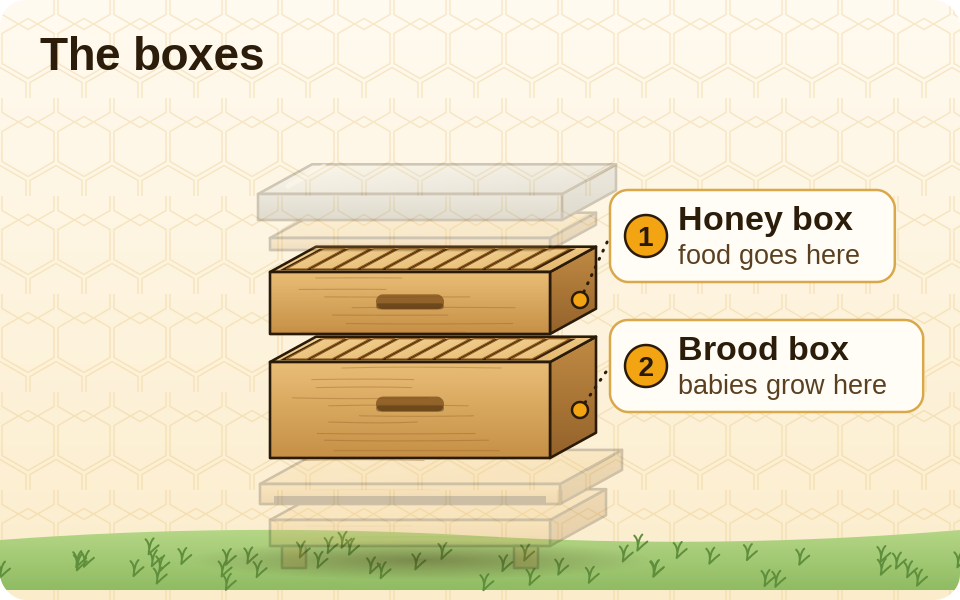
Picture 2. The boxes stack on the bottom board. Go deeper
Boxes come in full-depth, medium and shallow sizes. Boxes placed above the for honey are called supers. Some beekeepers add a , a grid that workers can pass through but the queen cannot, to keep eggs out of the honey boxes. It is optional.
Check yourself: step 2
What happens inside the hive bodies?
-
Hang the frames
Frames hang inside each box like files in a drawer. Bees build their wax comb on the frames. Because each frame lifts out, you can look inside the hive without breaking the comb.
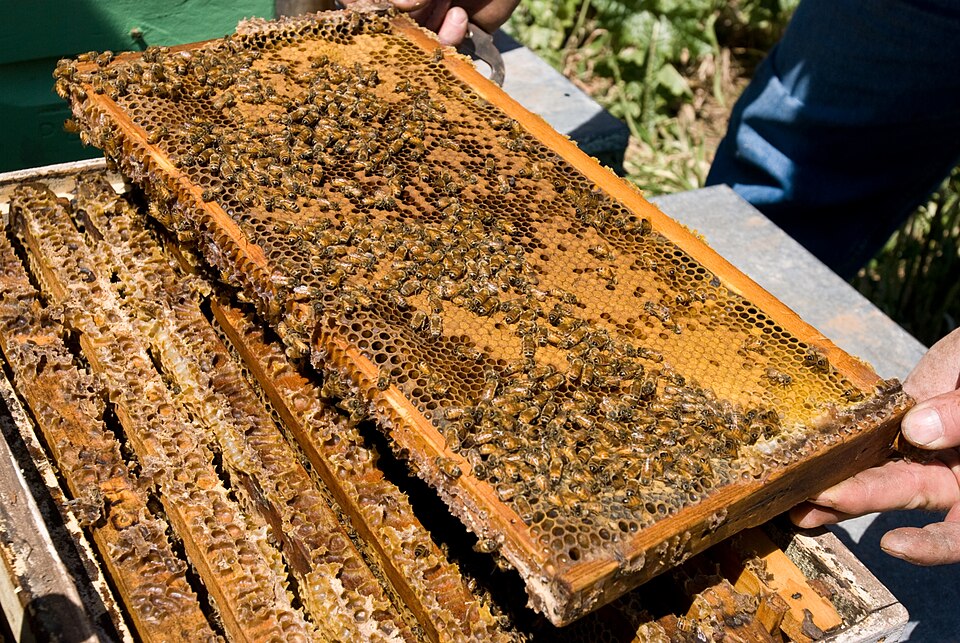
A frame lifted out of the box. The bees have covered it with comb. Photo: Nick Pitsas, CSIRO, CC BY 3.0, Wikimedia Commons 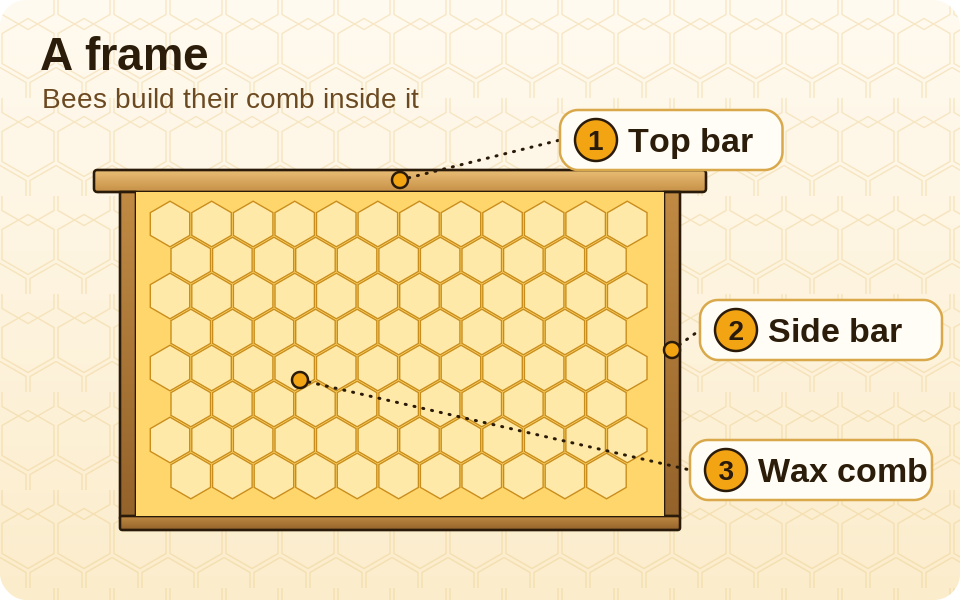
Picture 3. A frame. Bees build their wax comb inside it. Go deeper
Modern hives work because of , a gap of about 1/4 to 3/8 of an inch. Bees leave a gap that size open as a walkway. They fill smaller gaps with and build comb in larger ones. Frames are spaced so the bees leave them free to lift out. Most frames start with a sheet of , which is stamped with the pattern of cell bases.
Check yourself: step 3
What do bees build on the frames?
-
Put on the covers
An sits on the top box. An goes over it like a roof and keeps out the rain.
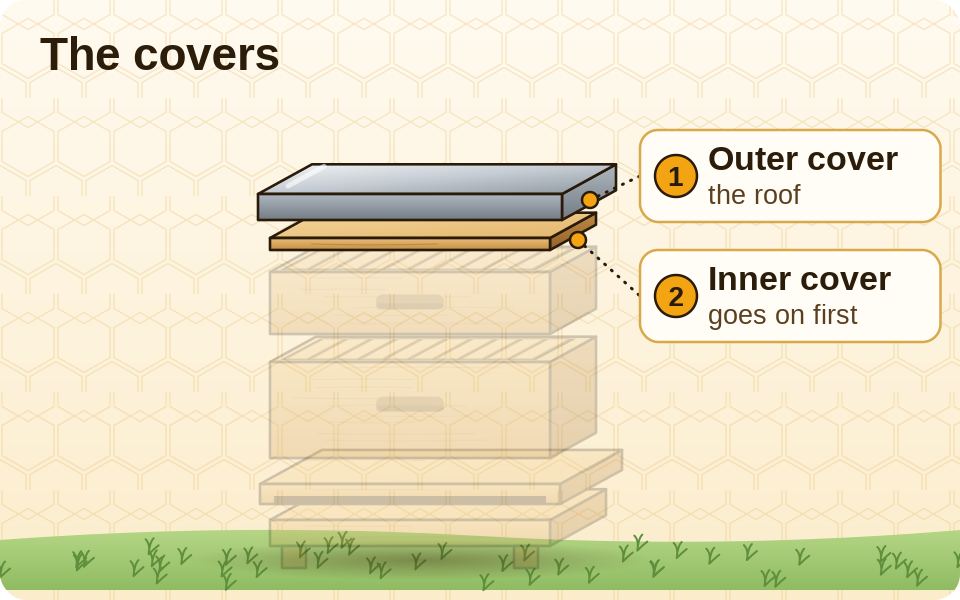
Picture 4. Two covers close the top. Check yourself: step 4
Which cover goes on like a roof and keeps out the rain?
-
Get a smoker
A is a small metal can that burns fuel and puffs cool smoke. A few puffs at the entrance and across the top of the frames keep bees calmer while you work. The smoke must be cool. Sparks and flames can hurt bees.
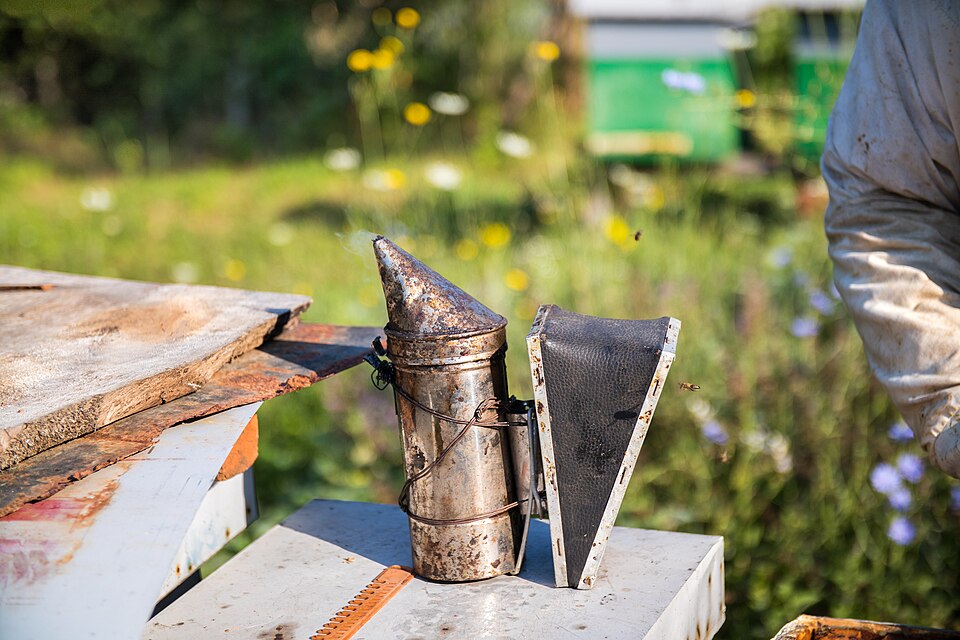
A smoker resting on a hive. Photo: Ivan Radic, CC BY 2.0, Wikimedia Commons 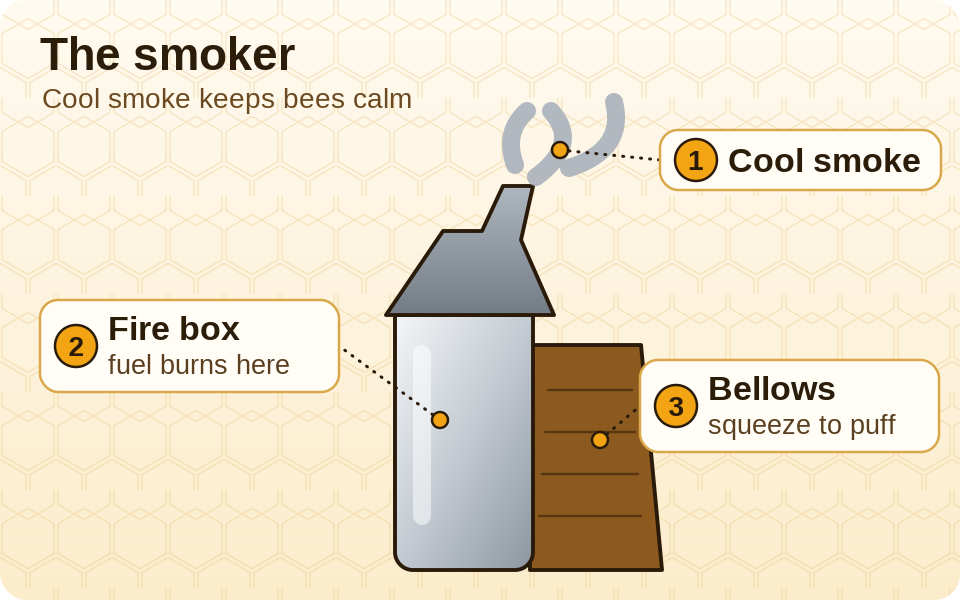
Picture 5. The parts of a smoker. Go deeper
The 4 by 7 inch smoker is the most widely used size. If the smoke gets hot, a handful of green grass or damp leaves on top of the fuel cools it.
Check yourself: step 5
What kind of smoke should a smoker make?
-
Get a hive tool
Bees glue the parts of their hive together. A is a flat metal bar you use to pry the boxes apart and lift the frames.
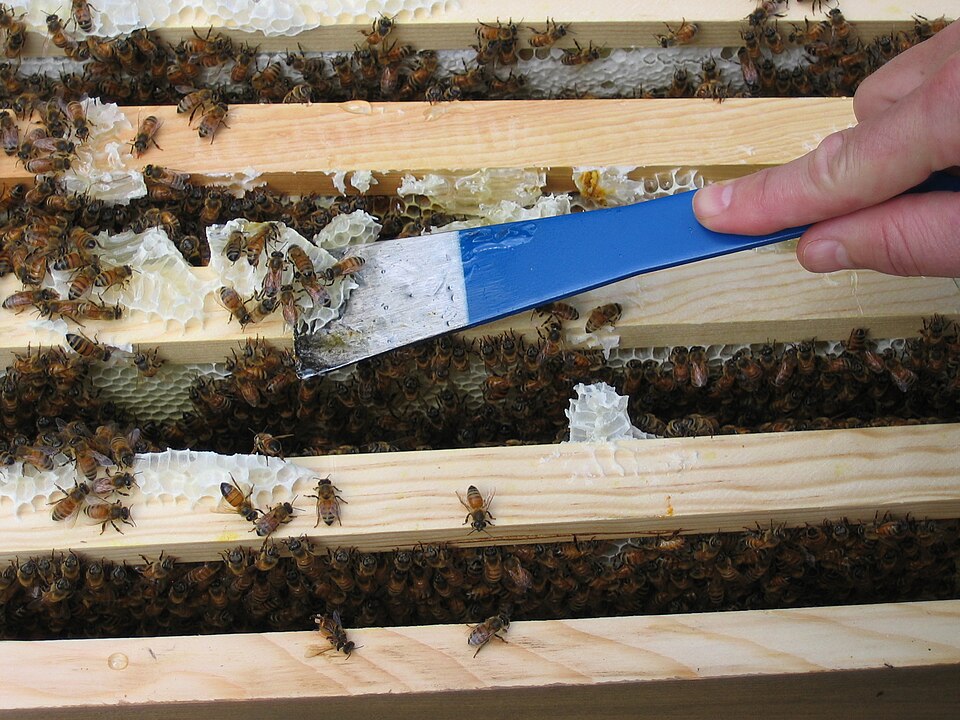
A hive tool scraping the tops of the frames. Photo: Joe DeLuca, CC BY 2.0, Wikimedia Commons 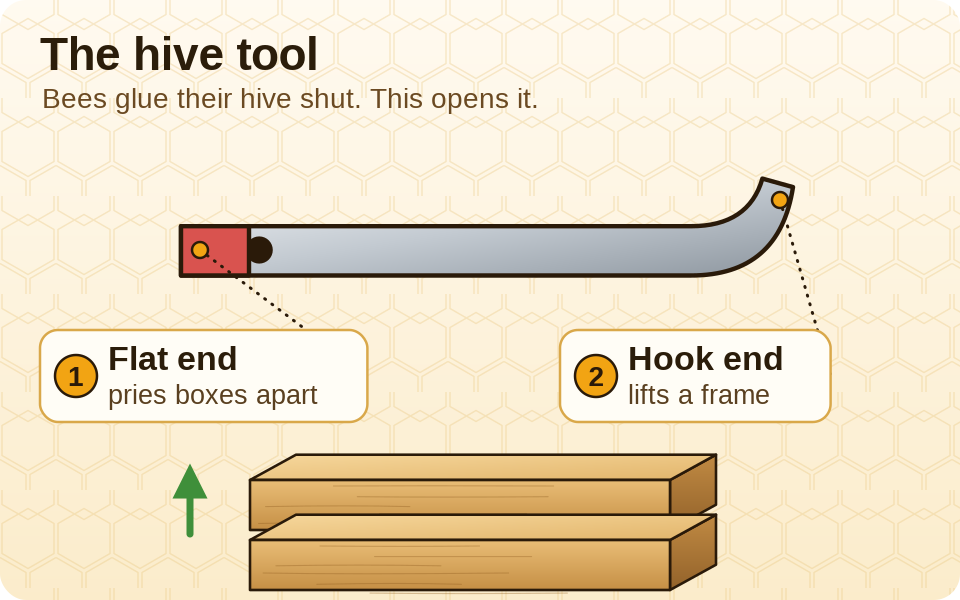
Picture 6. A hive tool pries boxes apart and lifts frames. Go deeper
The glue is propolis, a sticky material bees make from plant resin. They use it to seal cracks and fasten down anything loose.
Check yourself: step 6
What is a hive tool for?
-
Wear a veil
A veil keeps bees away from your face and eyes. Many beginners also wear a full and gloves. Light colors and smooth fabric are the usual choice.
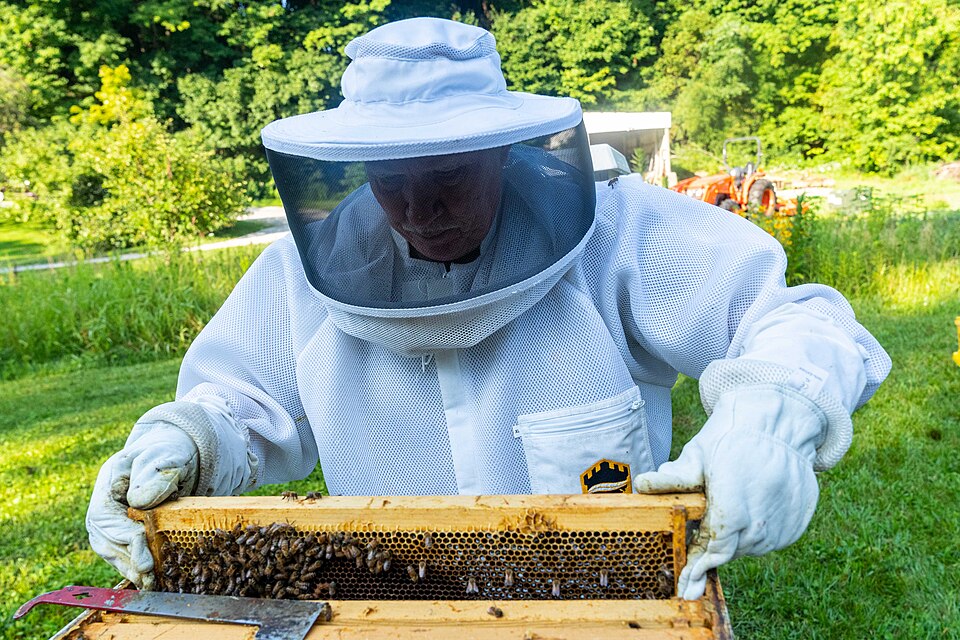
A full suit, veil and gloves. Photo: U.S. Department of Agriculture, Public domain, Wikimedia Commons 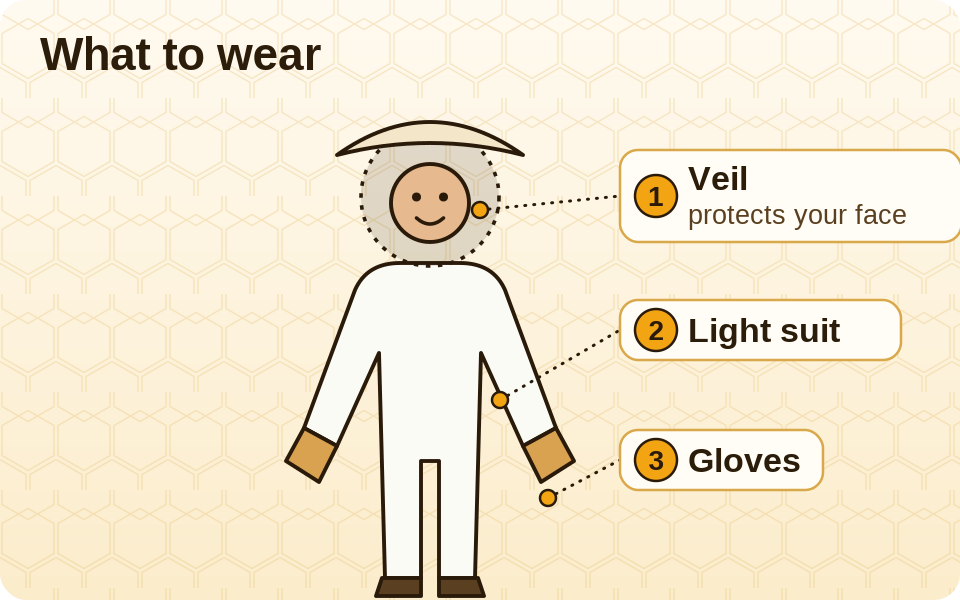
Picture 7. Dress to keep bees away from your face and hands. Check yourself: step 7
What does a veil protect?
Honey meter: 0 of 7 cells filled. Answer each step question to fill the frame.
Words to know
- Hive body
- A box that holds frames. Hive bodies stack to make the hive.
- Frame
- A rectangle that hangs in the box and holds one sheet of comb.
- Entrance reducer
- A strip of wood that makes the hive door smaller so a small colony can guard it.
- Smoker
- A tool that makes cool smoke to calm bees.
Lesson quiz
Pick one answer for each question. Get all 3 right to pass the lesson. You can try as many times as you like.
What do bees build their comb on?
What is a hive tool for?
Should smoker smoke be hot or cool?
Where these facts come from
- Penn State Extension, Beekeeping Basics (Collison, Frazier and Caron)
- Rutgers NJAES, Beginner's Beekeeping Glossary
- UC Davis Department of Entomology honey bee glossary (Mussen)
This lesson is general education. Rules and conditions differ by city and season, so check with your county and a local beekeeping club before you start.