What you will learn
- The three kinds of bees in a colony
- How a bee grows from an egg
- Why the colony acts like one big family
Step by step
The steps are written in simple words. Tap a word with a dotted line under it to see what it means. Tap “Go deeper” under a step for the numbers and reasons behind it. Every step ends with one quick question, and the lesson quiz is at the bottom.
-
A colony is one big family
Honey bees live together in a group called a colony. A healthy colony has 20,000 to 60,000 bees. They share one home, one food supply and one job: keeping the family alive.
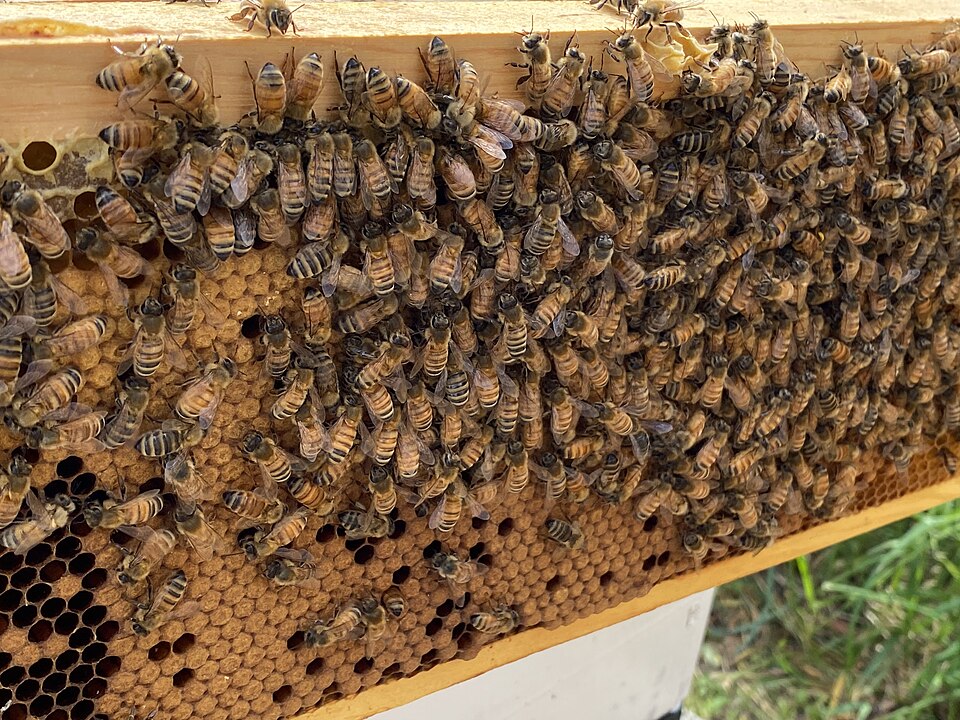
A real frame from a hive. Almost every bee you see here is a worker. Photo: Einebillion, CC BY 4.0, Wikimedia Commons 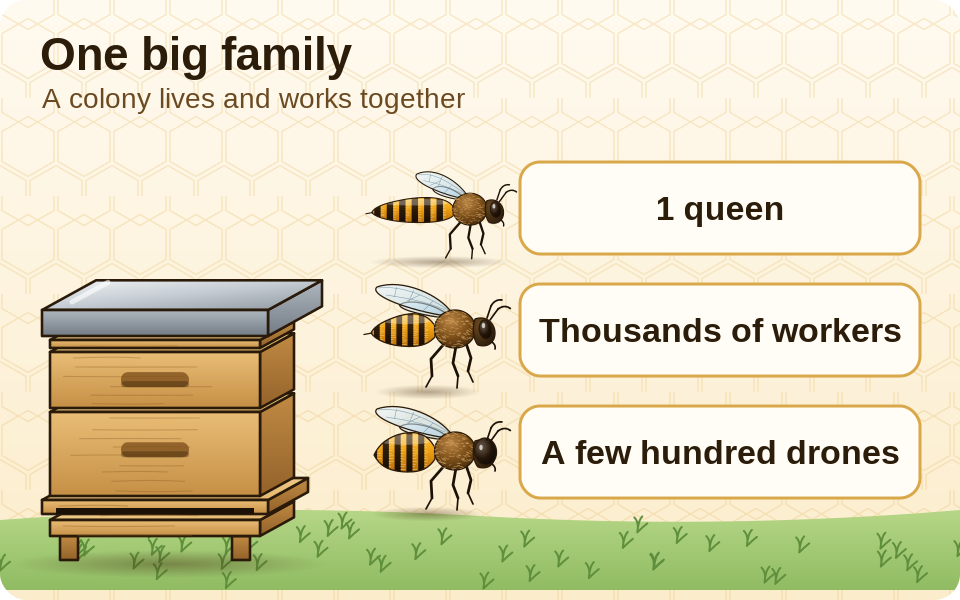
Picture 1. A colony is one family: one queen, thousands of workers and a few hundred drones. Go deeper
A typical colony has one queen, about 500 and 30,000 to 60,000 workers. Numbers rise in spring and fall back in winter. During the busy season an adult worker lives only about six weeks, so the colony is always raising replacements.
Check yourself: step 1
What is a group of honey bees living together called?
-
Meet the queen
Each colony has one queen. She is the mother of the other bees. Her main job is laying eggs. She is longer than the other bees, so you can learn to spot her.
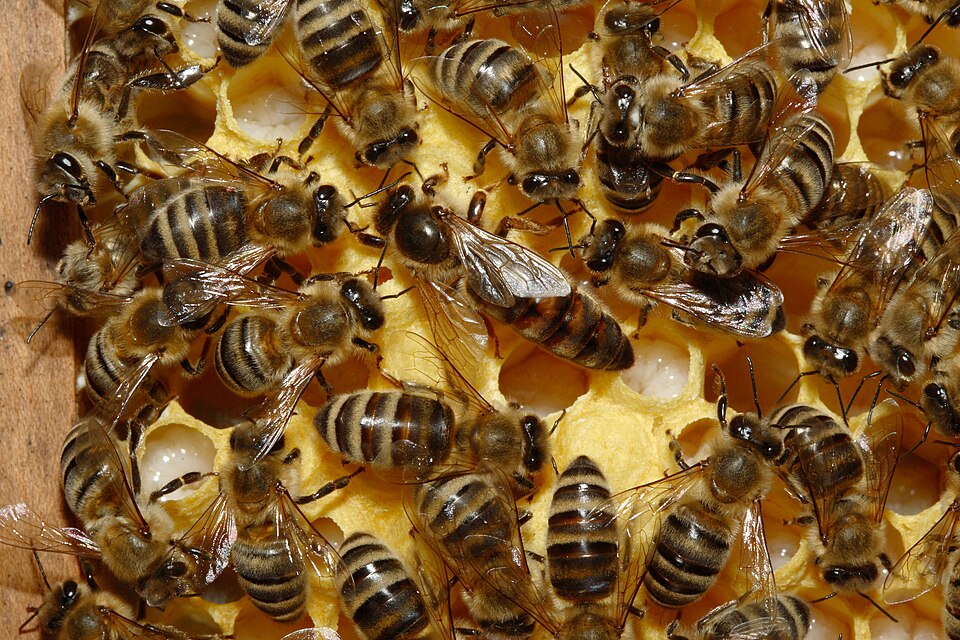
The queen is in the middle. Look for the longest body on the comb. Photo: Waugsberg, CC BY-SA 3.0, Wikimedia Commons 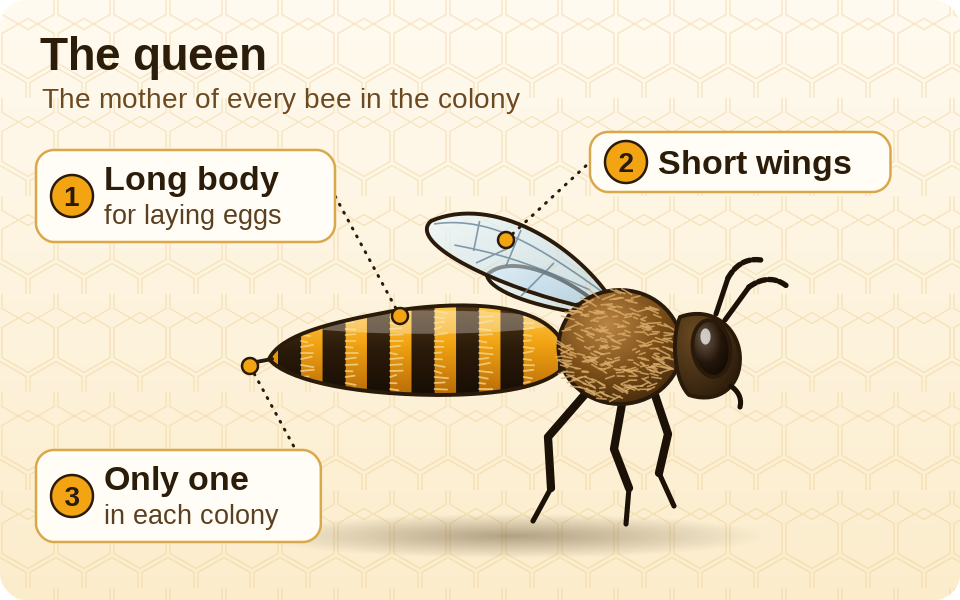
Picture 2. The queen. Her long body is built for laying eggs. Go deeper
A young queen mates in the air with about a dozen drones during the first two weeks of her life. She stores the sperm in an organ called the and uses it for years. She never mates again.
Check yourself: step 2
How many queens does each colony have?
-
Meet the workers
Almost all the bees you see are workers. Workers are female. They clean the hive, feed the babies, build wax comb, guard the door and fly out to find food.
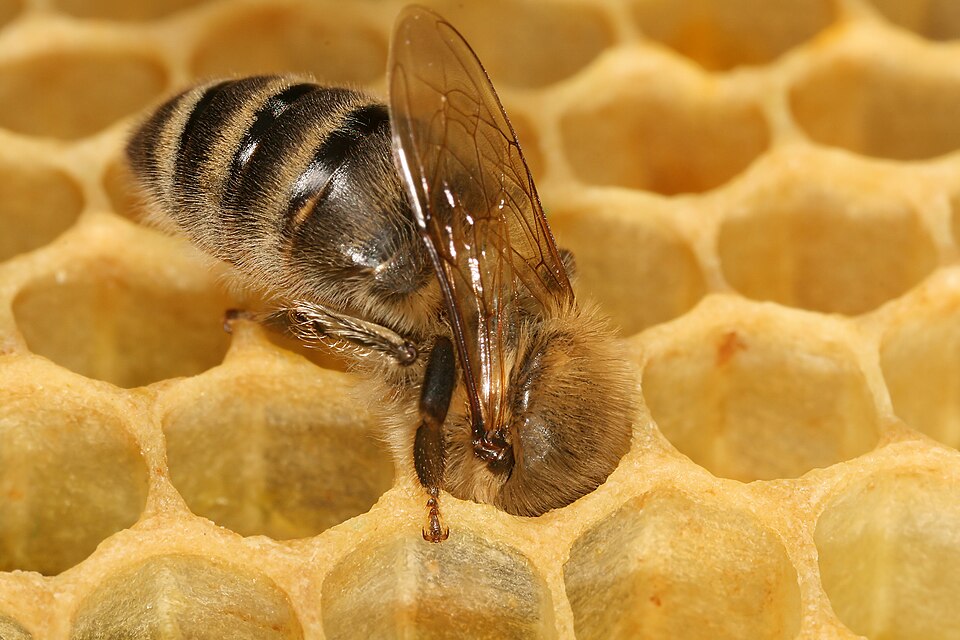
A worker on the wax comb she and her sisters built. Photo: Richard Bartz and Hubert Seibring, CC BY-SA 2.5, Wikimedia Commons 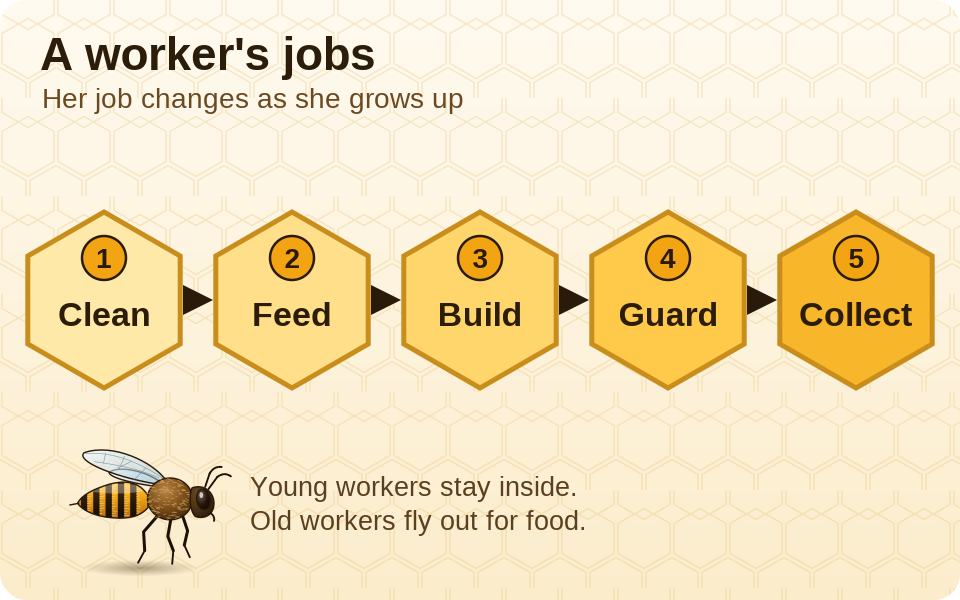
Picture 3. A worker changes jobs as she gets older. Check yourself: step 3
Are worker bees male or female?
-
Meet the drones
Drones are the male bees. A colony has a few hundred of them. Drones do not collect food and they cannot sting. Their job is to mate with a new queen from another colony.
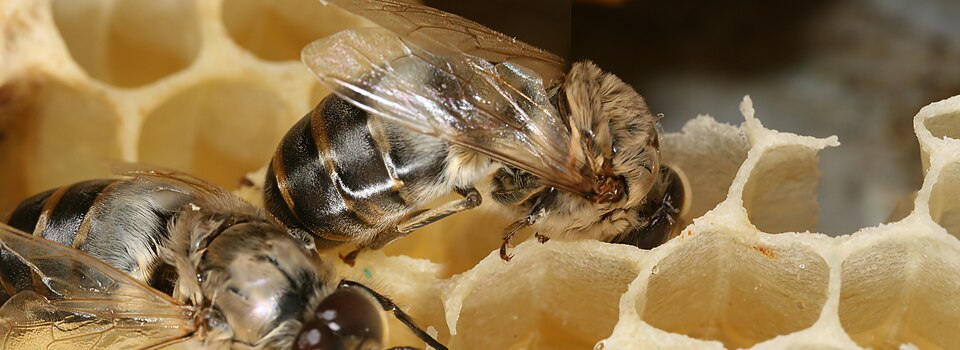
A drone. Notice the huge eyes and the wide, blunt body. Photo: Richard Bartz and Hubert Seibring, CC BY-SA 2.5, Wikimedia Commons 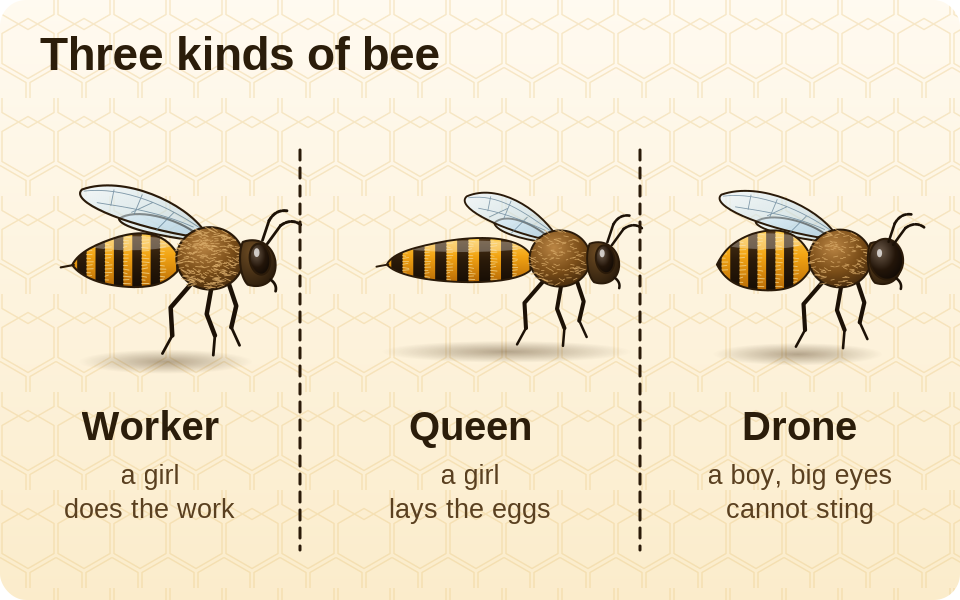
Picture 4. How to tell a worker, a queen and a drone apart. Go deeper
Drones grow from eggs that were never fertilized. They eat about three times as much as a worker, and in fall the workers push them out of the hive to save food for winter.
Check yourself: step 4
Can a drone sting you?
-
From egg to bee
A queen lays one tiny egg in a wax cell. After 3 days the egg hatches into a , which looks like a small white worm. Workers feed it, then seal the cell with wax. Inside, it changes into a bee. A worker takes 21 days from egg to adult.
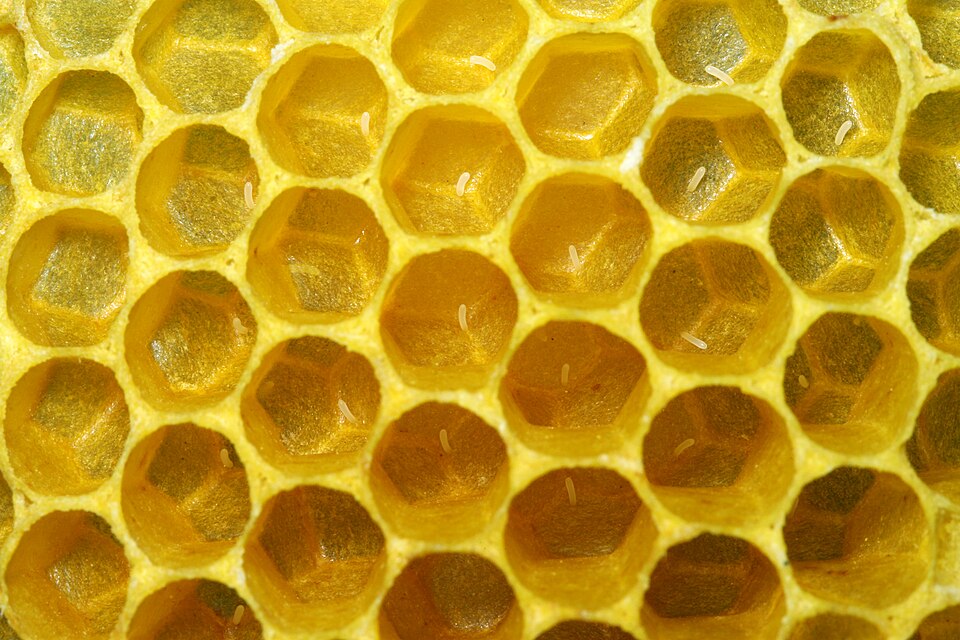
Eggs: one tiny white grain standing in the bottom of each cell. Photo: Waugsberg, CC BY-SA 3.0, Wikimedia Commons 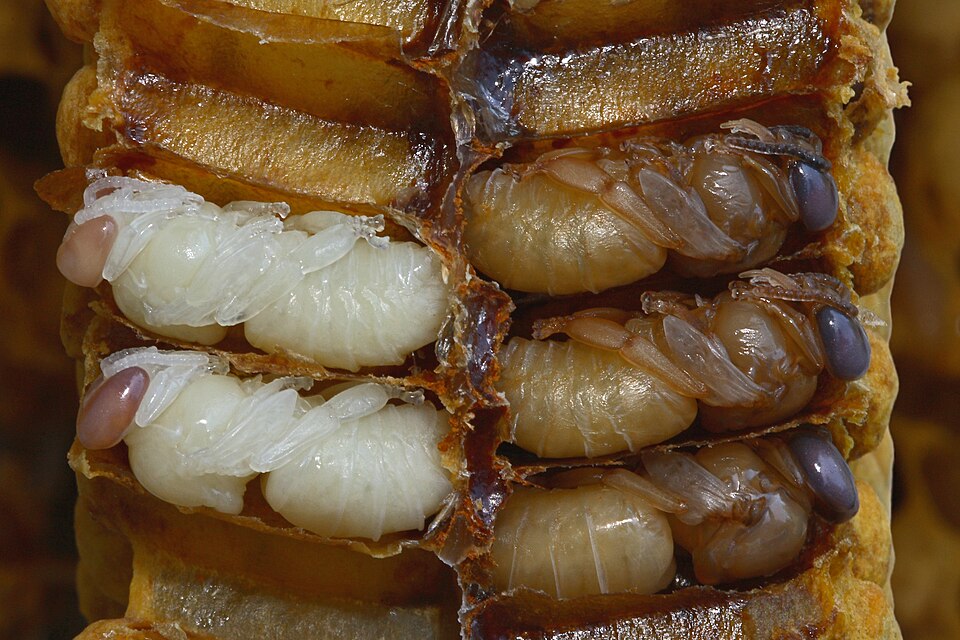
Pupae, with their cell caps removed so you can see them. Photo: Waugsberg, CC BY-SA 3.0, Wikimedia Commons 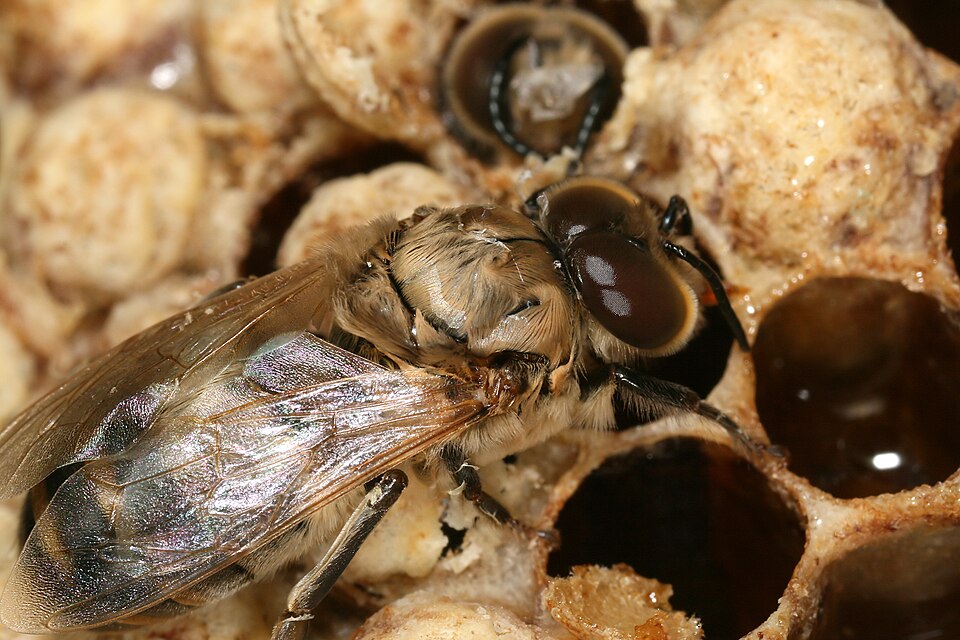
A new adult chewing its way out of its cell. Photo: Richard Bartz and Hubert Seibring, CC BY-SA 2.5, Wikimedia Commons 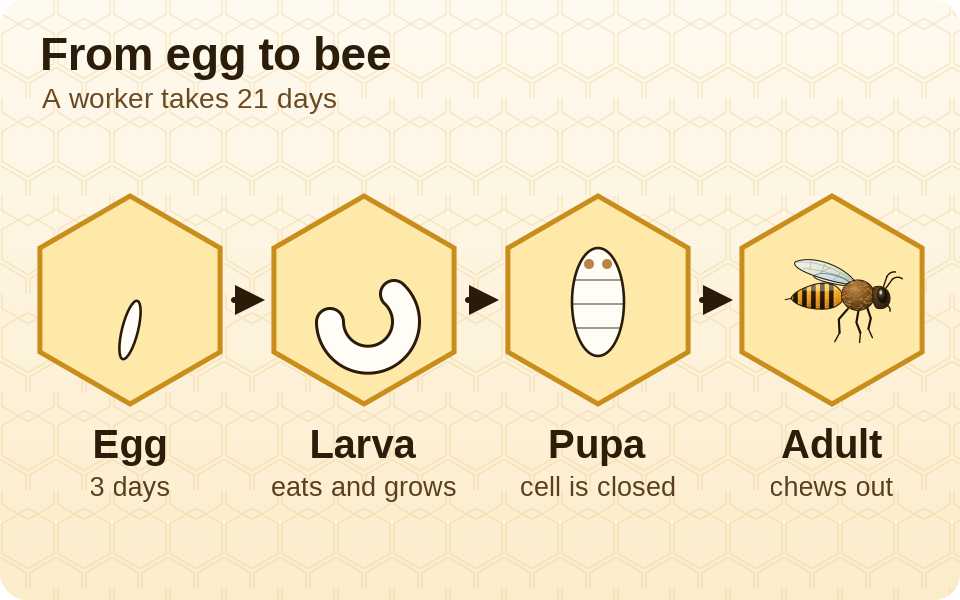
Picture 5. The four stages every bee goes through. Go deeper
Timing differs by caste. A queen takes 15 to 16 days from egg to adult, a worker 21 days and a drone 24 days. For a worker that is 3 days as an egg, about 6 as a larva and 12 as a . These numbers let a beekeeper read the age of like a calendar.
Check yourself: step 5
How many days does a worker take to grow from egg to adult?
-
What bees eat
Bees collect two foods from flowers. Nectar is a sweet liquid that bees turn into honey. Pollen is a powder that gives bees protein. Honey is the food the colony saves for times when few flowers are blooming.
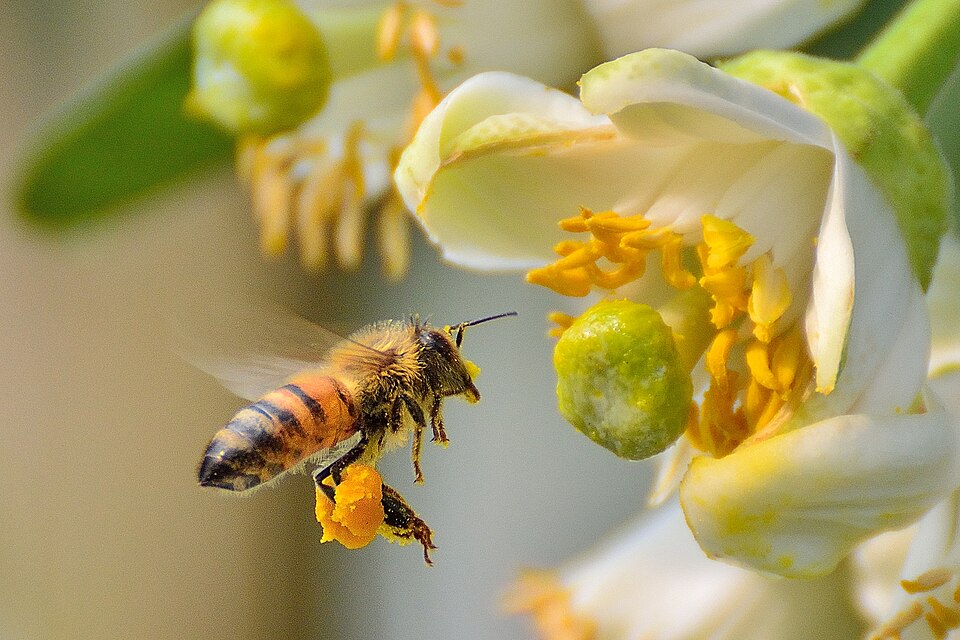
A forager with a ball of pollen packed on her back leg. Photo: Jimmy Kao, CC BY-SA 3.0, Wikimedia Commons 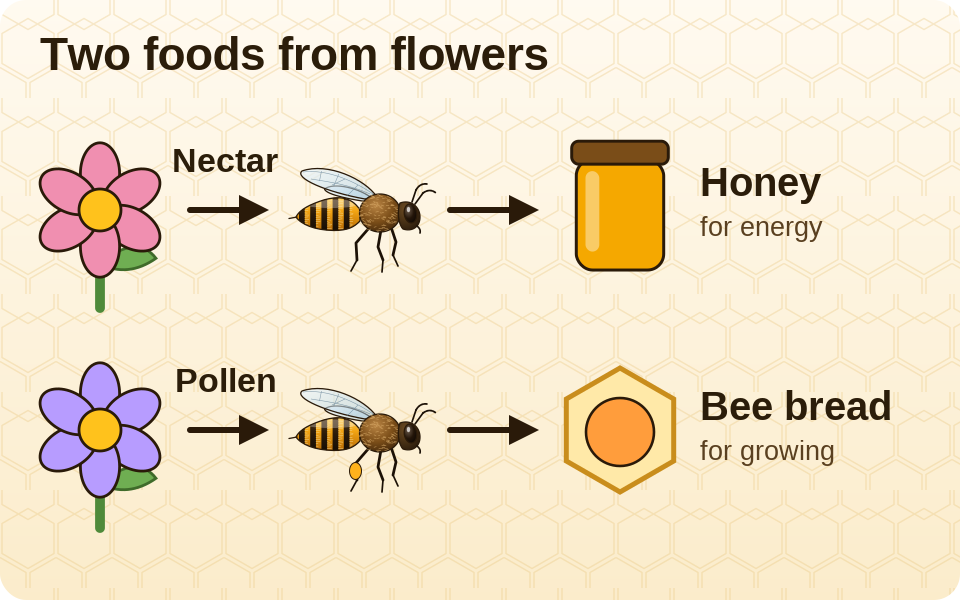
Picture 6. Nectar becomes honey. Pollen becomes bee bread. Go deeper
Nectar is mostly water when it comes in. Bees dry it down until finished honey is only about 17 percent water. Stored pollen is packed into cells with a little nectar and is called .
Check yourself: step 6
What do bees turn nectar into?
Honey meter: 0 of 6 cells filled. Answer each step question to fill the frame.
Words to know
- Colony
- A family of honey bees that lives and works together.
- Brood
- Baby bees: the eggs, larvae and pupae in the comb.
- Comb
- Sheets of six-sided wax cells where bees raise babies and store food.
- Nectar
- Sweet liquid from flowers that bees make into honey.
Lesson quiz
Pick one answer for each question. Get all 3 right to pass the lesson. You can try as many times as you like.
How many queens does a colony have?
Which bees do almost all the work?
How long does a worker take to grow from egg to adult?
Where these facts come from
- UC Davis / UC ANR, Niño, Honey Bee Biology
- UF/IFAS Extension, EENY568, 2024
- North Central SARE, Dantoin, Honey bee biology and social organization
- USDA ARS, Agriculture Handbook 335, 1967
- Rutgers NJAES, Beginner's Beekeeping Glossary
This lesson is general education. Rules and conditions differ by city and season, so check with your county and a local beekeeping club before you start.