Usually you hear it before you see it: a steady hum inside a wall, above a patio cover, or up in an eave you’ve walked past a hundred times. At first it’s just “bees near the house.” Then it’s a line of foragers at the faucet, a cluster on the kids’ playset, or a tenant calling because somebody got stung. That’s when most property owners have to make a real decision, and it affects the people who live or work there and the bees too.
When I say “ethical bee hive extraction,” I mean a standard of care. You take the colony out of the structure in a way that keeps people safe, doesn’t hurt the bees more than it has to, and fixes the problem for good, so you get your house back and the bees get a chance to keep being bees.
What ethical bee hive extraction actually is
Ethical bee hive extraction is carefully removing an established honey bee colony (the bees, the brood or developing bees, the comb, the honey stores and the queen) from a building or other structure, with the goal of relocating the living colony to a suitable apiary or managed setting.
By that definition, spraying and walking away doesn’t count. Neither does trapping for a few days and hoping the bees go away. A real extraction deals with the whole colony and with whatever let it move in.
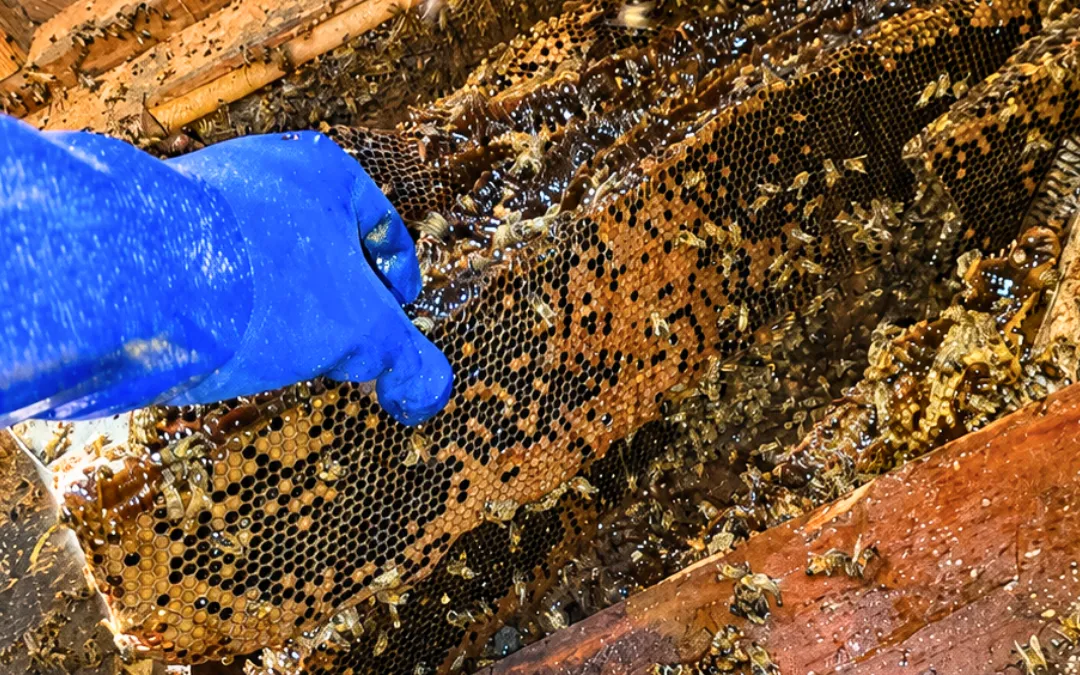
It also starts from a simple fact: bees in a wall cavity aren’t living “near” your home. They’re living in it. Their comb can hold a lot of honey and pollen. Leave it behind and it can melt, ferment, soak the insulation, stain the drywall and keep attracting pests long after the buzzing stops.
Why “just move them” is rarely simple
People ask me all the time, “Can’t you just relocate the bees?” Sometimes I can, when it’s a swarm.
A swarm is a temporary cluster of bees that split off from an existing hive and is out looking for a new home. Swarms usually have no comb built and no honey stored. A lot of the time they can be collected quickly and safely, because nothing is built inside a structure yet.
A hive is a different job. Once bees build comb inside a wall, soffit or roofline, the colony is anchored there. The brood is in that comb, the honey keeps piling up, and the bees will defend all of it.
Ethical bee hive extraction works with that. The colony comes out and the comb comes out, so you aren’t left with smells, leaks or a second batch of bees moving into the same space.
The ethical part: what humane looks like in practice
Being ethical about it still means getting your hands in there. It comes down to deliberate choices that cut down on harm and skip the shortcuts.
The first choice is no poison or pesticide on honey bees when a live removal can be done. Chemicals kill bees fast, but they can also leave contamination in the structure, and the comb and honey are still in there. On a lot of properties that ends up a bigger problem than the bees were.
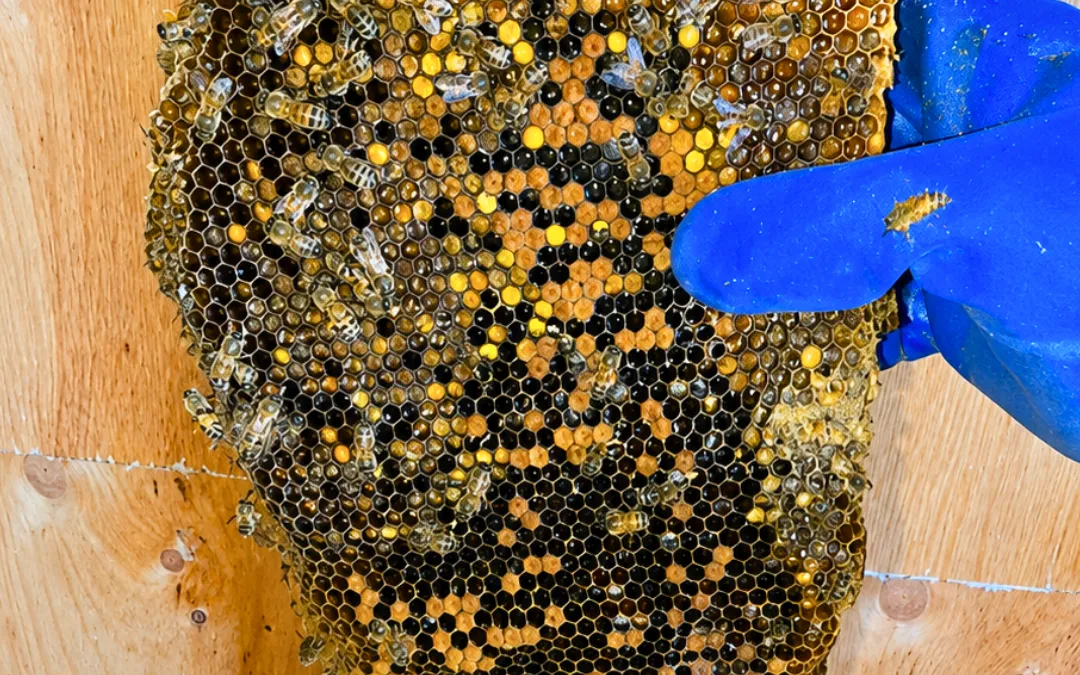
The second is keeping the colony together as much as possible. A healthy colony is more than its adult bees. The queen, the brood and the comb are what keep it alive. When I do an extraction carefully, I can often fasten brood comb into frames so the colony can rebuild in a standard hive box and doesn’t have to start from nothing.
Third, the bees need to go somewhere that suits them. They need room to forage, space to grow, and a keeper who treats them as livestock to look after. Treating them as pests to get rid of is what this whole approach is trying to avoid.
And last, being honest about what’s involved. Not every removal is low-impact. If the comb is deep inside a wall, I may have to open the surface to get to it. A humane removal is still construction work; it just avoids the harm that isn’t needed.
What the extraction process typically involves
Every property is different, but ethical bee hive extraction usually goes in a careful order.
Inspection and a plan you can understand
It should start with finding the entry points, listening for where the activity is heaviest, and figuring out what kind of bees you’ve got. In Southern California that’s often honey bees, and sometimes more defensive colonies, depending on their genetics and what’s stressing them.
The inspection should also look at what’s behind the surface: wiring, plumbing, stucco, siding or tile. The best plan gets the whole hive out with as little extra damage as possible.
Controlled access, not demolition
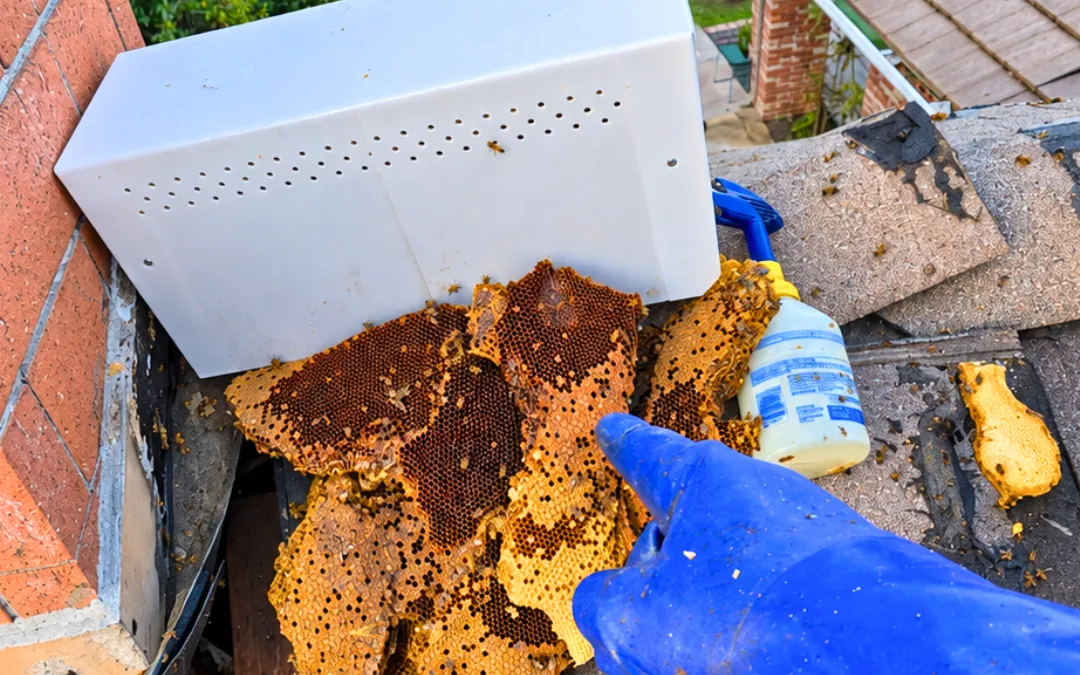
I go for small, “surgical” openings. That might mean taking off a section of soffit, opening drywall between two studs, or carefully lifting part of the fascia. The point is to get to the comb and the colony without turning the job into a remodel.
Anyone you hire should also take safety seriously: protective gear, calm handling, and a work zone that keeps residents, pets and passersby out of the flight path.
Removing bees, comb and the queen
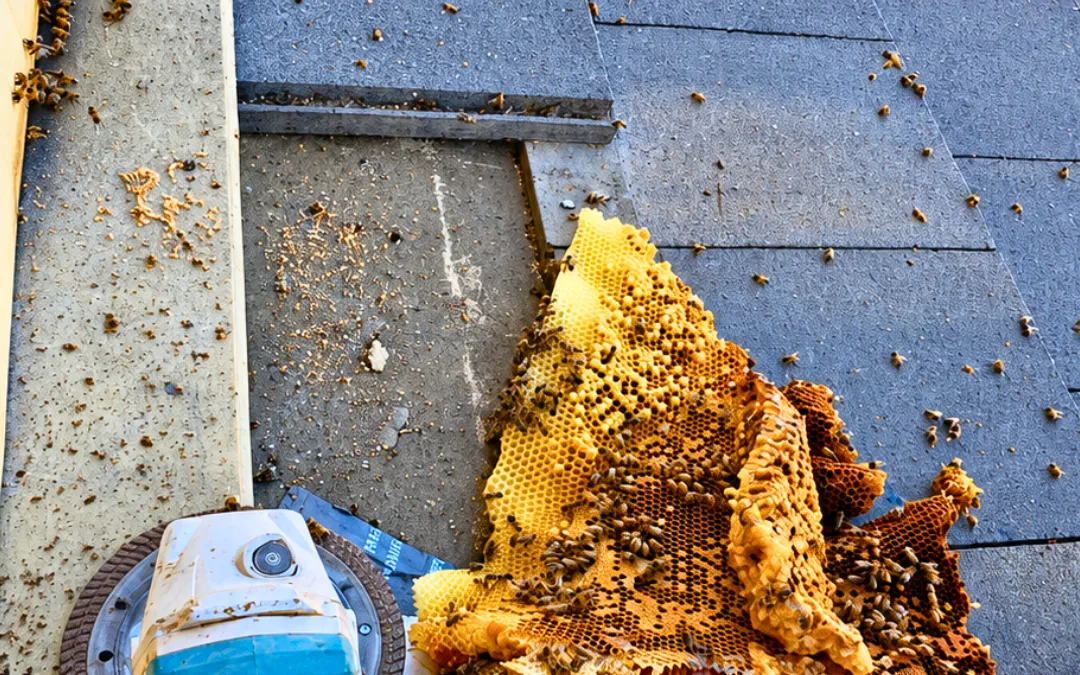
Once I can get to the comb, it’s slow, steady work. The bees are gently removed and contained. The comb comes out piece by piece. When brood comb is in good enough shape to save, I secure it so the colony has something to build back from. Finding the queen is a big moment, because without her the colony may have a hard time pulling itself back together.
Cleaning the cavity (where “ethical” meets “effective”)
After the comb is out, the cavity still needs work. Leftover wax and honey smell can draw ants, roaches, moths and future swarms.
Cleaning it doesn’t take harsh chemicals. It can be careful scraping, pulling out insulation that’s soaked or dirty, and other practical steps to cut down the smell that’s left. The idea is to leave the structure in a state that doesn’t invite the same problem back.
Sealing and entry-point repairs
Ethical bee hive extraction isn’t finished until the house is closed up. Bees are stubborn, and other colonies will find the same gaps.
Entry-point repairs might mean sealing cracks, shoring up weak joints, screening vents the right way, or patching the opened area so weather stays out. This is where a lot of “cheap” removals fall down: the bees are gone, but the opening is still there inviting the next ones in.
Trade-offs: live extraction vs. faster methods
When your wall is buzzing in August, you don’t always want the fine print. You want it handled. It still helps to know the trade-offs.
Live extraction usually takes more labor than killing the bees with chemicals. It takes time to open things up, take out the comb, handle the bees and patch the area. It can cost more up front.
It’s also usually the fix that lasts. When comb and honey get left behind, you may pay for it later in cleanup, smell, drywall work, pest problems and bees moving back in.
Access matters too. A colony deep in a complicated roofline may take more structural work to reach safely. I’d rather tell you that before anything gets opened than surprise you halfway through.
When you should call right away (and what to do while you wait)
If anyone on the property has had a severe allergic reaction before, treat any bee problem as urgent. Same for busy commercial entrances, schools, apartment walkways, or anywhere people can’t reasonably stay away from the bees.
While you wait, keep the doors and windows near the activity closed, keep pets inside, and don’t make vibration near the hive (loud tools, hammering, pressure washing). Don’t spray anything into a hole in the wall. That can stir up the colony and drive bees into the house.
If it’s a swarm in a tree and they aren’t going into a structure, give them space. Swarms often don’t stay long and are easier to collect when nobody has bothered them.
How to spot a contractor who’s truly ethical
Anybody can say “humane.” Showing it is harder, and you can usually tell by the details.
Someone who works ethically talks about taking out the comb along with the bees. They can tell you where the bees are going and why that spot works for the colony. They’re careful about safety and realistic about access points and patching.
They also take your concerns seriously. You can want the bees treated with respect and want your property safe at the same time, and the right approach covers both.
If you want live removals, responsible relocation and entry-point repairs, that’s what I do at Eli the Bee Guy, humane bee work across Southern California.
A few ethical “depends” scenarios homeowners run into
Sometimes the question is how to remove the bees, since they clearly have to go.
If a colony has been there a long time, there may be a lot of honey stored. In warm weather honey can drip when the comb gets disturbed. A careful extraction plan allows for that, with containment and cleanup so you don’t end up with stained ceilings or sticky wall cavities.
If the hive is near electrical equipment, the safest way may take coordination and extra precautions. Ethical work means protecting the house and the crew, and that rules out taking risks to save time.
If the bees are somewhere that can’t be opened without major construction, you may have to weigh timing and budget. Sometimes waiting for a remodel you already have planned saves money and hassle, as long as the bees aren’t an immediate danger.
The goal: your home back, bees rescued
Ethical bee hive extraction is one of those cases where the kinder choice is also the one that holds up better. The bees get treated as pollinators worth saving, and your house gets treated as the place your family should feel safe in.
If you’re standing in the yard listening to that hum and wondering what’s next, pick the option that takes care of the whole problem: careful, complete, and with some respect for what’s living in your walls. You’ll sleep better afterward, and the bees get another shot.
Like these guides? Add Eli the Bee Guy as a preferred source on Google to see more of them in your search results.