A managed honey bee colony in the United States produced an average of 48 pounds of honey in 2025, down from 51.7 pounds in 2024, according to the USDA's annual Honey report. California's average was lower, at 35 pounds per colony. Those numbers are averages of the surplus beekeepers actually harvested. A strong colony in a good year can produce well over 100 pounds, and a weak one in a drought year may not have any to spare.
Honey yield per hive at a glance
| Measure | Typical amount |
|---|---|
| U.S. average harvest per colony (2025) | 48 lb (about 22 kg) |
| California average harvest per colony (2025) | 35 lb (about 16 kg) |
| Strong colony in a good flow | 100+ lb |
| Honey made by one worker bee in her life | About 1/12 of a teaspoon |
Why a hive makes more honey than you can take
Bees make honey to eat. A colony goes through a big share of what it makes feeding itself and raising young, and it needs a reserve to get through months without flowers. The harvest numbers above are only what's left over after that. Beekeepers in cold climates leave much more honey on the hive for winter than beekeepers in mild Southern California, where bees can forage for most of the year.
What changes how much honey a hive produces
- Colony strength. More foragers bring in more nectar. A colony needs to be at full strength when the main bloom (the "flow") arrives.
- Forage. The number and kind of flowering plants within a few miles of the hive matter more than anything else.
- Weather and rain. Drought means less nectar. Here in Southern California, yields swing a lot from year to year depending on the winter rains.
- Swarming. When a colony swarms, roughly half the bees leave with the old queen, and honey production drops for the season.
- Health. Varroa mites and the viruses they spread are the biggest threat to colonies in the U.S. and cut honey production sharply.
How much honey does one bee make?
A worker bee lives about five to six weeks in summer and spends only the last two or three of them foraging. In that time she makes roughly 1/12 of a teaspoon of honey. It takes the work of many thousands of bees and visits to millions of flowers to make one pound.
What about a wild hive in a wall?
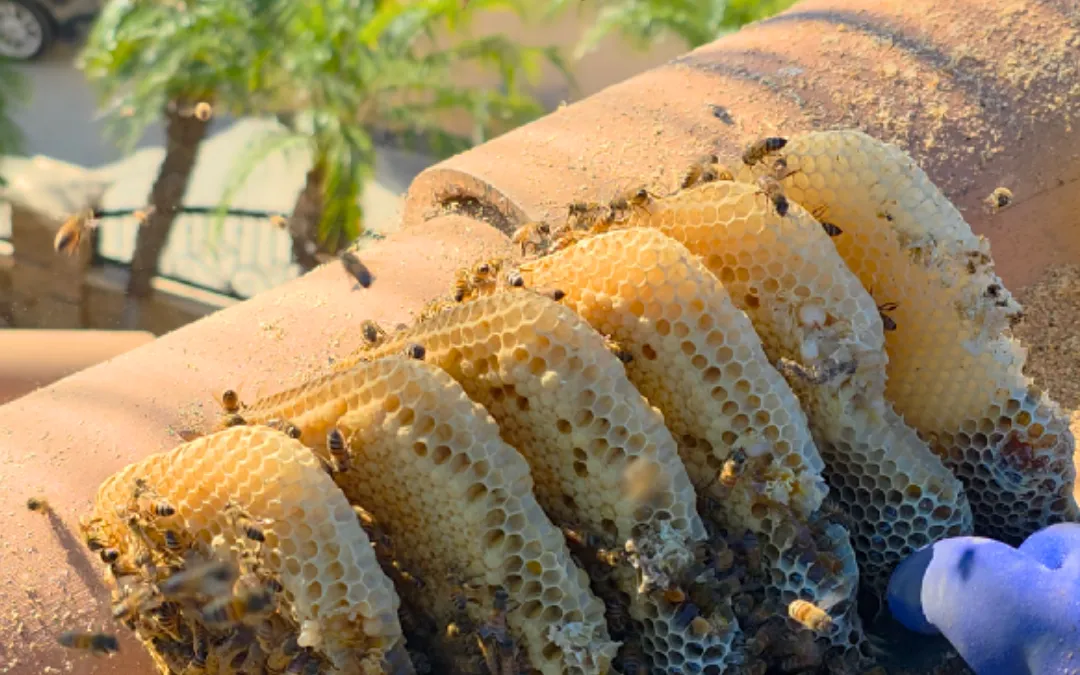
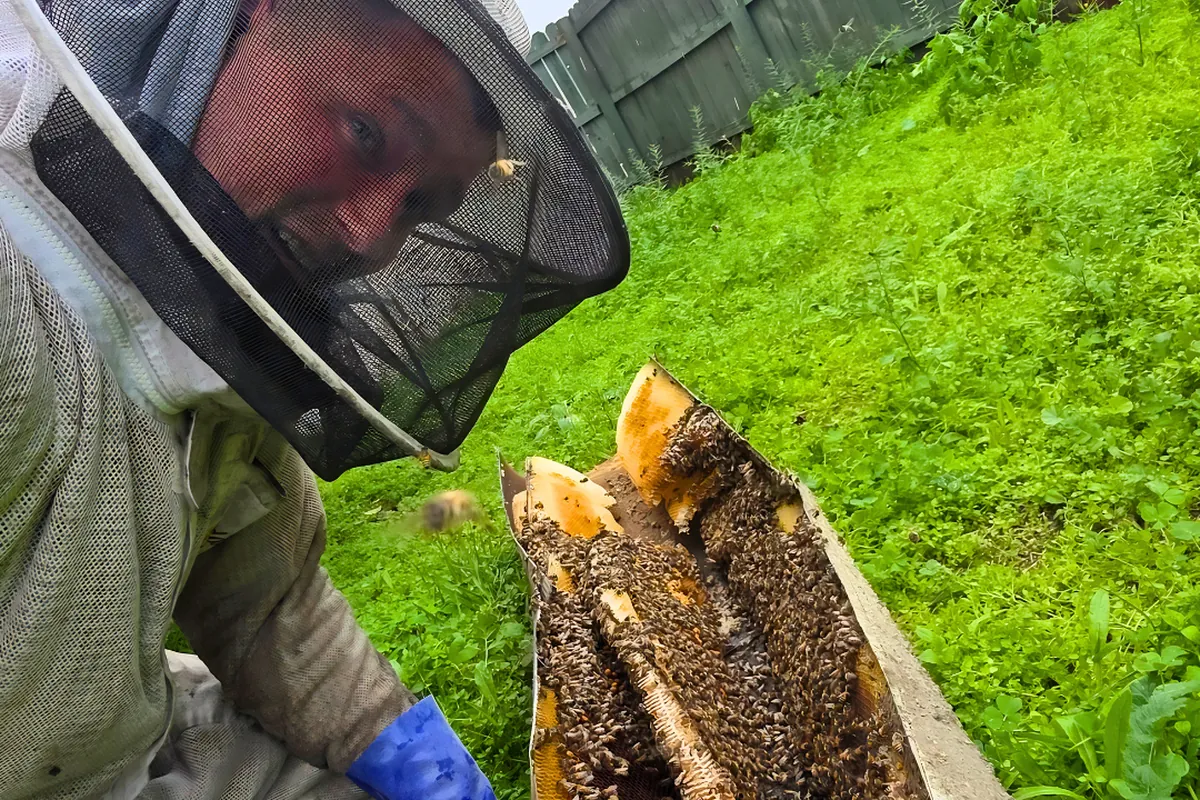
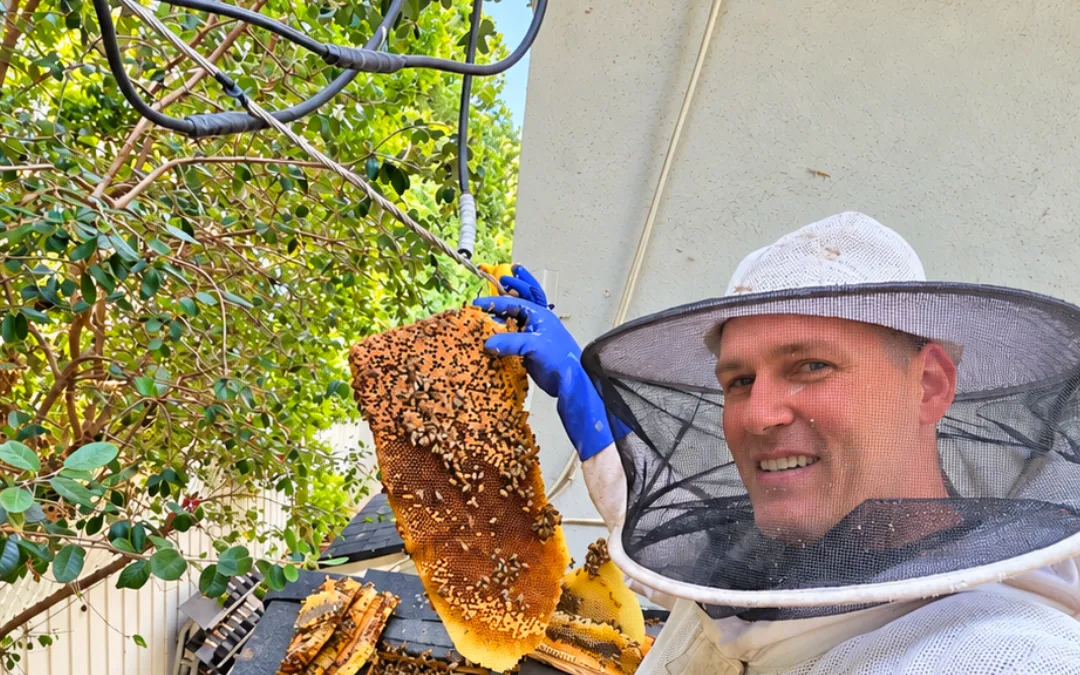
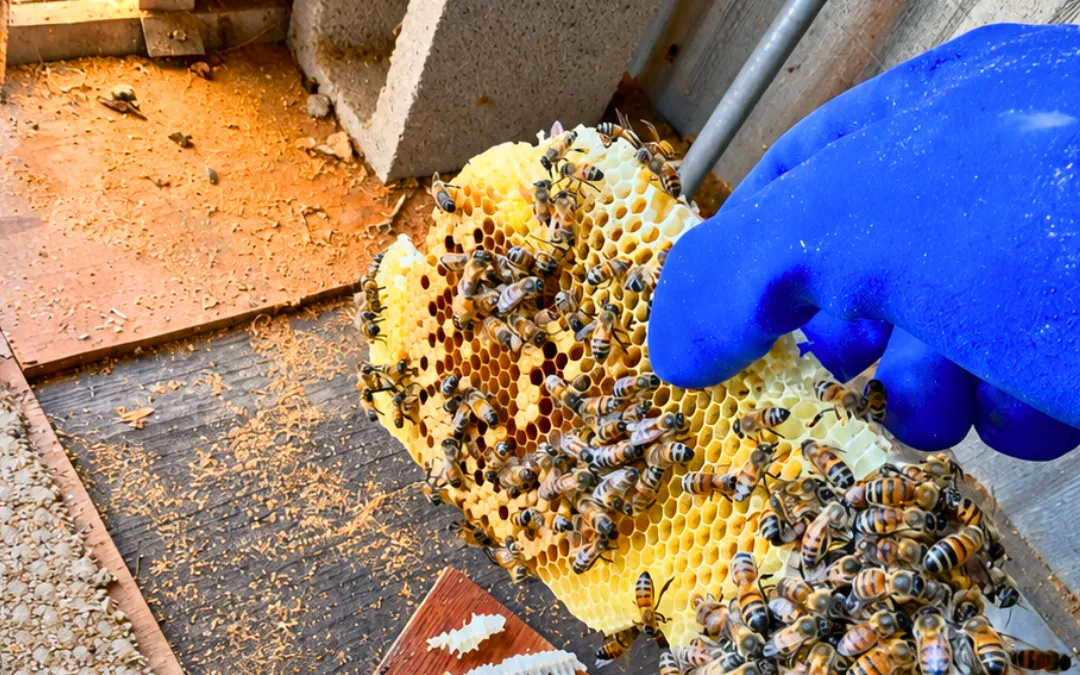
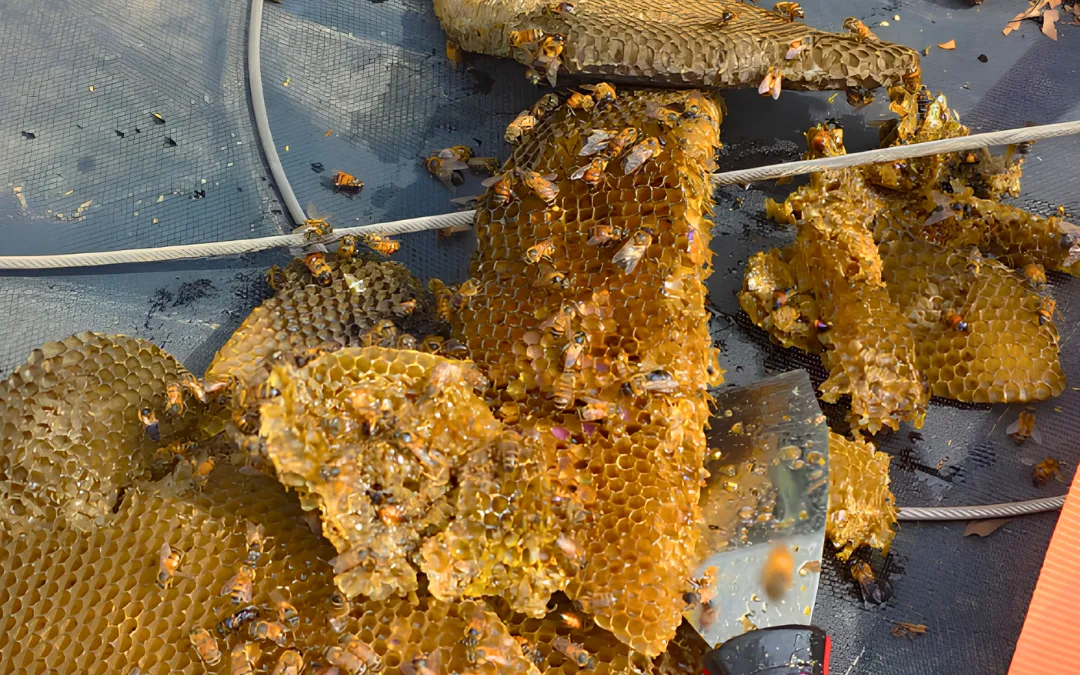
Colonies living inside walls, roofs and chimneys make honey too, and an established one can store a lot of it. That's why I won't just spray a hive in a structure: when the bees die, nobody is left to cool the comb, the honey can melt and run down the inside of the wall, and the smell attracts ants, roaches and new swarms. When I do a live hive removal, I take out the bees and all of the comb and honey, then seal the entry. See the hidden damage bees can cause, or call or text (626) 487-6052.
Frequently asked questions
How much honey does one hive produce in a year?
The U.S. average harvest was 48 pounds per colony in 2025 and 35 pounds in California, according to the USDA. A strong colony in a good year can make more than 100 pounds.
How much honey does a single bee make?
About 1/12 of a teaspoon over her whole life.
How much honey should be left in the hive for the bees?
It depends on your climate. Colonies in cold regions need a lot more stored honey to get through winter than colonies here in mild Southern California, where bees forage most of the year. Your local beekeeping club is the best place to get a number for your area.
Do hives in walls have honey in them?
Yes. Established colonies inside walls and roofs store honey in their comb, which is why all of the comb has to come out along with the bees.
Like these guides? Add Eli the Bee Guy as a preferred source on Google to see more of them in your search results.