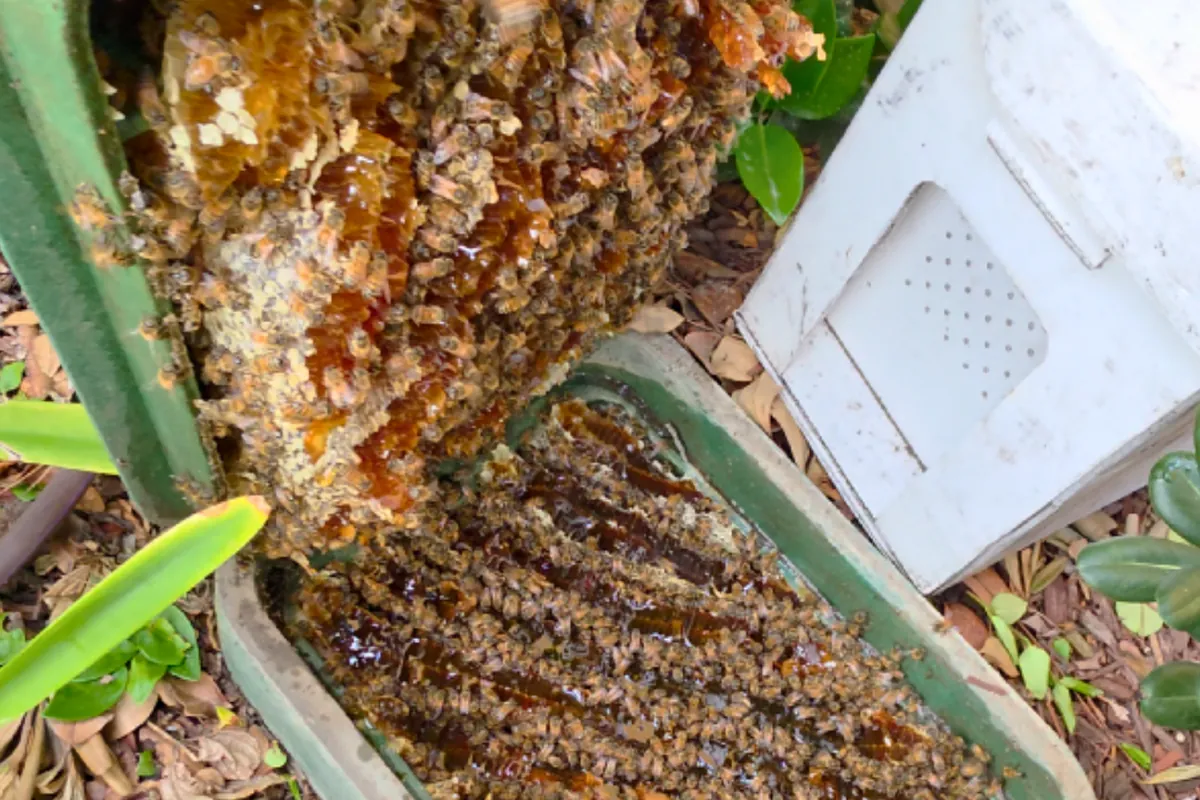
You flip open the lid to check a sprinkler valve, or you're running the mower along the parkway, and suddenly there's a steady stream of bees pouring out of a little box in the ground. It's one of the most common calls I get in Southern California, and it catches people off guard because the box seemed too small and too ordinary to hold anything.
Short answer: Bees in a water meter box or sprinkler valve box are usually a honey bee colony that has built comb inside. Keep people and pets back, don't open the lid or pour anything in it, call your water provider if it's the meter box, and have a beekeeper remove the bees and comb alive, then seal the box.
Why do bees move into water meter and sprinkler valve boxes?
From a honey bee's point of view, an underground box is close to perfect real estate. It's dark, it's sheltered from wind and sun, it stays fairly cool, and it usually has one small opening that's easy to guard: a key hole in the lid, a gap where the lid doesn't sit flat, or a crack in the plastic or concrete. When a swarm's scout bees go house hunting in spring, they're looking for exactly that kind of protected cavity.
The UC Statewide IPM Program lists water meters and utility boxes right alongside walls, fences and barbecue grills as common honey bee nesting sites. The USDA's Carl Hayden Bee Research Center notes that bees can get into a water meter box through an opening as small as 3/16 of an inch. It doesn't take much of a gap.
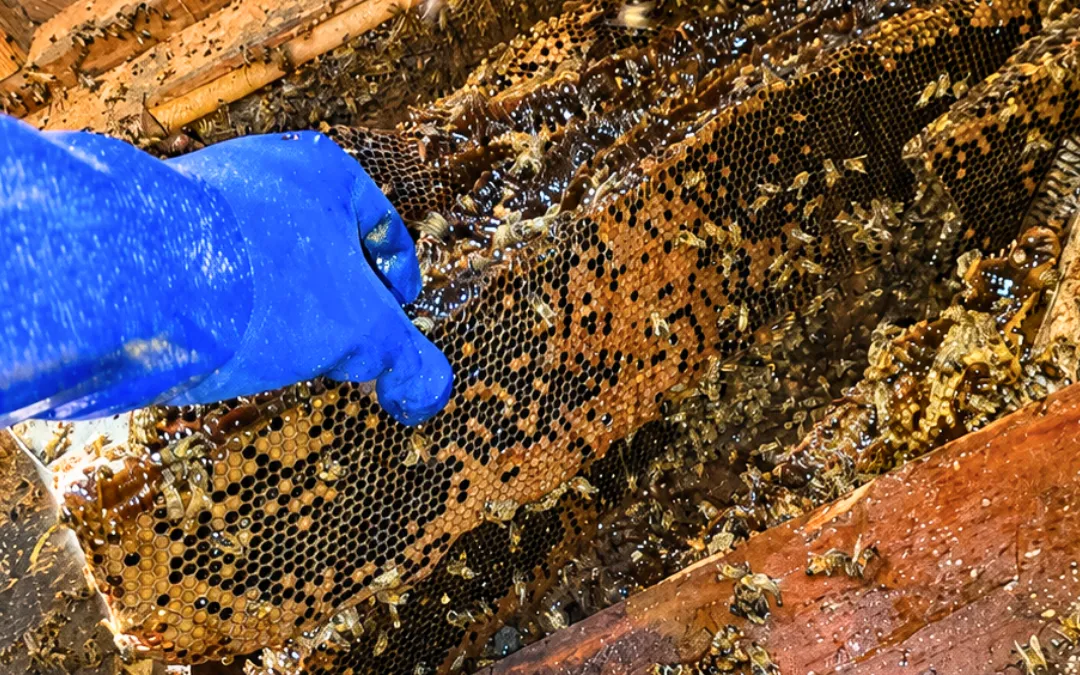
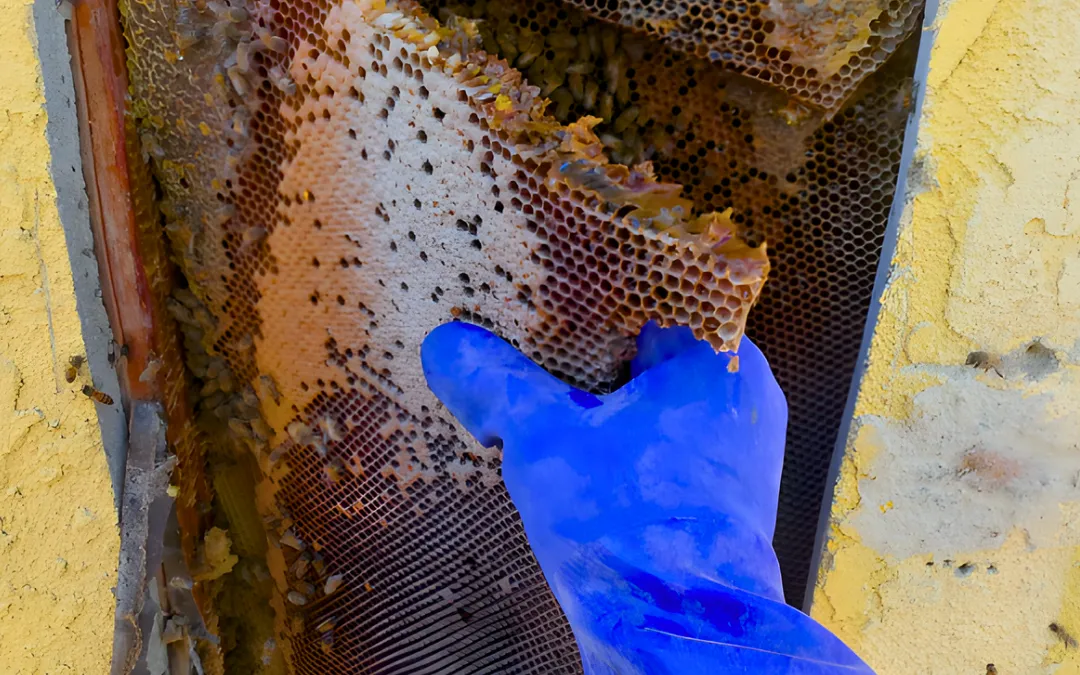
Once they're in, the bees start building wax comb from the underside of the lid and down into the box, and the colony grows week by week. A box that had a few bees in it in April can be packed with comb, brood and honey by summer.
Is a bee hive in a meter box dangerous?
A colony that's left alone mostly minds its own business. The trouble is that ground boxes sit right where people work and walk. The risky moments are predictable:
- Mowing, edging and leaf blowing. The noise and vibration right over the box can set the colony off, and a lot of people find the bees the hard way, with a mower in their hands.
- Opening the lid. Comb hangs from the underside, so lifting a valve box or meter box lid brings the comb (and the colony) right up to your face.
- Kids, dogs and foot traffic. Boxes along sidewalks, parkways and side yards get stepped on and sniffed.
- Meter readers and utility crews, who usually have no warning there are bees inside when they open the box.
Some honey bee colonies in Southern California carry Africanized genes, and the Los Angeles County Agricultural Commissioner points out that those colonies are more protective of their hives. You can't tell by looking, so treat every ground-level colony with respect. If anyone gets stung many times, or has trouble breathing, swelling of the face or throat, or feels faint after a sting, call 911.
Bees in water meter box or valve box: who do you call?
This depends on which box the bees are in.
The water meter box
The meter is the water utility's equipment, so your first call should be your water provider. LA County's Agricultural Commissioner tells residents that for bees in a utility box, you should contact the utility company. A number of Southern California water districts have their own process for this. Some send their own bee removal vendor, and some ask customers not to hire anyone themselves. Policies vary from district to district, so check with the provider on your water bill before you do anything else. Even if they handle it, they'll want to know so the meter reader doesn't get a surprise.
Sprinkler valve boxes and other irrigation boxes
Irrigation valve boxes, backflow covers and other ground boxes on your side of the meter generally belong to the property owner, so those are yours to deal with. That's where a live bee hive removal comes in. If you're a renter, let your landlord or property manager know in writing.
Not sure which box it is? Meter boxes usually sit near the street or sidewalk and are often labeled "water" on the lid. If you can't tell without lifting the lid, don't lift it. I'll identify it for you during a free inspection.
What not to do: gasoline, bleach, boiling water and bug spray
I get wanting to just make it go away, but home remedies cause more trouble than they fix with a ground box:
- Gasoline and other fuels are a fire risk, they soak into the soil around your water line and irrigation parts, and they leave all the comb behind.
- Bleach, ammonia and other household chemicals poured through the lid rarely reach the whole colony. Mostly they just make the bees that survive angry.
- Boiling water means standing over an active colony holding a pot, which is a good way to get stung badly, burned, or both.
- Bug spray or foggers may kill some bees, but UC IPM notes that killing a colony with pesticides often leads to undesirable consequences, and the leftover honey, wax and dead bees are contaminated.
- Sealing the bees in with tape or foam doesn't hold up. Bees chew and dig their way around it, and you still have a box full of comb.
Whatever kills the bees, the comb and honey stay behind. That old comb smells like home to the next swarm, and leftover honey draws ants, yellow jackets and other pests. What actually fixes it is taking the bees out alive and getting every bit of comb out of the box.
How does live bee removal from a meter or valve box work?
Ground boxes are one of the more manageable places to remove a colony, because there's no wall to open. Here's how I typically handle one:
- First I make sure they're honey bees (not yellow jackets, which also love ground cavities) and see how big the colony is.
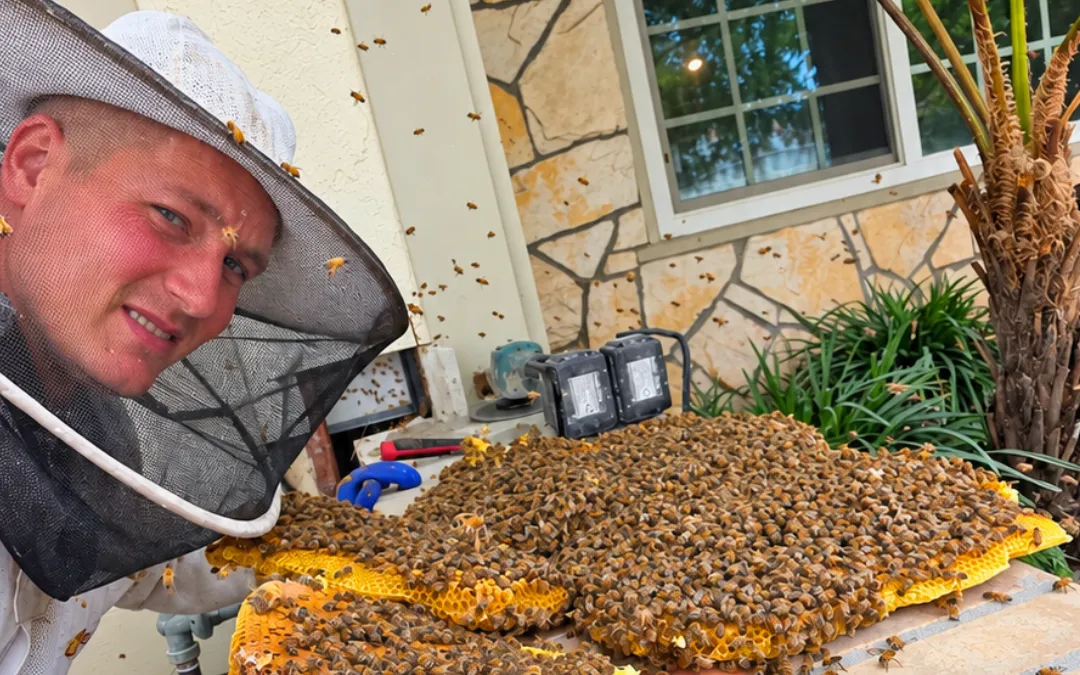
- I suit up in full protective gear, use smoke to calm the colony, and keep people and pets well back.
- I lift the lid and cut the comb out piece by piece, saving the brood comb so the colony stays together.
- The bees, and ideally the queen, go into a transport box, along with the stragglers that come back from foraging.
- I scrape out the wax and honey residue so the smell doesn't call in the next swarm.
- Key holes, cracks and gaps around the lid get closed or screened. A cracked or warped lid may need replacing; on a utility-owned meter box, that's the water provider's call.
- The colony goes to a vetted local beekeeper through my bee relocation program.
No chemicals are used on the honey bees, and nobody has to dig anything up.
How do you keep bees out of ground boxes?
Keeping bees out is mostly about closing the openings before a swarm finds them. The USDA bee research lab in Tucson recommends putting a small mesh screen over irrigation valve boxes and water meter box key holes. A few more simple habits help:
- Replace cracked, broken or missing lids, and make sure lids sit flat.
- Check ground boxes a few times each spring for bees flying in and out of one spot.
- Pay attention to a "busy" box before you mow over it, especially from spring into summer.
- For the meter box, ask your water provider about a damaged lid instead of modifying it yourself.
If you've already had a colony in a box, cleaning out the old comb and wax matters as much as sealing. You can read more about finding where bees are getting in on my bee entry point guide.
Need a hand?
If you've got bees coming out of a meter box, sprinkler valve box or any other hole in the ground, keep everyone back and give me a call. I'll come take a look with a free inspection, tell you exactly what you're dealing with, and remove honey bees alive. I serve Orange County, the Inland Empire and Los Angeles County, from Rancho Cucamonga to Irvine. Call (626) 487-6052 or request a free quote online. If someone in your home has a life-threatening bee sting allergy, tell me when you call.
Frequently asked questions
Can bees damage a water meter or sprinkler valves?
Are bees in a sprinkler valve box honey bees or yellow jackets?
Will bees in a meter box leave on their own?
Can I still water my yard with bees in the valve box?
How do I know if bees are living in my meter box?
Like these guides? Add Eli the Bee Guy as a preferred source on Google to see more of them in your search results.