You see a few yellow and black insects darting in and out of a crack in your wall, and then you hear it: a faint crackling or buzzing from inside. A yellow jacket nest in a wall is one of the more stressful things a homeowner can find, because you can't see how big it is, and the obvious fixes tend to backfire.
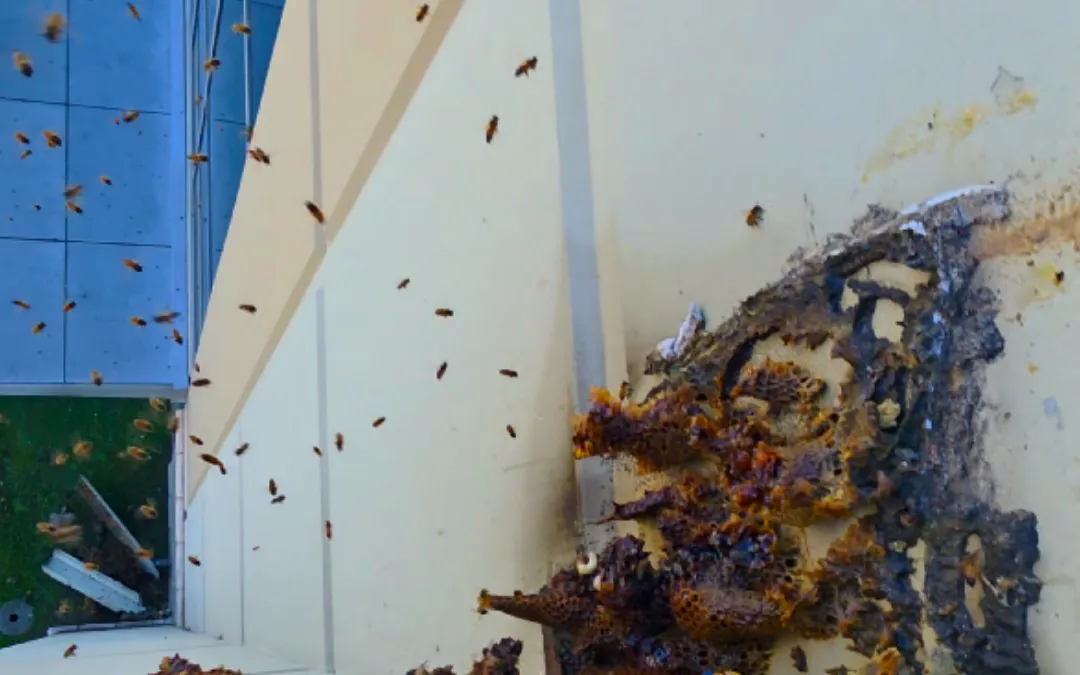
Short answer: If yellow jackets are flying in and out of one spot on your wall, there's likely a paper nest in the wall void behind it. Don't seal the hole or spray into it. Trapped yellow jackets may chew through drywall and come into the house. Keep your distance, note the entry point and have the nest professionally removed.
Here's how to confirm what you're dealing with, why sealing the hole is risky, and what to do next.
How do you know you have a yellow jacket nest in the wall?
Steady traffic in and out of one opening is the clearest sign. Watch from a safe distance for a few minutes and look for:
- Yellow jackets flying straight into and out of a crack, gap, weep hole or vent, over and over
- Smooth, shiny, bright yellow and black insects with a narrow waist, not fuzzy bees
- A crackling, rustling or buzzing sound inside the wall
- Yellow jackets showing up indoors, especially near outlets, light fixtures or the same wall
- A soft, damp or discolored spot on drywall, which can mean the nest is pressing on it
If you've noticed any of these, especially the last two, treat it as a priority.
Yellow jackets or honey bees in the wall: how do you tell?
Look closely at the insects and at what happens around the entrance. Both can live in wall voids, but they're very different problems with very different fixes.
| Yellow jackets | Honey bees | |
|---|---|---|
| Look | Smooth, shiny, bright yellow and black, narrow waist | Fuzzy, golden-brown, less bright |
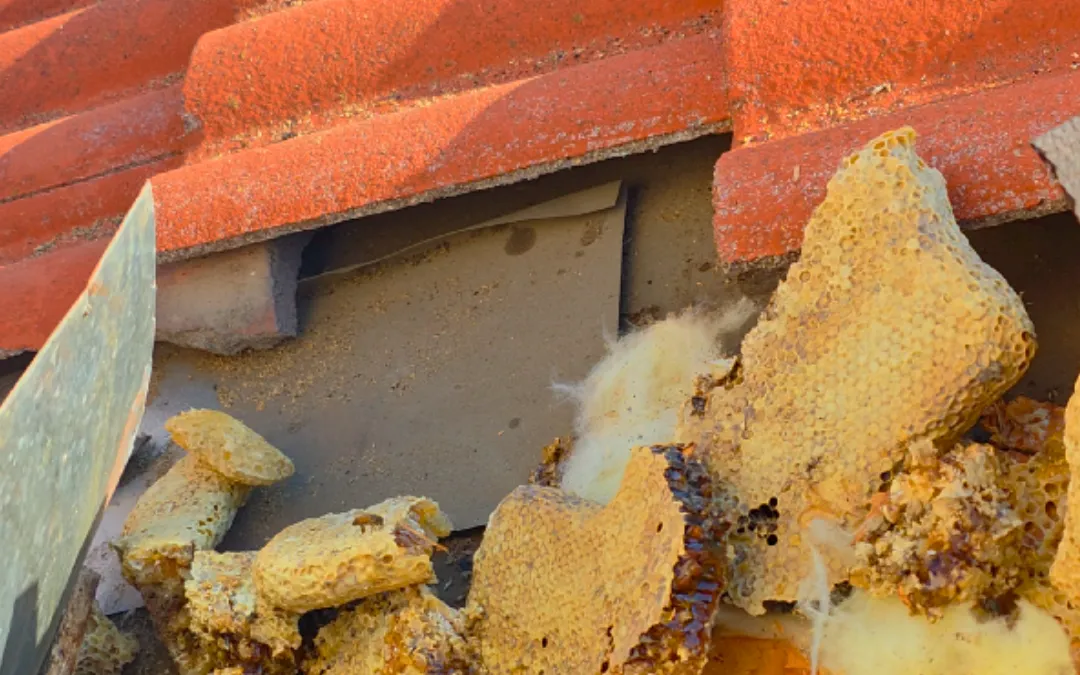
| Nest | Gray paper nest made from chewed wood fibers | Wax honeycomb with honey and brood |
| Sting | Can sting more than once | Stinger is barbed and usually stays in the skin |
| Season | Usually one season; activity peaks late summer and fall | Year-round colony that keeps growing |
| Food | Insects, meat and sweets; often at trash and barbecues | Nectar and pollen from flowers |
| What happens | Professional nest removal | Live removal and relocation |
For a closer look at the differences, see my guide to honey bees vs. yellow jackets vs. wasps.
Should you seal the hole where yellow jackets are going in?
No. It's the most common mistake I hear about, and it can make things worse. When the only exit is blocked, the yellow jackets inside don't just give up. They look for another way out, and a common risk is that they chew through drywall or find a gap around an outlet, vent or light fixture and come into the house. Instead of a nest outside your living space, you can end up with angry yellow jackets in a bedroom.
Leave the entrance open until the nest is dealt with. If you want to mark it, put a piece of tape or a flag nearby, not over the hole.
Can you spray yellow jackets in a wall yourself?
I don't recommend it. Spraying into the hole usually only reaches the yellow jackets near the entrance, while the nest itself may be well inside the wall. It also puts you right at the opening of a disturbed nest. UC IPM's yellowjacket Pest Notes point out that yellow jackets can sting repeatedly, and a whole colony coming out of a wall at once is dangerous, especially for anyone with a sting allergy.
A few other "fixes" to skip:
- Pouring gasoline, water or anything else into the opening
- Banging on the wall to "see how big it is"
- Cutting into the drywall yourself without protective gear
- Running loud equipment like trimmers or blowers right next to the entrance
How do you get rid of yellow jackets in a wall?
The safest way is to have it professionally removed. Here's roughly how that goes:
- Make sure it's yellow jackets and not honey bees, because the job is completely different.
- Find the main entry point and figure out where the nest probably sits in the wall void.
- Check the inside of the house for spots where yellow jackets could break through into the living space.
- Take out the active nest itself, instead of just knocking down the yellow jackets at the entrance.
- Once the nest is gone, seal the gap so the next queen doesn't pick the same spot.
My yellow jacket removal service handles nests in walls, siding and other structural cavities, along with ones in the ground. For paper wasps under eaves and overhangs, see wasp removal.
Will yellow jackets in a wall go away on their own?
Eventually, but probably not soon enough. Yellow jacket colonies are generally seasonal. According to UC IPM, in most of California the workers die off in winter while new queens leave to spend the winter somewhere else, and a queen usually starts a new nest in spring rather than reusing the old one.
The problem is timing. Most people find a wall nest in late summer or fall, which is when colonies are at their largest and yellow jackets are most defensive. Waiting months with a busy nest next to your living space, especially if kids, pets or anyone with an allergy lives there, usually isn't worth the risk.
When is a yellow jacket nest in a wall an emergency?
Call right away if:
- Yellow jackets are getting inside the house
- You see a bulging, soft or chewed spot on the inside of the wall
- The nest is next to a door, a play area or a spot people use every day
- Someone in the home is allergic to stings
If someone is stung many times, has trouble breathing or is allergic, call 911.
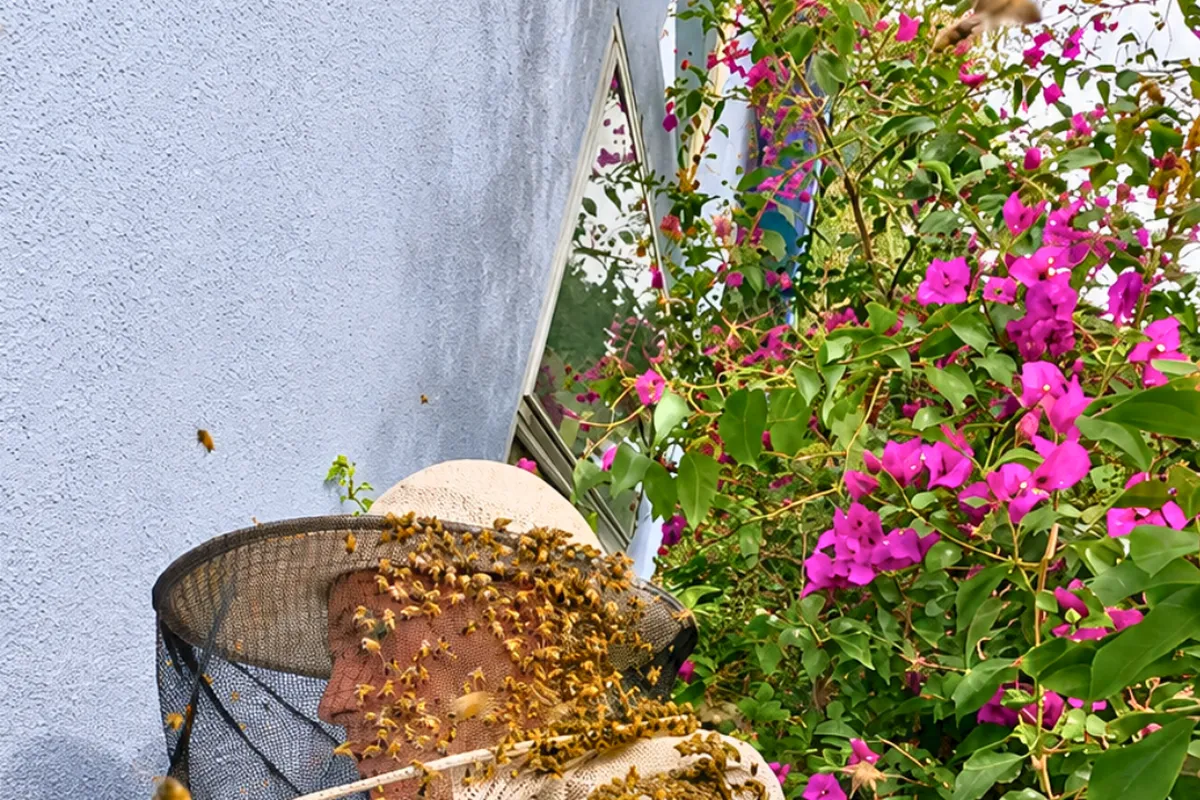
Why shouldn't you get close without protective gear?
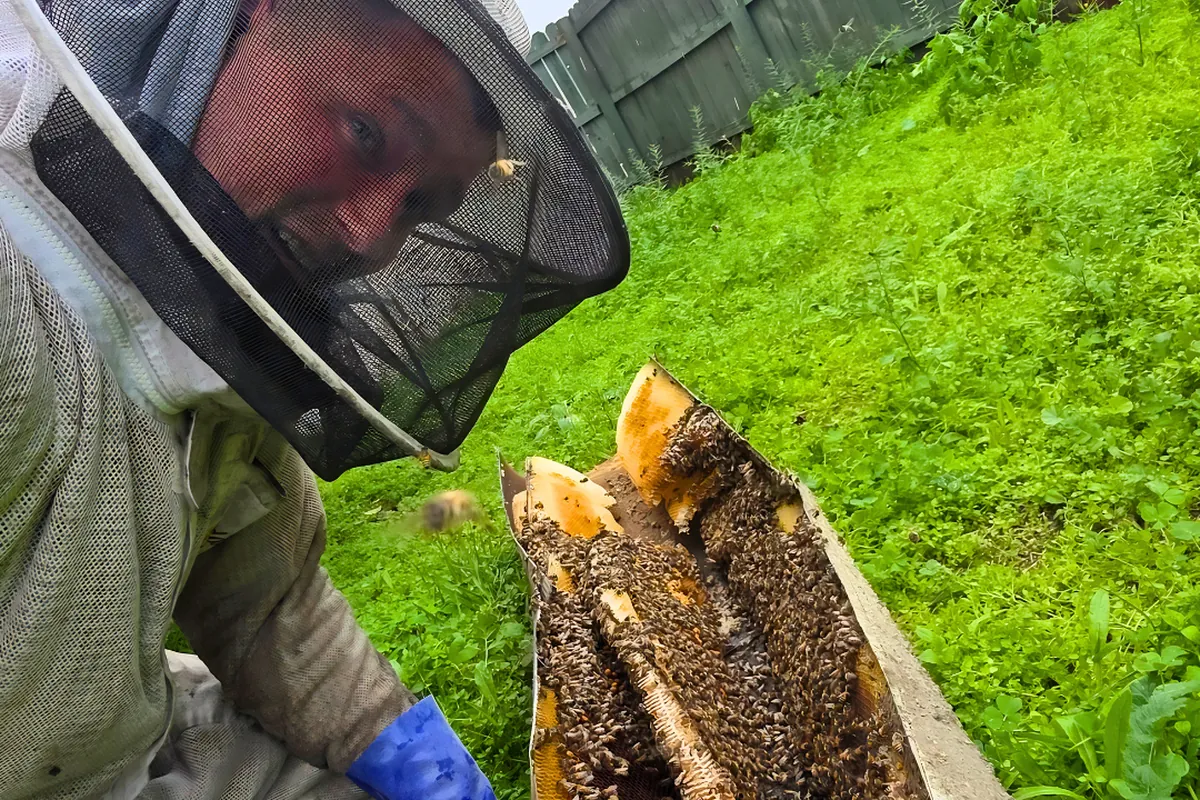
Because a wall nest can empty out fast when it's disturbed. Yellow jackets defend their nest hard, and each one can sting more than once. That's why I suit up before working near any stinging-insect nest. The photo at the top of this post is me in my protective beekeeper suit outside a home in Lake View Terrace, in Los Angeles. I cover Lake View Terrace and the rest of Los Angeles County, along with Orange County and the Inland Empire.
Need a hand?
If you've got yellow jackets going in and out of your wall, keep the hole open, keep people and pets back, and call or text a photo to (626) 487-6052. You can also request a quote online. The inspection is free, and I'll tell you whether you're dealing with yellow jackets or honey bees and what it will take to fix it. I answer calls 7 days a week, and I do removals Monday through Saturday.
Frequently asked questions
Can yellow jackets chew through drywall?
Should I seal the hole yellow jackets are using?
How big can a yellow jacket nest in a wall get?
Will a yellow jacket nest in my wall die in winter?
How do I know if it's yellow jackets or honey bees in my wall?
Like these guides? Add Eli the Bee Guy as a preferred source on Google to see more of them in your search results.